From dusty main streets and historic saloons to rodeos, ranches and cowboy boots, the American West still carries traces of a frontier that officially disappeared more than a century ago. In places like Cody, Bandera, Deadwood, Jackson and San Angelo, cowboy culture has survived by adapting to modern life. These towns are not living museums, but communities where Western traditions, local history and tourism continue to overlap. The result is a fascinating glimpse into how the mythology of the Wild West became part of modern American identity.
The Wild West Isn’t Just a Movie Anymore
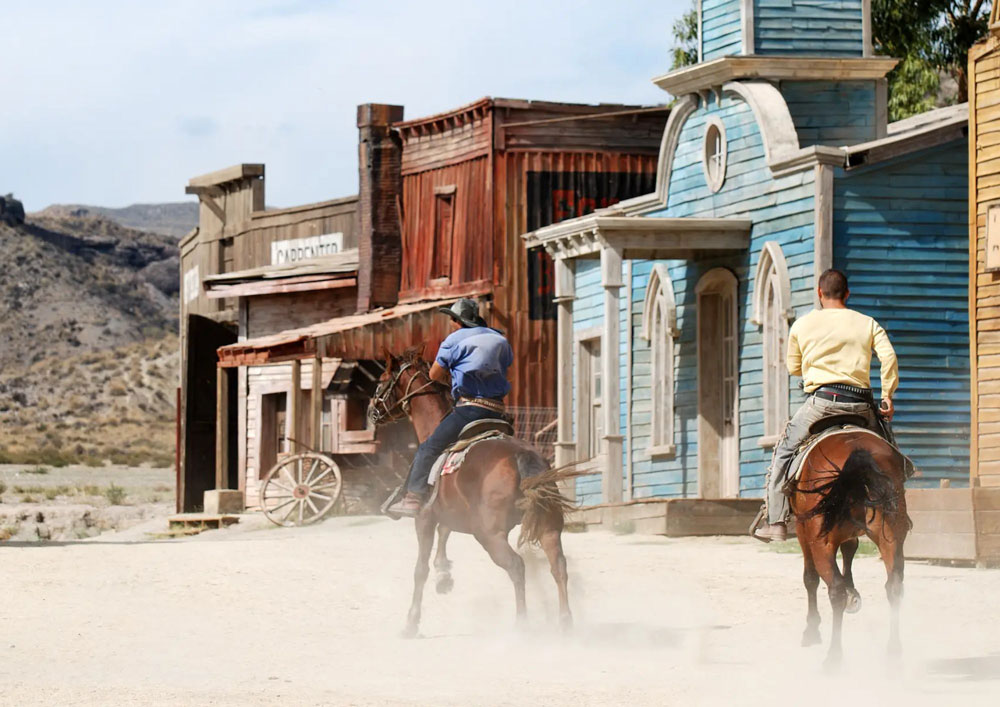
Picture a small town somewhere in the American West. Its main street is lined with low historic buildings, cowboy boots and Stetson hats are still part of the local style, horses stand near ranches, and a rodeo draws a crowd on the weekend. As evening falls, country music spills from a saloon.
It sounds like the setting of a Western movie. But what if you could experience something surprisingly similar without stepping onto a movie set?
The cowboy has long been one of America’s most recognizable cultural symbols. Popular films often portray him as a lone rider moving through dusty streets, facing outlaws and gunfights before disappearing into the frontier. The reality of cowboy life, however, was much more closely connected to ranching, cattle, horses and the demanding work of life in the American West.
And while the frontier of the 19th century is gone, parts of its culture remain remarkably visible. Some American towns still hold rodeos, maintain working ranches, preserve historic downtowns and keep Western music and dance traditions alive. Others have transformed their cowboy heritage into festivals, museums, restaurants and tourist experiences without completely losing their connection to the communities that created those traditions.
These places are not simply frozen pieces of the past. They are living towns that have adapted to modern America while preserving elements of an older way of life.
That makes them especially fascinating. The Wild West may be history, but in some American towns, it never completely disappeared.
Think the Wild West is gone? Think again. This video takes you through remarkable American towns where cowboy culture, mining history, legendary outlaws and old frontier traditions are still alive today—from Bandera and Jackson to Deadwood, Dodge City and Leadville. 10 Best Old West Towns in America.
The Cowboy Towns Where the Old West Still Feels Alive
Cody, Wyoming — Where Buffalo Bill Left His Mark
Few towns embody the mythology of the American West quite like Cody, Wyoming. Founded in 1896 by William F. “Buffalo Bill” Cody, the town carries the name and legacy of one of America’s most famous frontiersmen.
Cody was established near the end of the 19th century, when the frontier was rapidly changing. Yet more than a century later, traces of that era remain visible throughout the community. Historic buildings, Western-style businesses and the town’s distinctive atmosphere help preserve a connection to its frontier origins.
The cowboy tradition is also still part of everyday culture. Rodeos and related Western events bring horses, riders and spectators together, while restaurants, shops, saloons and dance halls give visitors ways to experience the culture beyond museums and historical exhibits.
What makes Cody particularly interesting is that its Western identity does not exist only as a memory. It has become part of the town’s modern character, creating a place where history and contemporary life exist side by side. What happens when a town founded by one of America’s most famous frontiersmen refuses to let the frontier disappear?

Bandera, Texas — The Cowboy Capital of the World
If Cody represents the legacy of the frontier, Bandera represents the living cowboy tradition.
Located along the historic Great Western Trail, Bandera became an important stopping point for cowboys moving cattle north. The town provided a place for people and horses to rest and resupply before continuing their journeys.
That connection to ranching never completely disappeared. Over time, dude ranches developed around the area, allowing visitors to experience aspects of Western ranch life themselves.
Today, Bandera continues to celebrate its cowboy identity through rodeos, honky-tonks, live Western music and ranch experiences. Instead of simply displaying its history behind glass, the town turns Western traditions into experiences that remain part of its community and tourism economy.
Together, Cody and Bandera show two different ways cowboy culture can survive:
- Cody → history and legacy
- Bandera → living ranch culture

Where Outlaws, Gold Rushes and Cowboy Legends Still Shape the Town
Deadwood, South Dakota — The Wild West’s Lawless Reputation
Few places embody the rougher side of the Old West quite like Deadwood, South Dakota. The town exploded into prominence after gold was discovered in the Black Hills in 1876, attracting prospectors, gamblers and fortune seekers hoping to strike it rich.
Deadwood quickly developed a reputation for lawlessness, and some of the most famous characters of the frontier era passed through its streets. Wild Bill Hickok was famously shot and killed in a Deadwood saloon in 1876, while Calamity Jane became another enduring figure in the town’s mythology.
A devastating fire destroyed much of Deadwood in 1879, but the community was rebuilt. Decades later, its historic significance was formally recognized when Deadwood became a National Historic Landmark in 1961.
Today, the town keeps its frontier identity alive through events such as wagon parades, rodeos and gunfight reenactments. Historic saloons and preserved buildings add to the feeling that the Old West is never quite far away.

Jackson, Wyoming — The Cowboy West Meets the Modern West
Jackson, Wyoming, offers a different version of cowboy culture. The surrounding Jackson Hole region has roots in fur trapping, homesteading and ranching, while the dramatic Teton landscape has become one of the defining images of the American West.
Today, Jackson combines that heritage with a thriving modern tourism economy. Visitors can still encounter working ranches, horseback riding and rodeos, while outdoor recreation has become an equally important part of the local identity.
The Jackson Hole Rodeo keeps traditional Western competition visible, while establishments such as the Million Dollar Cowboy Bar have helped turn cowboy imagery into a recognizable part of contemporary Western culture.
The contrast between these two towns is revealing. Deadwood preserves the mythology of the frontier—gold, outlaws and legendary characters. Jackson shows how the cowboy West evolved into a modern American lifestyle, where ranching. traditions coexist with tourism, recreation and contemporary life.

The Cowboy Life Was Never Only About Cowboys
San Angelo Was Built Around Cattle
The story of the American cowboy is often told through images of horses, wide-open ranges and dusty trails. But behind that image was something much larger: an entire economic system built around livestock.
San Angelo, Texas, offers a good example. The community began as a trading post in the 1860s, benefiting from its location along the Concho River. After the Civil War, cattle drives and livestock became increasingly important to the region, bringing ranchers, workers and businesses into the growing settlement.
Saloons and trading businesses appeared alongside the cattle economy, while the arrival of the railroad in the 1880s transformed San Angelo into an important livestock hub. The city’s economy eventually expanded beyond cattle, with wool production and horse-related industries becoming important parts of its Western identity.
The cowboy, in other words, was not simply someone riding across the landscape. He was part of a much larger network involving ranches, livestock, transportation, trade and local businesses. Cowboy culture wasn’t simply about riding horses. It was an entire economic system.

Why These Towns Still Matter
That history helps explain why cowboy culture has survived long after the frontier itself disappeared.
Ranching, cattle, horses and agriculture remain connected to communities across the American West, while traditions surrounding rodeos, Western music and local celebrations have become part of regional identity.
At the same time, many towns have found new ways to preserve and share that heritage. Tourism, festivals, rodeos, historic attractions and Western entertainment allow traditions that once served practical purposes to remain visible in modern life.
The cowboy survived not because America remained frozen in the 19th century, but because the culture surrounding him adapted. The cowboy survived because the culture around him evolved.
The Wild West Survived by Changing With America
From Frontier Life to Cultural Identity
For much of the 19th century, being a cowboy was primarily an occupation. Cowboys worked with cattle, managed herds, traveled long distances and performed demanding physical labor as part of the ranching economy.
Today, the word carries a much broader meaning.
In many parts of the American West, cowboy culture has become a form of cultural identity and heritage. Boots, hats, horses, ranches and rodeos remain familiar symbols, while Western music and historic buildings help preserve a connection to the region’s past.
The towns discussed in this story are no longer frontier settlements in the way they were during the 1800s. Yet their Western identity has survived because these traditions have been adapted to modern life.
A rodeo can now be both a sporting event and a community tradition. A historic saloon can serve tourists while remaining part of a living downtown. Even the cowboy itself has evolved from a job title into a cultural symbol recognized far beyond the ranches where the tradition began.
The Wild West People Remember Was Always Partly a Myth
There is another layer to the story.
Hollywood helped create an enduring image of the Wild West: the lone cowboy riding across a dusty frontier, the mysterious gunfighter, the dangerous outlaw and the saloon filled with tension.
Real life was considerably more complicated.
Cowboys were workers. Ranching was a business. Towns developed around cattle, transportation and trade. The romantic image of the frontier often leaves out the difficult, ordinary work that made the Western economy possible.
Modern cowboy towns therefore exist somewhere between history and reinvention. They preserve genuine traditions while also adapting them for tourism and contemporary audiences.
That does not necessarily make the experience less authentic. It shows how cultures survive by changing.
And it leaves us with an intriguing question: Are these towns preserving the Wild West—or reinventing it for a new generation?
The Wild West Never Really Disappeared
Picture a cowboy riding down a quiet Western street, a rodeo unfolding under the evening sky, or a historic saloon opening its doors as country music fills the air. Add a downtown lined with buildings more than a century old, and for a moment, it can feel as though you have stepped backward in time.
But these towns are not frozen pieces of the 19th century. They are part of modern America.
Tourism has reshaped their economies. Historic buildings have become attractions, rodeos have become community events, and cowboy traditions have evolved into a form of cultural heritage. The mythology of the Old West is still present, but it exists alongside restaurants, hotels, businesses and modern lifestyles.
Cody preserves the legacy of Buffalo Bill.
Bandera keeps the traditions of ranching and the working cowboy visible.
Deadwood holds onto the legends of outlaws, gold seekers and frontier life.
Jackson combines cowboy heritage with modern Western tourism and outdoor recreation.
And San Angelo reveals the economic foundations behind the cowboy culture, from cattle and ranching to transportation and trade.
Together, these towns show that the Wild West did not survive by remaining unchanged. It survived because Americans found new ways to preserve, celebrate and reinterpret it.
Perhaps that is why the cowboy remains such a powerful symbol. He represents not only a historical occupation, but an entire era of American expansion, independence and frontier identity.
The frontier itself is gone. The culture it created is not. The Wild West may be gone as a frontier, but in these towns, its spirit still has a place to live.
The Wild West may no longer exist as the untamed frontier Americans once knew, but its influence remains deeply woven into the culture of the American West. In towns like Cody, Bandera, Deadwood, Jackson and San Angelo, ranching traditions, rodeos, historic buildings and Western stories continue to connect the present with the past. These communities show that preserving history does not mean freezing it in time. Instead, traditions survive by adapting to new generations while retaining the identity that made them meaningful in the first place.