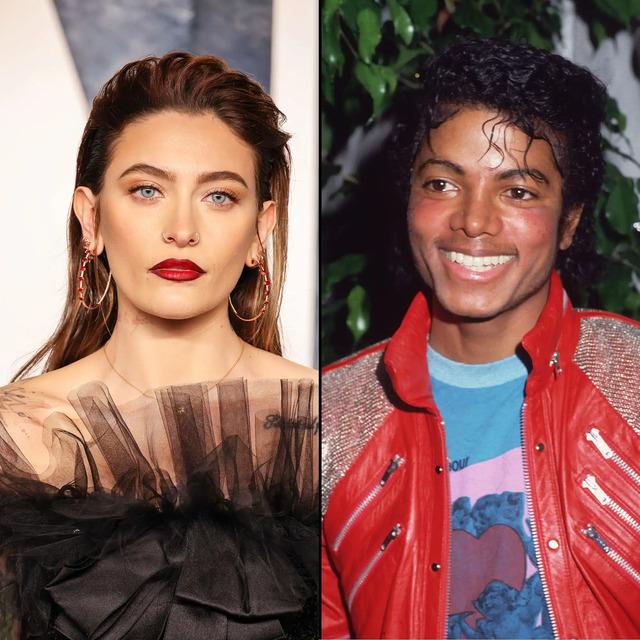
Paris Jackson has spent much of her life under an unusually powerful spotlight. As the daughter of Michael Jackson, almost every public appearance invites comparisons with her famous father and, increasingly, with her mother, Debbie Rowe. Yet her appearance at the 2025 Cannes Film Festival offered something more interesting than another debate about family resemblance. Wearing a crystal-covered Vivienne Westwood gown, amber-toned opera gloves, and a distinctly individual style, Paris showed how she is turning an inherited legacy into something unmistakably her own.
Paris Jackson Made a Statement at Cannes
At the 2025 Cannes Film Festival, Paris Jackson attended the premiere of Honey Don’t! in a striking Vivienne Westwood look that immediately attracted attention. The strapless brown-toned gown featured sculpted corsetry, shimmering crystal details, and a dramatic thigh-high slit, while opera gloves and jewelry from Messika added a more theatrical finish. Fashion coverage from Vogue confirmed her appearance in Vivienne Westwood and Messika at the festival, placing her among the celebrities who generated attention on the Cannes red carpet.
The outfit was notable because it balanced several parts of Paris’s public image at once. It had the glamour expected from Cannes, but the corsetry, warm colors, slightly gothic styling, and relaxed blonde waves also reflected the alternative aesthetic she has developed through music and fashion. Rather than appearing like a celebrity simply borrowing a conventional red-carpet formula, Paris looked like someone using fashion as another form of self-expression.
That distinction has become increasingly important throughout her career. Every appearance invites comparisons with the Jackson family, but her strongest fashion moments tend to be the ones in which the reference point becomes Paris herself.

Witness a story of courage and resilience. Debbie Rowe opens up about her cancer battle and how it helped her reconnect with her daughter, Paris. Watch the full story now.
The Look Combined Hollywood Glamour With Her Own Edge
The Cannes gown also reflected the type of fashion language Paris has increasingly embraced. Vivienne Westwood is strongly associated with corsetry, historical references, rebellious tailoring, and punk-influenced design, making the label a natural match for someone whose public style frequently moves between elegance and alternative influences.
At the Honey Don’t! premiere, the combination of a classic floor-length silhouette with a contemporary edge gave Paris a look that felt both glamorous and slightly unconventional. Her styling did not attempt to reproduce the polished image historically associated with Hollywood’s biggest stars. Instead, it incorporated elements of rock culture, fashion experimentation, and modern celebrity dressing.
That balance is particularly appropriate for Paris because her career has never belonged entirely to one industry. She has worked across music, modeling and acting, and her fashion choices often sit somewhere between those worlds.
The result is an image that feels less like a costume and more like an extension of her artistic personality.
Why People Keep Comparing Paris to Her Parents
The fascination with Paris’s appearance is understandable. She inherited highly recognizable features from two well-known parents, and photographs often lead fans to debate whether she looks more like Michael Jackson or Debbie Rowe.
Her Cannes appearance revived that conversation, with some viewers focusing on similarities to her father while others noticed characteristics associated with her mother. But celebrity resemblance is inevitably subjective, and photographs, makeup, hairstyle, lighting, and styling can dramatically change how someone’s features are perceived.
The comparison also says something about the unusual position Paris occupies. Many celebrity children are compared with their parents, but few inherit a family name as globally recognizable as Jackson. Every new hairstyle or red-carpet appearance can therefore become part fashion discussion and part family-history discussion.
Yet Paris has increasingly demonstrated that she does not want her identity reduced to resemblance. Her own career gives audiences plenty of reasons to discuss her independently.

Watch Prince and Paris Jackson share a beautiful, heartfelt tribute to their father at the 2022 Tony Awards. A powerful moment you won’t want to miss!
Her Relationship With Debbie Rowe Has Its Own Story
The conversation about Paris’s mother is particularly interesting because Debbie Rowe remained largely outside the spotlight while Michael Jackson was raising their children. Paris’s relationship with Rowe developed gradually, and Paris has spoken publicly about reconnecting with her mother as a teenager.
In 2026, Paris discussed that relationship again during an appearance on Call Her Daddy, recalling that she first began asking about her mother around age 10 or 11 and eventually met Rowe at 15. She described the relationship as something that developed naturally rather than according to a predetermined idea of what a mother-daughter relationship should look like.
That history gives the “does she look more like her mother or father?” conversation a deeper context. Paris’s relationship with both sides of her family has been shaped by unusual circumstances, public attention, and the legacy of one of the world’s most famous entertainers. Her appearance is therefore only one small part of a much more complicated family story.
The important point is that resemblance does not determine identity. Paris can inherit physical characteristics from both parents while developing a personality, career, and worldview that belong entirely to her.
Paris Jackson Has Been Building a Career of Her Own
Paris’s public identity began with her family name, but her professional ambitions quickly expanded beyond simply being Michael Jackson’s daughter. She has worked as a model and actress while developing a serious career as a musician, eventually releasing her debut album wilted in 2020.
When she discussed the album with Billboard, Paris emphasized experimentation and described music as a personal outlet shaped by grief, change, and the experiences that influenced her as she grew up. She also explained that her father’s musical influence was unavoidable because music had been part of her life from birth, but she approached her own work from a different creative direction.
That distinction is central to understanding her career. Paris does not need to escape her father’s influence—nor could she realistically do so—but she can decide what she does with it. Her music has leaned toward alternative and indie influences rather than attempting to reproduce the sound associated with Michael Jackson.
In that sense, her career is less about rejecting a famous legacy than about translating it into a different artistic language.

Music, Acting and Fashion Became Parts of the Same Identity
Paris’s career becomes more interesting when music, acting, and fashion are viewed together rather than as separate pursuits. She has described herself as someone who enjoys creative work across several disciplines, with music remaining especially important while modeling and acting provide other forms of expression.
An earlier interview with PAPER captured that approach particularly well. While discussing wilted, Paris said she wanted to continue acting and modeling but that music made her happiest, describing a broader desire to keep creating rather than pursue fame for its own sake.
That attitude helps explain her evolving fashion identity. For an artist who works in multiple creative fields, clothing becomes another medium rather than simply a tool for looking glamorous on a red carpet.
Her Cannes appearance fits naturally into that philosophy. The gown was important because it was visually memorable, but the larger story was that Paris was using the red carpet to present an artistic identity that had developed independently over time.
The Jackson Legacy Is Still Present—But It No Longer Defines Everything
There is no realistic way for Paris Jackson to escape her family legacy completely. Her surname remains one of the most recognizable in music history, and her father continues to influence how media and audiences interpret her public appearances.
Yet the relationship between legacy and identity has changed as Paris has matured. She has appeared on magazine covers, pursued music, worked in film and television, and developed a personal style that moves comfortably between rock, alternative fashion, and high-end designer dressing.
That evolution was already visible years ago. Rolling Stone described her as a model, actress, and musician while noting that she wanted to earn her own money and develop her own creative identity rather than rely solely on her inheritance and family fame.
Her fashion choices now make that independence increasingly visible. At the 2025 Cannes Festival she chose Vivienne Westwood, while in later Paris Fashion Week appearances she continued experimenting with darker, theatrical beauty and fashion looks. Vanity Fair highlighted her striking beauty look at Paris Fashion Week in October 2026, showing that her visual identity continues to evolve rather than settling into one recognizable formula.

Why Paris Jackson’s Transformation Is More Interesting Than a Family Resemblance
The “does she look like her mother or father?” question is an easy way to attract attention, but it ultimately captures only the surface of Paris Jackson’s story. Physical resemblance is something she was born with; artistic identity is something she has spent years developing.
The Cannes appearance offered a useful snapshot of that distinction. She was standing on one of the world’s most famous red carpets, carrying an extraordinary family legacy, yet the actual choices—Vivienne Westwood, the warm-toned styling, the gloves, the jewelry, the combination of glamour and alternative edge—were choices made for Paris Jackson in her own era.
That is the more compelling story behind her public image. The goal is not to look exactly like Michael Jackson or Debbie Rowe. It is to become recognizable as Paris.

A New Generation of Celebrity Legacy Looks Different
Paris Jackson represents a broader change in how celebrity children build careers. Earlier generations of famous heirs often entered the same industries as their parents and were immediately judged against them. Today, social media, independent music, fashion, and direct audience relationships allow the next generation to construct identities across several creative spaces simultaneously.
Paris has been able to do that while acknowledging the enormous influence of her upbringing. She can talk about her father’s musical legacy, maintain a relationship with her mother, create her own music, act, model, and experiment with fashion without having to choose one single version of herself.
That flexibility may eventually become the most important part of her public identity. The Jackson name will always open a door, but what happens after she walks through it depends on her own decisions.
Paris Jackson’s Cannes appearance was more than another celebrity fashion moment. The Vivienne Westwood gown, dramatic styling, and attention-grabbing red-carpet presence brought back the familiar question of whether she resembles Michael Jackson or Debbie Rowe, but the more interesting story is how deliberately Paris has developed an identity beyond either comparison. Through music, modeling, acting, and fashion, she has transformed a famous family legacy into a creative career of her own. The resemblance may attract the first glance, but Paris’s own choices are increasingly becoming the reason people keep watching.