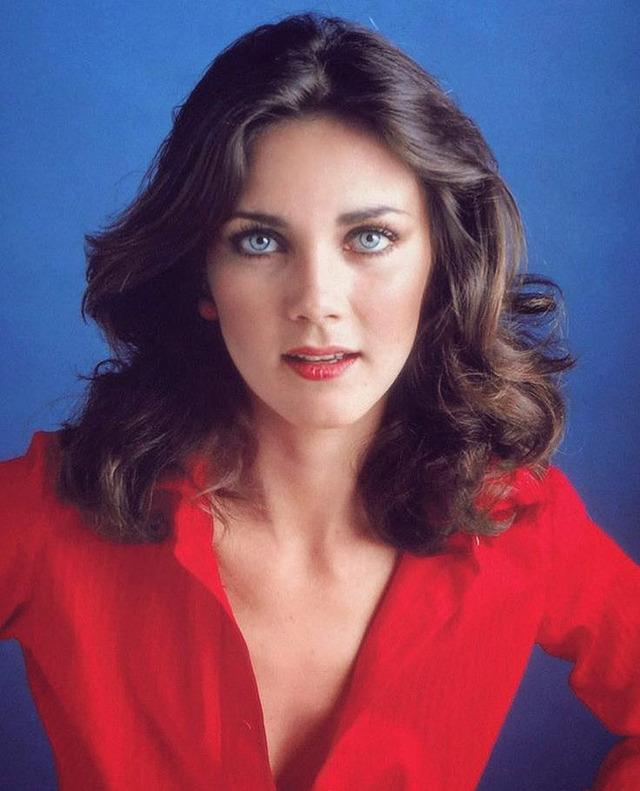
For generations of television viewers, Lynda Carter will always be the face of Wonder Woman. When she brought DC Comics’ legendary superhero to life in the 1970s, she helped establish a new kind of female action hero—one whose strength was matched by compassion, intelligence, and a powerful sense of justice. But Carter’s story extends far beyond the iconic costume. From her early ambitions as a singer to her work in television, music, and social advocacy, she has built a lasting legacy that continues to evolve decades after her most famous role.
From Phoenix to the World of Entertainment
Lynda Jean Carter was born on July 24, 1951, in Phoenix, Arizona. Growing up in a family that encouraged her interests, she developed a passion for music while still a child. According to her official biography, Carter made her first musical appearance at just five years old in a local talent show, an early experience that foreshadowed the creative career she would eventually pursue.
By her teenage years, Carter was performing regularly with bands. She joined Just Us in 1965 before moving on to The Relatives, a group that toured between Las Vegas and venues farther east. She later performed with Speedy Garfin and the Garfin Gathering, gaining experience as a vocalist long before television audiences knew her name.
Music was initially more than a hobby. It was a serious professional ambition that exposed Carter to live audiences, stage performance, and the discipline required to build a career in entertainment. Those formative experiences would eventually prove valuable when she began working in television, where confidence, timing, and the ability to connect with an audience were equally important.
In 1972, Carter won the Miss World USA pageant and represented the United States at the international Miss World competition, where she reached the semifinals and placed among the top 15 contestants. The achievement gave her a new platform and helped open the door to Hollywood. She moved to Los Angeles that year to study acting, continue singing, and write music.
The pageant title created an opportunity, but it was only the beginning. Carter still needed to establish herself as a performer capable of holding an audience’s attention beyond a competition stage. Her next major opportunity would provide exactly that chance.

Wonder Woman Made Her a Cultural Icon
Carter’s defining breakthrough came when she was cast as Diana Prince, also known as Wonder Woman, in the live-action television series that premiered in 1975. The role quickly established her as one of the most recognizable television stars of the decade.
At the time, female-led action programs were relatively uncommon. Television frequently placed women in supporting roles, while male characters dominated stories involving crime-fighting, adventure, and physical heroism. Wonder Woman offered a different image: a woman who could lead the action, outthink her opponents, and protect others without sacrificing her independence.
Carter brought warmth and sincerity to the character. Her Diana Prince was intelligent and composed, while Wonder Woman combined physical strength with a strong moral purpose. The performance helped audiences see the superhero as more than an impressive costume or a collection of extraordinary abilities.
The series ran from 1975 to 1979, becoming the defining achievement of Carter’s acting career. Its familiar transformation sequence, distinctive costume, and memorable action scenes became enduring elements of television history. Carter also performed some of her own stunts, including a dangerous sequence involving a helicopter, demonstrating her willingness to participate physically in bringing the character to life.

The cultural importance of the role went beyond its entertainment value. Wonder Woman arrived during a period when public conversations about women’s rights, professional opportunities, and gender equality were changing. For young viewers, seeing a woman occupy the central heroic position on a television series offered a powerful alternative to more traditional portrayals.
Carter herself understood that appeal. In a 2025 interview with the Television Academy, she reflected on wanting Wonder Woman to be open and vulnerable while remaining self-assured. Her interpretation was not built around the idea that a hero never experiences uncertainty, but around the ability to confront problems and work through them.
That combination of strength and humanity helped make her portrayal memorable. Even after the original series ended, Carter remained closely associated with the character, and her performance continued to influence how audiences remembered Wonder Woman.

A Musical Career Beyond the Superhero Costume
Although acting made Carter internationally famous, music remained a major part of her identity. Her experience as a vocalist predated her Hollywood career, and she continued to perform and record music even as Wonder Woman became a cultural phenomenon.
In 1978, she released Portrait, her first solo album, which included songs she had written herself. The project showed that she was interested in developing her own musical voice rather than treating singing merely as a secondary activity. Her official career timeline also documents several television variety specials, including productions featuring guest performers from different musical backgrounds.
Carter continued developing her musical work in later decades. She released At Last in 2009 and Crazy Little Things in 2011, followed by Red Rock n’ Blues in 2018. Her live performances have drawn on different styles, including pop, country, blues, and traditional standards, allowing her to explore musical territory beyond the sound of her earliest recordings.

She has also contributed performances and original songs to video games. In 2015, Carter joined the cast of Fallout 4 as Magnolia, a singer in the fictional city of Goodneighbor. She recorded five original songs for the game, combining her acting and musical abilities within a different form of storytelling. She had previously voiced Gormlaith Golden-Hilt in The Elder Scrolls V: Skyrim.
More recently, music has provided a way for Carter to express personal experiences that are difficult to communicate through acting alone. Her 2023 single “Rise Up” emphasized civic engagement and collective responsibility, encouraging listeners to see themselves as capable of making a positive difference.
In March 2024, she released “Letters from Earth,” a deeply personal song written in memory of her late husband, Robert Altman. Co-written with songwriter John Barlow Jarvis, the ballad explored grief, memory, and the continuing emotional connection between people after loss. Carter explained that writing and performing it had become part of her healing process.
These projects reveal another dimension of Carter’s career. Wonder Woman made her an iconic actress, but music has given her a different way to communicate emotion, respond to personal experiences, and connect with audiences.

Returning to the Screen in New Roles
Carter’s later acting career demonstrates that she never allowed Wonder Woman to become her only professional identity. Although the character remains her most recognizable role, she has continued to work in television, film, theater, and voice acting.
In 2005, she appeared in the superhero comedy Sky High, playing Principal Powers at a school for the children of superheroes. The role allowed her to participate in a new generation of superhero storytelling while bringing a playful awareness of her own place in the genre.
She later appeared in television series including Smallville and Two and a Half Men. Her recurring role as President Olivia Marsdin in Supergirl from 2016 to 2018 was especially fitting, allowing her to inhabit another influential character within the DC universe. Instead of reprising Diana Prince, she played a political leader in a world where extraordinary abilities and public responsibility intersect.
In 2018, Carter also returned to the comedy franchise Super Troopers in its sequel, further demonstrating the range of productions she was willing to explore.
Her connection to Wonder Woman nevertheless remained strong. In 2020, she made a cameo appearance in Wonder Woman 1984, directed by Patty Jenkins and starring Gal Gadot as Diana Prince. Carter’s appearance created a symbolic connection between the original television portrayal and the modern cinematic version of the character.
It was a meaningful moment for longtime fans. Rather than competing with the newer interpretation, Carter’s cameo acknowledged the history that had helped make the franchise so enduring. Her role in the film reflected how a performance can become part of a character’s cultural history even when a different actor takes over the role.

Advocacy and the Responsibility of a Public Platform
Carter’s influence has also extended into social advocacy. Through her public appearances, charitable support, and personal commitments, she has used her visibility to promote causes that matter to her.
One important area is women’s history. Carter serves on the advisory board of the Smithsonian American Women’s History Museum, an initiative intended to preserve and communicate the contributions of women throughout American history. The project aligns naturally with her experience playing one of popular culture’s most recognizable female heroes.
Her advocacy also includes LGBTQ+ rights. She has appeared at Pride events and supported organizations working toward equality, drawing on Wonder Woman’s longstanding importance to many LGBTQ+ fans. The character’s themes of self-acceptance, compassion, and strength have resonated with audiences who have often struggled to find positive representation in mainstream entertainment.

Carter has also supported City of Hope and the Translational Genomics Research Institute, commonly known as TGen, in efforts to advance research and treatment for myelofibrosis and related blood disorders. These causes have special personal significance because her husband lived with myelofibrosis before his death in 2021.
Her charitable work extends to other organizations, including the Alzheimer’s Drug Discovery Foundation, Susan G. Komen, and GLAAD, as listed on her official website.
Carter’s activities illustrate how an entertainment career can provide opportunities to support work beyond the screen. Fame does not automatically create meaningful change, but it can help direct attention toward research, organizations, and communities that might otherwise receive less visibility.
The causes she supports also connect with the values audiences often associate with Wonder Woman. While a television character can represent courage and justice symbolically, real-world advocacy involves sustained work with organizations, researchers, and communities.

Personal Challenges, Grief, and the Meaning of Resilience
Carter’s life has not been free from personal challenges. She has spoken publicly about her experience with alcohol dependence and recovery, including in a 2002 interview with Larry King. Her willingness to discuss the experience offered a reminder that public recognition and professional success do not protect someone from personal struggles.
Her personal life also included a long marriage to businessman Robert A. Altman. They married in 1984 and raised two children, Jessica and James. Altman, a co-founder of ZeniMax Media, died in February 2021 after living with myelofibrosis, a serious bone-marrow disorder.
Carter has spoken candidly about how difficult it was to imagine life without her husband of 37 years. In interviews after his death, she described the depth of their relationship and the challenge of finding her identity again following such a profound loss.
Her song “Letters from Earth” became one expression of that grief. Rather than presenting healing as a simple process with a clear endpoint, the song acknowledges the continuing presence of memories and love after someone has died. It gave Carter a way to share a deeply personal experience while creating something that listeners who have experienced bereavement could recognize.
These experiences add important context to her public image. Wonder Woman was a character who appeared capable of handling almost any obstacle, but Carter’s own life reflects the more complicated nature of resilience. Recovery, grief, and rebuilding are not solved through a dramatic transformation; they require time, support, and the willingness to continue living through uncertainty.
Her openness has allowed fans to understand her as more than the confident superhero they remember from television. It has shown the person behind the icon, with the same vulnerabilities and emotional challenges that shape many lives.

Why Lynda Carter’s Legacy Continues to Matter
Few television performances remain as closely associated with a fictional character as Carter’s portrayal of Wonder Woman. Decades later, viewers still remember her transformation spin, her determination, and the distinctive costume that became part of the show’s visual identity. Yet the longevity of the role is not simply a product of nostalgia.
Carter helped establish a vision of female heroism that balanced physical ability with empathy and moral conviction. Wonder Woman could overcome danger without relying entirely on violence, and she could be powerful without losing her humanity. Those qualities gave the character an appeal that extended beyond one generation of viewers.
The role has also created a lasting connection between Carter and later interpretations of the superhero. Her public appearances alongside Gal Gadot and director Patty Jenkins helped acknowledge the character’s history while introducing her legacy to new audiences.
Away from the screen, Carter’s continued music career and charitable work demonstrate how an established public identity can evolve rather than remain frozen in its most famous moment. She has used her platform to discuss recovery, honor her late husband, support medical research, and advocate for communities she cares about.
Her story therefore extends beyond the familiar language of celebrity success. It is a story about developing multiple creative interests, adapting to changes in personal circumstances, and finding ways to make a public platform meaningful over time.

Lynda Carter became a global icon by bringing sincerity, strength, and compassion to Wonder Woman, but her legacy has never been limited to a single television role. She built a parallel career in music, explored new acting opportunities, and used her public platform to support women’s history, LGBTQ+ rights, and medical research. Personal challenges and the loss of her husband also shaped a more reflective chapter of her life, expressed in music and advocacy. Carter’s enduring achievement lies in the connection she continues to make with audiences: a reminder that real strength involves not only courage, but also empathy, creativity, and resilience.