On July 26, 1184, some of the most powerful men in medieval Europe gathered in Erfurt for what should have been an important political meeting. Then, without warning, the floor beneath them gave way, sending nobles crashing into the darkness below. Dozens were killed in a matter of seconds, while the young King Henry VI narrowly escaped the same fate. What makes the disaster almost unbelievable is where the victims ended up—and how the king’s survival may have changed the future of Europe.
A Royal Meeting Ends in Seconds
Henry VI had summoned the gathering, known as a Hoftag, to Erfurt in July 1184. The 18-year-old king was attempting to mediate a dispute between Archbishop Conrad of Mainz and Ludwig III, Landgrave of Thuringia, at a time when conflicts between powerful nobles could threaten the stability of the Holy Roman Empire. Dozens of aristocrats and high-ranking officials had gathered for the meeting, with many arriving in the city the previous day.
The meeting took place in a medieval building near Erfurt Cathedral, traditionally associated with the Petersberg area. The structure had a wooden upper floor that was already old, and the gathering placed an extraordinary load on it. On July 26, the floor suddenly gave way beneath the assembled nobles, sending people and debris crashing through the structure.
The collapse did not stop at the first floor. The falling structure brought down the level below as well, opening a path into the cesspit beneath the building. In a matter of seconds, a room filled with some of the empire’s most powerful men had become a deadly trap.

The Men Who Fell Into the Cesspit
The disaster was as horrific as its name suggests. Medieval latrines were often little more than deep pits used to collect waste, and those who fell into the Erfurt cesspit faced drowning, crushing injuries or suffocation. HistoryExtra reports that somewhere between 60 and 100 aristocrats perished, although the precise death toll remains uncertain in the historical record.
Several high-ranking nobles were among the dead, including Count Heinrich of Schwarzburg, Count Friedrich of Abenberg and other members of the aristocracy whose names were preserved in contemporary chronicles. The deaths were not simply the result of the fall itself; some victims were trapped beneath the collapsed structure, while others died after reaching the cesspit.
Yet the disaster contained an extraordinary twist. The two men whose political confrontation had brought everyone together survived. Landgrave Ludwig fell into the collapse but was rescued alive, while Archbishop Conrad and King Henry VI avoided the main fall because they were sitting in a stone window alcove. They remained there until rescuers could reach them with ladders.
The king had come to Erfurt to settle a dispute between powerful men. Instead, he watched dozens of other powerful men disappear beneath his feet.
Ever heard of a royal meeting that ended in a tragic toilet disaster? Dive into the wild story of the 1184 Erfurt incident that claimed 60 nobles. You won’t believe this actually happened!
The King Who Walked Away
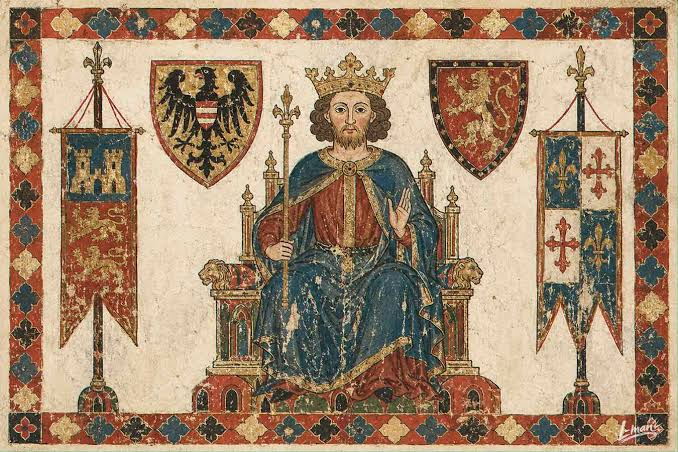
Henry VI’s survival was more than a bizarre footnote. His political career was only beginning, and he would go on to become Holy Roman Emperor in 1191. He later expanded his power into Sicily and became involved in major European affairs, including the capture and ransom of Richard the Lionheart.
That makes the accident particularly striking from a historical perspective. Had Henry been sitting a few feet away when the floor collapsed, the political consequences could have been enormous. The empire might have faced a very different succession struggle, while Henry’s later campaigns and expansion into Sicily would never have happened in the same way.
There is no way to know exactly how history would have unfolded if Henry had died in the latrine. But his survival meant that the young king left Erfurt and continued the political career that would make him one of the most powerful rulers in medieval Europe.
And the meeting itself achieved almost nothing. The dispute Henry had come to settle was overshadowed by the catastrophe, and the quarrel between Conrad and Ludwig appears to have continued.
What the Disaster Revealed About Medieval Life
The Erfurt disaster is remembered partly because of its grotesque circumstances, but it also reveals something important about medieval society. Even kings, bishops and counts were dependent on buildings that could be surprisingly fragile by modern standards. A meeting involving the highest levels of political power could take place on a wooden floor that was apparently unable to cope with the weight gathered upon it.
The tragedy also shows how different medieval sanitation was from anything familiar today. A latrine could be a large underground cesspit directly beneath a building, meaning that a structural failure could turn an ordinary accident into a mass casualty event. The combination of crowded rooms, aging timber and primitive sanitation created hazards that modern construction and sewage systems largely eliminate.
Yet the most fascinating part is how ordinary the meeting had seemed only moments before. The nobles were there to negotiate territory and political power, subjects that had shaped European history for centuries. Then a structural failure transformed an important political assembly into a disaster remembered for its almost unbelievable circumstances.
The Accident That Almost Changed Europe
The Erfurt Latrine Disaster has survived for more than eight centuries because it sits at the intersection of tragedy, dark irony and historical consequence. A dispute brought powerful men together, an aging floor collapsed beneath them, and dozens died in one of the strangest mass accidents recorded from medieval Europe. The fact that many of the victims were aristocrats made the event even more shocking.
But the strangest detail is what happened afterward. Henry VI survived because of where he happened to be sitting, then continued his rise to power. His later reign helped reshape the political map of Europe, including the expansion of imperial authority into Sicily.
There is an important lesson in the accident: history can turn on incredibly small details. A king sitting in one part of a room rather than another may have been the difference between survival and death. In Erfurt, that difference helped preserve the political career of a future emperor while dozens of other nobles were lost in a catastrophe that remains difficult to imagine even today.
The Erfurt Latrine Disaster began as a royal attempt to settle a political dispute and ended with dozens of nobles dead beneath a collapsing building. The exact number of victims remains uncertain, but the disaster unquestionably claimed many lives while King Henry VI survived by taking refuge in a stone window alcove. His survival mattered far beyond that terrible day: he later became Holy Roman Emperor and reshaped European politics. Eight centuries later, the event remains unforgettable not only for its bizarre circumstances, but because one unlikely accident nearly changed the course of medieval Europe.
P.S. The account is based primarily on HistoryExtra’s reconstruction of the 1184 Erfurt disaster, including the political meeting, the collapse, the estimated casualties and Henry VI’s remarkable survival. Source: https://www.historyextra.com/period/medieval/erfurt-latrine-disaster-what-happened/