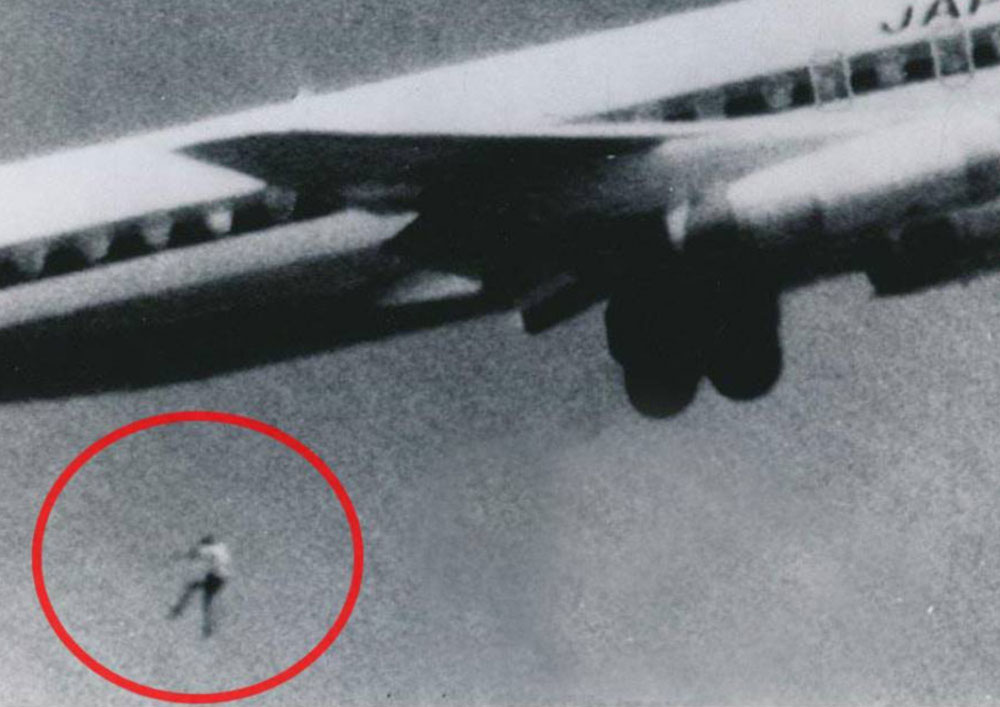
On February 22, 1970, 14-year-old Keith Sapsford made a desperate attempt to leave Sydney. He slipped onto the tarmac at Sydney Airport and climbed into the wheel well of a Japan-bound Douglas DC-8, apparently hoping to travel without a ticket. Moments after the aircraft took off, the landing gear began retracting and the compartment opened. Keith fell roughly 200 feet to his death. By an extraordinary coincidence, amateur photographer John Gilpin was photographing aircraft at the airport that day and unknowingly captured the moment on film.
Keith Sapsford Was a Boy Who Wanted to See the World
Keith Sapsford grew up in Randwick, Sydney, and was remembered by his family as a restless and curious teenager. His desire to travel was so strong that his parents had previously taken him on an overseas trip, hoping that seeing the world would satisfy his curiosity. Instead, the experience appears to have made him even more determined to explore beyond Australia.
After returning home, Keith continued to run away. His parents eventually sent him to Boys’ Town, a Catholic residential institution for young people in Engadine, in an attempt to give him more structure. But Keith did not remain there for long. He escaped and eventually made his way to Sydney Airport.
His father, Charles Sapsford, was a university lecturer in engineering and understood that hiding inside an aircraft’s landing-gear compartment was extremely dangerous. Contemporary accounts indicate that he had even warned Keith about the dangers after hearing of another young person who had died attempting something similar. Yet Keith was determined to leave and see the world.
That determination ultimately led him to the airport on a February day in 1970.

He Hid Inside the Wheel Well of a Plane Bound for Tokyo
Keith managed to reach a Japan Air Lines Douglas DC-8 that was preparing to depart Sydney. He climbed into the aircraft’s wheel compartment and apparently remained hidden while the aircraft prepared for takeoff.
The decision was extraordinarily dangerous because a landing-gear compartment is not a passenger cabin. It contains moving mechanical components, and the doors are designed to open as the landing gear retracts after takeoff.
Keith apparently did not understand what would happen once the aircraft left the ground.
As the DC-8 climbed, the landing gear began retracting. The compartment doors opened, and Keith fell from the aircraft at an altitude of roughly 200 feet, or about 60 meters. He died in the fall.
The danger would not have ended even if he had somehow remained inside. A wheel well is unpressurized and exposed to extremely cold temperatures and very low oxygen levels at cruising altitude. Aviation safety research has since documented the severe risks faced by people who attempt to hide in aircraft landing-gear compartments.
What makes Keith’s case especially tragic is that he was not trying to cause trouble or damage the aircraft. He was a teenager who wanted to travel and apparently did not understand that the place he had chosen to hide could become fatal within minutes.
Want to learn more about Keith Sapsford’s tragic story? Watch the video to see the story behind the photograph and the events that unfolded on that fateful day.
A Photographer Accidentally Captured His Final Moment
The story might have become one more tragic aviation incident from the 1970s if it were not for a remarkable coincidence.
Amateur photographer John Gilpin was at Sydney Airport that day testing a new camera lens and photographing aircraft taking off. He was not aware that anyone was hiding inside the DC-8.
As the aircraft climbed, Gilpin took a photograph.
He did not realize what he had captured.
It was only about a week later, when he developed the film, that he noticed the small figure falling beneath the aircraft. The image showed Keith suspended against the sky, with the enormous airliner above him. Gilpin had accidentally photographed the precise moment of the boy’s fatal fall.
The photograph became an extraordinary piece of visual evidence. It captured an event that lasted only a few seconds and preserved it permanently on film.
Gilpin had simply been trying to photograph an airplane.
Instead, his camera recorded the final moments of a 14-year-old boy whose attempt to leave Australia had ended almost immediately after takeoff.
The photograph was later published by LIFE magazine in its March 6, 1970 issue, helping spread the story far beyond Sydney.

Investigators Found Evidence Inside the Aircraft
After Keith’s death, investigators examined the aircraft and found physical evidence showing that someone had been inside the landing-gear compartment. Reports described handprints, footprints and fibers from the boy’s clothing inside the area.
Those traces helped establish how Keith had managed to hide aboard the aircraft.
The investigation also made clear how little chance he would have had of surviving a full international flight in that location. The immediate fall had ended his life, but the wheel well itself presented multiple potentially fatal dangers, including extreme cold, lack of oxygen and the aircraft’s mechanical systems.
For Keith’s family, however, the technical explanation could not change the tragedy.
His father later described his son’s overwhelming desire to see the world, saying that his determination to discover how the rest of the world lived had ultimately cost him his life.
That detail gives the story a painful human dimension.
Keith was not an experienced traveler or an adult attempting an elaborate escape. He was a 14-year-old boy with an enormous curiosity about the world who made one decision without fully understanding its consequences.
The Photograph Became a Warning About the Dangers of Stowing Away
Keith’s death was not an isolated example of the dangers of hiding in an aircraft’s wheel well. Stowaways have attempted similar journeys many times, but survival is extraordinarily rare because of the combination of mechanical hazards, extreme cold and lack of oxygen.
Aviation safety literature has documented numerous cases and emphasizes that people hiding in wheel wells can be crushed by landing gear, fall when the compartment opens or suffer severe hypoxia and hypothermia during flight.
Keith’s photograph made those dangers particularly difficult to forget.
Instead of reading a technical report about what can happen inside an aircraft’s landing gear compartment, people could see the danger frozen in a single frame.
The image showed the enormous scale of the aircraft compared with the tiny human figure beneath it. There was no explanation needed to understand what had happened.
The photograph also became a reminder of how quickly a dream can turn into tragedy.
Keith wanted to leave Sydney and see another part of the world. His journey did not even make it beyond the airport.
Yet the image of his fall traveled much farther than he ever could have imagined. It appeared in newspapers and magazines and became one of the most recognizable photographs associated with the dangers of aircraft stowaways.

Keith Sapsford’s story remains one of the most haunting tragedies in aviation history. At just 14 years old, he wanted nothing more than to see the world, but his attempt to hide aboard an aircraft ended only moments after takeoff. The photograph accidentally taken by John Gilpin preserved that final moment and turned a tragic accident into a lasting reminder of how quickly youthful curiosity and a dangerous decision can lead to irreversible consequences.