Earth has survived enormous changes throughout its history, but life on our planet is not guaranteed to remain unchanged forever. An extinction-level event, or ELE, is a catastrophe capable of eliminating a large majority of Earth’s species. Scientists can identify past extinction events through fossils, rocks and chemical evidence, while several potential causes have been proposed for future catastrophes. Some could come from space, others from Earth’s own geological systems, and one possibility comes from humanity itself.
The Sun Will Eventually Become Earth’s Greatest Threat
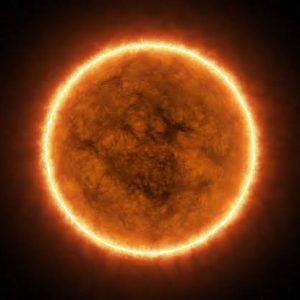
The Sun is essential to almost every form of life on Earth, but its gradual evolution will eventually make our planet increasingly hostile to life. As the Sun continues converting hydrogen into helium, it will slowly become brighter. According to the source, its brightness could increase by roughly 10% over the next billion years, enough to contribute to greater evaporation of Earth’s water. Because water vapor is itself a greenhouse gas, more water in the atmosphere could intensify warming and create a feedback loop.
Over a much longer timescale, the Sun will eventually enter its red giant phase. As it expands dramatically, conditions throughout the inner Solar System will change, making the long-term survival of life on Earth extremely unlikely. This is not an imminent threat, but it illustrates an important point about extinction-level events: some operate on timescales far beyond human history.
The Sun could also produce more immediate hazards. A powerful coronal mass ejection can send enormous quantities of charged particles into space, and a sufficiently severe event directed toward Earth could cause major disruption. Beyond our own star, a nearby supernova or gamma-ray burst could expose Earth to intense radiation and damage the ozone layer. The source notes that scientists have considered such cosmic events as possible contributors to ancient extinction events.

Earth’s Magnetic Shield Could Become Weaker
Earth’s magnetic field acts as an important protective barrier against charged particles from the Sun. But the planet’s magnetic poles do not remain permanently fixed. Geological evidence shows that Earth’s magnetic field has reversed many times, with the north and south magnetic poles switching positions.
Scientists do not know exactly what would happen during a future reversal. The process is not necessarily an extinction-level event, and past reversals have not consistently been associated with mass extinctions. However, periods of weakened magnetic protection could potentially allow more solar wind to interact with Earth’s upper atmosphere. Some research has explored whether changes in the magnetic field may have contributed to certain extinction events in the distant past.
The important distinction is that a magnetic reversal should not automatically be described as a disaster. It is a natural planetary process, and scientists continue to study how the magnetic field changes over time. The potential danger comes from the possibility that a weakened magnetic field could increase Earth’s exposure to certain space-weather effects.

Want to explore these extinction-level threats in greater detail? Watch the video to take a closer look at the catastrophic events that could reshape life on Earth and the science behind these extraordinary scenarios.
A Massive Asteroid Impact Could Change the Planet
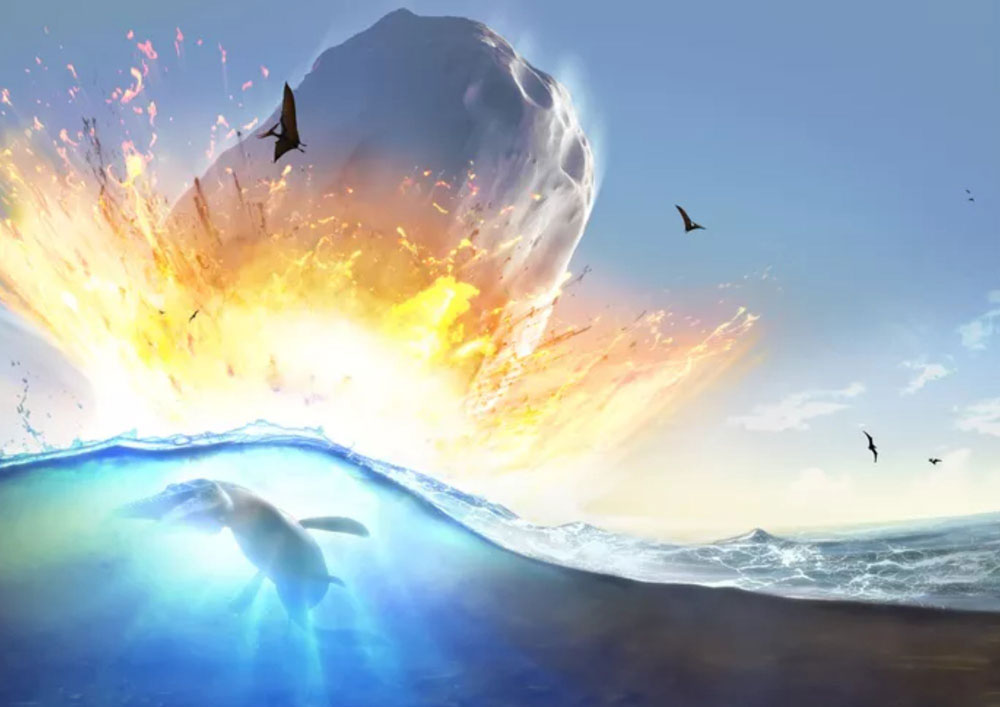
Few extinction scenarios are as familiar as a large asteroid striking Earth. The impact itself would be devastating near the collision site, but the consequences could spread around the entire planet. A sufficiently large impact could generate powerful shock waves, earthquakes, tsunamis and fires, while enormous quantities of debris could be thrown into the atmosphere.
The aftermath could be even more important than the initial impact. Dust and other material entering the atmosphere could alter the climate and reduce the conditions needed for plants to grow. If photosynthesis were severely disrupted, food supplies would decline throughout ecosystems, affecting organisms far beyond the original impact zone.
The Cretaceous-Paleogene extinction is the clearest example connecting a large impact with a mass extinction. Scientists have found strong evidence that an asteroid impact was a major factor in the extinction event that ended the age of non-avian dinosaurs approximately 66 million years ago.
Not every asteroid is an extinction-level threat, of course. Most objects that approach Earth are far too small to cause a global catastrophe. The danger comes from the relatively rare large objects capable of producing effects that extend well beyond the impact site.

The Ocean Could Trigger a Global Chain Reaction
The oceans cover most of Earth’s surface and play a central role in the planet’s climate and chemical cycles. That also means major changes in ocean conditions can affect life far beyond the marine environment.
One potential mechanism involves methane trapped in structures known as methane clathrates. Under certain conditions, these deposits can become unstable and release methane into the atmosphere. Because methane is a powerful greenhouse gas, a large release could contribute to significant climate changes. The source connects this type of process with discussions surrounding events such as the end-Permian extinction and the Paleocene-Eocene Thermal Maximum.
Changes in sea level can also disrupt ecosystems. When sea levels fall substantially, continental shelves can become exposed, eliminating habitats for marine organisms. Major changes in the oceans can then affect ecosystems on land as well.
Another serious possibility is ocean anoxia, when parts of the ocean become severely depleted in oxygen. The source notes that anoxic conditions were associated with several major extinction events, including the Ordovician-Silurian, Late Devonian, Permian-Triassic and Triassic-Jurassic extinctions. Other chemical changes, including fluctuations in essential trace elements and the production of hydrogen sulfide under certain conditions, may also contribute to ecological collapse.
The lesson is that the ocean is not an isolated system. When its chemistry, temperature or circulation changes dramatically, the effects can spread throughout the global ecosystem.

Volcanoes and Extreme Climate Could Collapse Food Chains
Volcanic eruptions are among the most important geological forces associated with major extinction events. Large eruptions can release enormous quantities of dust, sulfur compounds and carbon dioxide into the atmosphere. Each can influence the environment in different ways.
Dust and other particles can reduce the amount of sunlight reaching Earth’s surface, potentially interfering with photosynthesis. Sulfur compounds can contribute to acid rain, while carbon dioxide can contribute to long-term warming. When these effects occur on a massive scale, the consequences can move through entire food chains.
The source highlights flood basalt events in particular, connecting them with major extinction episodes including the End-Permian, End-Triassic and End-Cretaceous events. These were not ordinary volcanic eruptions but enormous episodes of volcanic activity that released vast amounts of material over extended periods.
Climate change can also work in the opposite direction. Periods of global cooling and glaciation have been associated with several major extinction events. Falling temperatures can directly stress organisms, while the expansion of ice can lower sea levels and dramatically change marine and terrestrial habitats.
Extreme warming presents its own dangers. Sustained high temperatures can intensify greenhouse effects and contribute to changes in ocean chemistry, including oxygen depletion. In other words, temperature itself may not be the only problem. It can trigger additional changes that make ecosystems increasingly difficult to sustain.

Humanity Could Become Part of the Extinction Equation
Perhaps the most unusual possibility is also the one that involves something humanity can influence directly. Human activity has the potential to create large-scale environmental pressures through several different pathways.
A global nuclear conflict could expose ecosystems to radiation and produce severe atmospheric and climatic consequences. Human-caused climate change can place additional stress on ecosystems, while the loss of large numbers of species can weaken food webs and reduce the resilience of entire environments.
The greatest concern may not be one isolated event.
Extinction events can develop through a cascade in which one environmental change creates another. A major volcanic eruption, for example, could occur in a world already experiencing significant changes caused by human activity. Multiple stresses can interact, making it increasingly difficult for ecosystems to recover.
This is an important distinction when thinking about extinction-level events. They do not necessarily resemble a single dramatic moment in which the entire planet suddenly changes. A mass extinction can instead develop through a sequence of pressures that gradually overwhelm ecosystems.
One species declines. Its disappearance affects another species. Food sources become less reliable. Habitats change. Environmental conditions deteriorate further. Eventually, a chain reaction can become much larger than the original disturbance.

What an Extinction-Level Event Really Means
An extinction-level event does not necessarily mean that every living organism on Earth disappears. The term refers to a catastrophe capable of eliminating a large majority of species. Life itself has survived enormous environmental changes throughout Earth’s history, but many individual species and ecosystems did not.
The seven possibilities discussed here also differ enormously in timescale and probability. The Sun’s eventual transformation is part of the natural life cycle of a star and lies unimaginably far in the future. Asteroid impacts are rare but physically possible. Volcanic, oceanic and climatic changes have repeatedly affected life in Earth’s past. Human-driven environmental pressures are different because they are influenced by decisions being made today.
What these scenarios have in common is their potential to create cascading effects. A single disturbance can alter the atmosphere, oceans, climate or food supply, which can then trigger additional changes throughout the ecosystem.
Earth has survived before, and life has repeatedly adapted and recovered after major crises. But recovery can take millions of years, and the species that eventually emerge may be very different from those that existed before the event.
That is perhaps the most important lesson behind extinction-level events. The planet itself is remarkably resilient, but individual forms of life are not guaranteed the same protection. Some catastrophes are beyond human control, while others may be influenced by how humanity manages its environment and the risks created by its own technology.
The most frightening scenario, therefore, may not be a single dramatic catastrophe. It may be a chain reaction in which several pressures combine until an ecosystem can no longer recover.

Earth has survived countless changes over billions of years, and life has repeatedly adapted after major disruptions. But mass extinctions show that even a resilient planet can experience periods when ecosystems are pushed beyond their ability to recover. Whether the threat comes from space, deep within Earth’s geological systems, extreme climate or human activity, the greatest danger may be the chain reaction created when multiple pressures occur at once. Understanding these possibilities is not about predicting the end of life—it is about recognizing how fragile complex ecosystems can be.