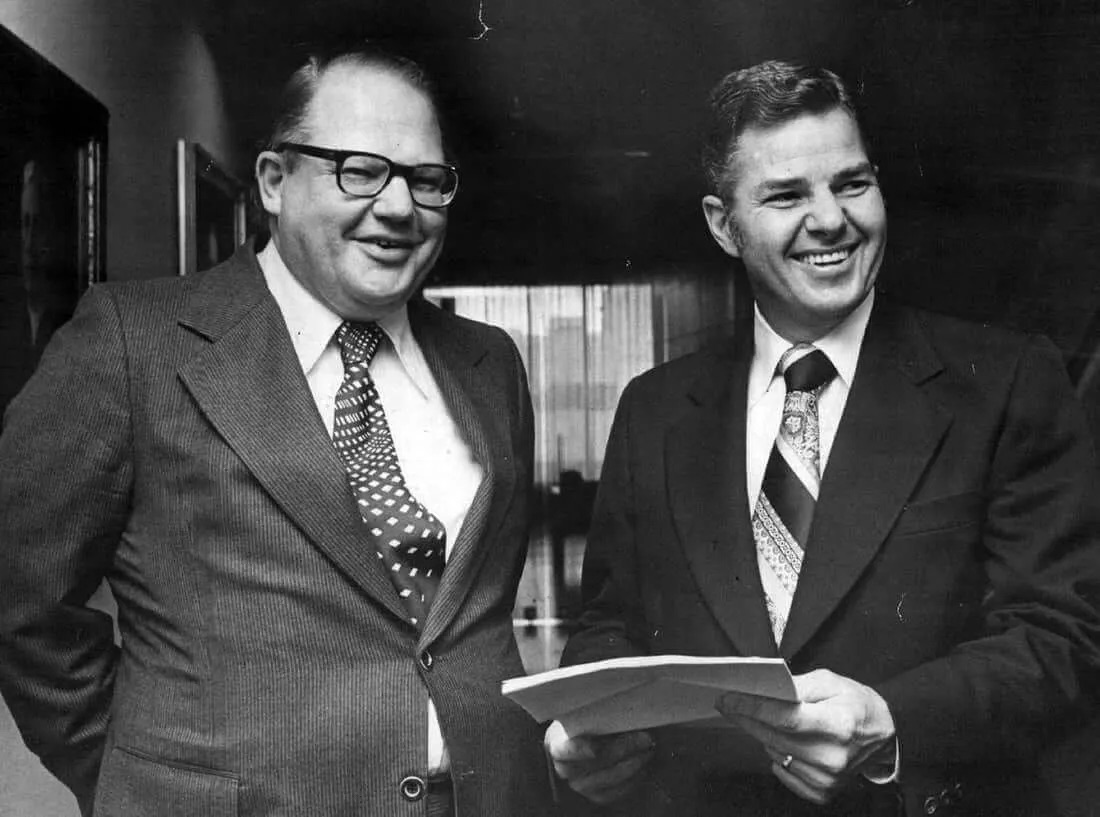
In the late 1970s, two Texas oil heirs made an extraordinary bet on silver. Nelson Bunker Hunt and William Herbert Hunt accumulated enormous physical holdings while also using futures and borrowed money to increase their exposure, helping drive silver toward an extraordinary peak near $50 an ounce in January 1980. Then the market turned. Within months, fortunes built on rising prices had become a liquidity crisis, producing one of the most dramatic episodes in modern commodities history: Silver Thursday.
The Texas Oil Fortune Behind the Silver Gamble
The Hunt brothers did not enter the silver market as ordinary speculators. Their father, H. L. Hunt, built a vast fortune in Texas oil after beginning his business career with cotton and later moving aggressively into petroleum, eventually becoming one of America’s wealthiest oilmen. Nelson Bunker Hunt and William Herbert Hunt inherited that extraordinary financial base and developed their own investment interests during an era marked by inflation, political instability, and concern over the value of paper currency.
Those conditions shaped their view of precious metals. The Hunts became increasingly convinced that tangible assets such as silver could protect wealth as inflation eroded the purchasing power of currencies, and their strategy was built around accumulating metal rather than simply betting on short-term price movements. Nelson Bunker Hunt later cited oil shocks, political turmoil in the Middle East, the Iranian Revolution, the Soviet invasion of Afghanistan, and other events when explaining why he had become so bullish on silver.
At first, the strategy appeared straightforward. Buy silver, hold it, and benefit when a scarce tangible asset became more valuable; but the Hunt family’s scale eventually changed the nature of the trade itself. Once a buyer controls a sufficiently large share of available supply, the market begins responding not only to underlying demand but also to the buyer’s own activity.
Ever wonder how two billionaires almost cornered the world’s silver market? Discover the gripping story of the Hunt brothers, their daring financial gamble, and the dramatic chaos of “Silver Thursday.” Watch now to see how they shook Wall Street and why this legendary market battle still matters today!
How the Hunts Built a Position Too Large to Ignore
The Hunts began accumulating silver in the early 1970s, when prices were around $2 an ounce, and continued buying as the metal appreciated. By the second half of the decade, their strategy had expanded beyond physical bullion into futures contracts, allowing them to control far more silver exposure than they could have purchased outright with cash. Later accounts estimated that the Hunt group and associated traders accumulated more than 100 million ounces, making their position extraordinarily large relative to the available market.
The crucial feature was leverage. Futures contracts allowed the buyers to control large amounts of silver while posting only a fraction of the total value as margin, meaning borrowed funds could magnify both gains and losses. Contemporary reporting later emphasized that the Hunts’ silver position rested heavily on credit arrangements, including bank-backed margin support, rather than being financed entirely with their own cash.
For a while, the strategy looked brilliant. Silver climbed from single-digit prices in the 1970s to more than $10, then $20, and eventually approached $50 an ounce in January 1980, with the Hunts’ purchases forming a major part of the extraordinary increase in demand. The Commodity Futures Trading Commission later summarized the period by noting that Hunt-related acquisitions and those of other large traders were the biggest single source of the change in demand for silver bullion during the second half of 1979 and early 1980.

The Moment Regulators Changed the Rules
The strategy became far more vulnerable once exchanges and regulators responded to the extraordinary concentration in the market. In late 1979, the Chicago Board of Trade imposed position limits and raised margin requirements, while COMEX introduced its own limits in January 1980 and required oversized positions to be reduced. On January 21, COMEX went further by suspending normal silver trading and accepting only orders that reduced existing positions.
These changes mattered because the Hunts needed continued access to financing and the ability to maintain enormous leveraged positions. When the rules made additional speculative buying more difficult, the mechanism that had helped drive prices upward began working in reverse. The market no longer offered the same room for the Hunts to keep adding exposure as prices climbed.
The psychological shift was just as important as the regulatory one. When investors believe prices will continue rising, leverage can make a fortune grow at remarkable speed, but the same leverage becomes dangerous when the price falls and lenders demand additional collateral. Suddenly, the Hunts were not simply choosing whether to sell silver; they were managing a balance sheet under pressure.
Silver Thursday: When the Trade Turned Into a Crisis
Silver reached its extraordinary peak in January 1980, with prices around $50 an ounce, but the rally could not continue indefinitely. As restrictions tightened and the market weakened, the Hunts’ enormous leveraged positions became increasingly difficult to finance, and margin calls began putting pressure on their available cash. The CFTC later described the situation as a vicious cycle in which falling prices made it harder for the large long position to be maintained, increasing pressure to sell and pushing prices down further.
The climax came on March 27, 1980, remembered as Silver Thursday. The price of silver plunged dramatically, falling by more than half in a single day according to contemporary accounts, while the Hunts’ brokers began liquidating collateral to raise the cash needed to meet obligations. The Washington Post reported at the time that the brothers had effectively run short of cash, revealing how heavily their supposedly immense fortune depended on a vast credit structure behind the silver position.
The numbers make the reversal extraordinary. A position that had appeared capable of creating billions in paper wealth suddenly generated enormous liabilities once silver collapsed, because futures losses and margin obligations had to be settled in cash. What had looked like control over a valuable asset had become a race to find liquidity before creditors forced more positions onto the market.

The $1.1 Billion Lifeline and the Aftermath
The collapse threatened more than the Hunts themselves. Their brokers, banks, and other financial institutions had become deeply involved in the financing structure, creating fears that the failure of the silver position could spread beyond the commodities market. Contemporary reporting described the episode as a moment when Wall Street itself was pushed toward panic, while several banks ultimately helped assemble a credit line of roughly $1.1 billion to address the immediate obligations.
That rescue did not restore the Hunts’ fortune. Silver remained far below its peak, while the brothers faced enormous financial pressure, lawsuits, tax liabilities, and eventually bankruptcy proceedings; by the late 1980s, both corporate and personal bankruptcy had become part of the aftermath of the silver speculation. The CFTC later reached settlements with the Hunts that included multimillion-dollar penalties and bans from trading commodities in U.S. markets.
The legal story also became part of the historical debate over the episode. Federal regulators and later litigation accused the Hunts of attempting to manipulate or corner the silver market, while Nelson Bunker Hunt denied that allegation and maintained that his purchases reflected a genuine belief in silver as a valuable asset. The CFTC’s historical record confirms that the period became a defining example in the development of modern rules concerning position limits, margin requirements, and concentrated futures positions.

What the Hunt Brothers Taught Wall Street About Leverage
The most important lesson of the Hunt episode is not simply that silver prices can crash. It is that wealth, leverage, and liquidity are three different things, and confusing them can destroy even an enormous fortune. The Hunts owned assets worth billions at the height of the boom, but much of their exposure was financed through credit, meaning their survival depended on being able to meet cash obligations when prices moved against them.
The episode also demonstrated why market concentration becomes dangerous when combined with leverage. A very large position can help push prices higher when buying pressure dominates, but once that position needs to be reduced, the same concentration can magnify the decline. The CFTC later described the mechanics of the silver collapse as a feedback loop in which attempts to liquidate a huge long position could themselves drive prices lower, increasing the pressure on the position.
For investors decades later, the Hunt story still feels remarkably modern. The asset may be silver rather than stocks, cryptocurrencies, real estate, or another fashionable trade, but the underlying pattern remains familiar: confidence creates leverage, leverage creates concentration, concentration creates fragility, and a sudden reversal exposes how little room there was for error.

The Billion-Dollar Lesson From Silver Thursday
The Hunt brothers did not lose because silver suddenly became worthless. They lost control because an enormous position was built on a combination of rising prices, leverage, concentrated exposure, and continued access to credit. When regulators changed the rules and the market reversed, the same structure that had amplified their gains magnified their losses, turning a spectacular commodity bet into a historic financial crisis.
Their story remains one of the clearest examples of why being wealthy is not the same as being liquid, and why owning valuable assets does not guarantee the ability to meet short-term obligations. Silver Thursday became a landmark not simply because prices collapsed, but because it exposed the financial machinery underneath one of the most aggressive market bets of the twentieth century. More than four decades later, the lesson remains remarkably simple: the bigger the position, the less room you have for the market to be wrong.
This article was developed from Scottsdale Mint’s historical account of the Hunt brothers, the Commodity Futures Trading Commission’s historical record of the 1979–1980 silver market, and contemporary reporting from The Washington Post and Los Angeles Times on the Hunts’ financing, market collapse, and aftermath. Source: https://www.scottsdalemint.com/articles/2024/the-hunt-brothers-how-two-billionaires-broke-the-silver-market/