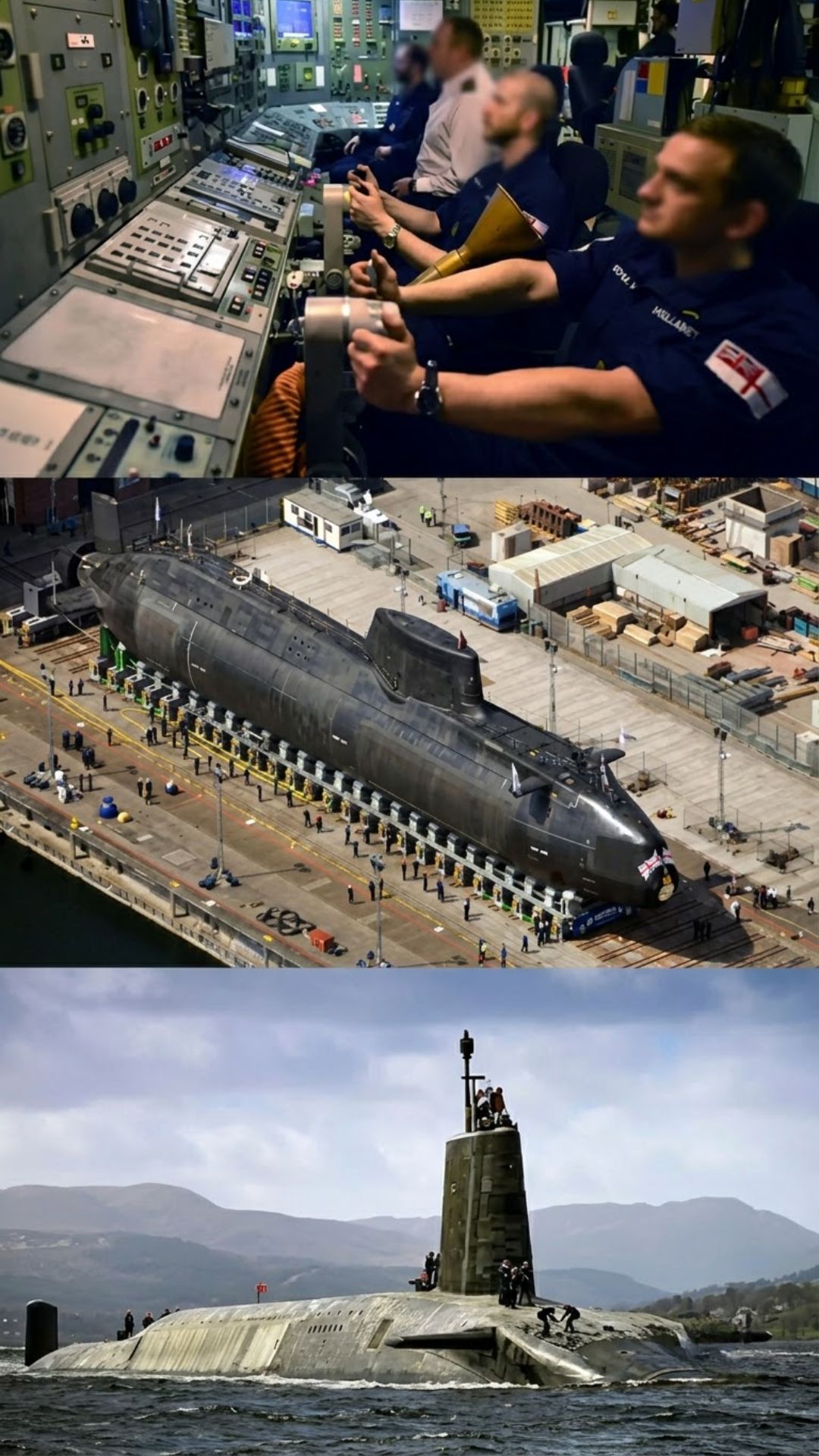
For weeks at a time, about 100 sailors lived inside a steel submarine beneath the ocean, with no windows, almost no personal space and nowhere to simply step outside. Their world was a 350-foot tube packed with machinery, bunks and a nuclear reactor, designed to remain underwater for long periods without returning to port. Sleep came in strange shifts, seawater had to be distilled for drinking and showering, and even the sound of a treadmill could matter. For former submarine officer Steve Weiner, learning to live in that environment meant discovering how comfortable a person could become with discomfort.
Life Began With Learning How To Handle Confinement
Weiner served aboard the USS Connecticut, a Seawolf-class nuclear submarine, during the early part of his career. His longest deployment lasted about two months and took him beneath the Arctic ice toward the North Pole, where the crew worked alongside scientists studying the Arctic environment and testing sonar and underwater communications. For the sailors onboard, however, the biggest challenge was not simply being underwater. It was learning to function normally in a place where ordinary ideas of space, privacy and time no longer applied.
That process began before an officer ever reached the submarine. The U.S. Navy’s nuclear program, shaped for decades by Admiral Hyman Rickover, placed enormous emphasis on technical ability and composure under pressure. Weiner described an intensive training program in which nuclear power students faced demanding technical coursework, frequent testing and long hours of study. The goal was not merely to teach officers how a reactor worked, but to prepare them to make correct decisions while responsible for a complicated machine operating beneath the ocean.
Once onboard, Weiner spent his first year learning practically every part of the submarine while supervising reactor operations. Eventually, after earning his submarine warfare qualification, he became responsible for navigation and coordinating operations as Officer of the Deck. By then, the submarine was no longer simply a vessel he served on. It had become an entire artificial world in which the crew had to produce many of the things people normally take for granted.
Ever wondered how submariners survive months deep underwater? From cramped sleeping quarters to high-stakes operations in the Arctic, discover the secret life inside a nuclear submarine. Experience the discipline, teamwork, and resilience required to live beneath the waves. Watch this fascinating deep dive into life on a submarine today!
The Submarine Had To Make Its Own Air And Water
A nuclear submarine can remain underwater for long periods because its reactor provides propulsion and electrical power without requiring the vessel to surface for fuel. But energy is only one part of keeping roughly 100 people alive in a sealed environment.
Fresh water had to be produced from seawater through distillation for drinking and showering. The submarine also had systems designed to generate oxygen, although Weiner recalled that the electrolysis machine used to split water molecules was frequently unavailable. In those circumstances, the crew burned chemical oxygen candles that produced breathable air.
That detail gives a very different picture of submarine life from the one suggested by the word “nuclear.” The reactor was an extraordinary piece of engineering, but daily life still depended on hundreds of ordinary tasks being performed correctly. Water, air, electricity, machinery and navigation all had to work together, because there was no convenient way to leave the submarine and fix a problem from outside.
Communication with the surface was also limited. The crew could send text-only emails to friends and family at certain times and from certain locations, with restrictions designed to protect the submarine’s secrecy. Life continued back home while the sailors experienced it only through fragments of information. Holidays, family events and ordinary moments happened without them.

A Bunk Was Sometimes Shared By More Than One Sailor
The lack of personal space was perhaps the most obvious difference between submarine life and life on land.
Weiner considered himself fortunate because, as an officer, he shared a small stateroom with only two other men. Most sailors had a much less private arrangement. Up to 18 crew members could sleep in a bunk room, with sailors taking turns using the same racks. The practice became known as “hot-racking,” because one sailor could climb into a bunk shortly after another sailor had left it.
Even the bunk itself offered very little privacy. A curtain provided the small amount of separation available, while the bunk rooms were expected to remain exceptionally quiet. Slamming a door or setting an alarm could disturb people who were sleeping before their next watch, so sailors were sometimes awakened personally by another crew member.
This meant that rest could not be treated like a normal part of the day. There was no quiet bedroom at the end of a hallway, no window showing whether it was morning or night, and no possibility of going outside for a few minutes. The crew had to create its own rhythm inside the submarine.
24 hours. A nuclear submarine. The middle of the frozen Arctic Ocean. Submerge into one of the most extreme missions on Earth. Don’t miss this one!
The Crew Lived On An 18-Hour Cycle
Time itself became strange beneath the ocean.
Instead of following a conventional 24-hour day, the crew worked on an 18-hour cycle involving watches, training, meals, drills, maintenance and sleep. Because the cycle did not match a normal day on the surface, the sailors’ circadian rhythms were constantly shifting. Weiner recalled that despite the amount of coffee he drank, he could fall asleep almost immediately when he reached his bunk.
Exercise was another problem. A submarine cannot simply make room for a full gym, and noise matters when the vessel is trying to remain difficult to detect. Weiner sometimes exercised on a rowing machine or stationary bicycle squeezed into available spaces. A treadmill was a different matter because the repeated sound of footsteps could be detected by sonar, so its use depended on the submarine’s circumstances.
Even diving required extraordinary attention to detail. Before submerging, officers visually checked thousands of valves to make sure systems were correctly positioned and capable of bringing the submarine back to the surface if something went wrong. After the submarine descended, crew members checked for leaks before settling into the endless rotation of watches, training, meals, maintenance and sleep.
The submarine was therefore not simply a place where people lived. It was a carefully controlled environment in which even small mistakes could have consequences.
Silence Was Part Of Staying Safe
A submarine is built to operate underwater, but it is also built around a paradox: it must move through the ocean while making as little detectable noise as possible.
That affected even mundane activities. A person walking on a treadmill produces a repetitive mechanical sound, and underwater sonar can detect noises that would be meaningless on land. As a result, exercise equipment had to be used with the submarine’s tactical situation in mind. What would be harmless noise in a house could become an operational problem beneath the ocean.
The same principle extended throughout the vessel. Machinery, valves and other systems had to be monitored carefully. The crew was surrounded by technology that had to operate reliably while the submarine remained hidden.
For someone accustomed to life on land, the psychological difference was enormous. There was no horizon, no weather, no natural light and no spontaneous change of scenery. The outside world existed somewhere beyond the steel hull, but the crew’s immediate reality was limited to the people and machines inside it.
After Leaving The Submarine, Ordinary Freedom Felt Different
After years of submarine service, Weiner came away with an unexpected lesson. Extended confinement had taught him to let go of anxieties that seemed important on the surface and to become more comfortable with conditions he could not immediately change. Living beneath a vast ocean inside a steel vessel put ordinary inconveniences into perspective.
He later found himself appreciating things that most people barely notice: choosing what to eat, having fresh fruit, controlling his own schedule and simply having 24 hours in a day. Those freedoms are almost invisible when they are available all the time. They become much more noticeable when they disappear for weeks.
That may be the most interesting lesson from submarine life. The remarkable achievement is not simply that a nuclear-powered vessel can travel beneath the ocean for extended periods. It is that dozens of people can build a functioning community inside a confined steel machine and maintain discipline, routines and cooperation day after day.
A submarine forces people to redefine what “normal” means. A shared bunk can become a bedroom. A curtain can become privacy. Distilled seawater can become an ordinary shower. An 18-hour cycle can become a day. And several inches of steel can become the boundary between an entire crew and the ocean surrounding them.
Life inside a nuclear submarine demanded far more than technical skill. Sailors had to adapt to cramped sleeping quarters, shifting schedules, limited communication, artificial air and water systems, strict noise discipline and months spent away from ordinary life. For Steve Weiner, those conditions eventually produced an unexpected benefit: a greater appreciation for freedoms that are easy to overlook on land. The submarine was designed to disappear beneath the ocean, but living inside it taught its crew something very human—how much people can adapt when they have no choice but to do so.
If you want to explore the experience from the perspective of a former submarine officer, Steve Weiner’s original Nautilus essay provides the firsthand account behind this story. Source: https://nautil.us/how-a-nuclear-submarine-officer-learned-to-live-in-tight-quarters-237776