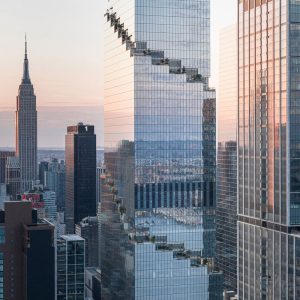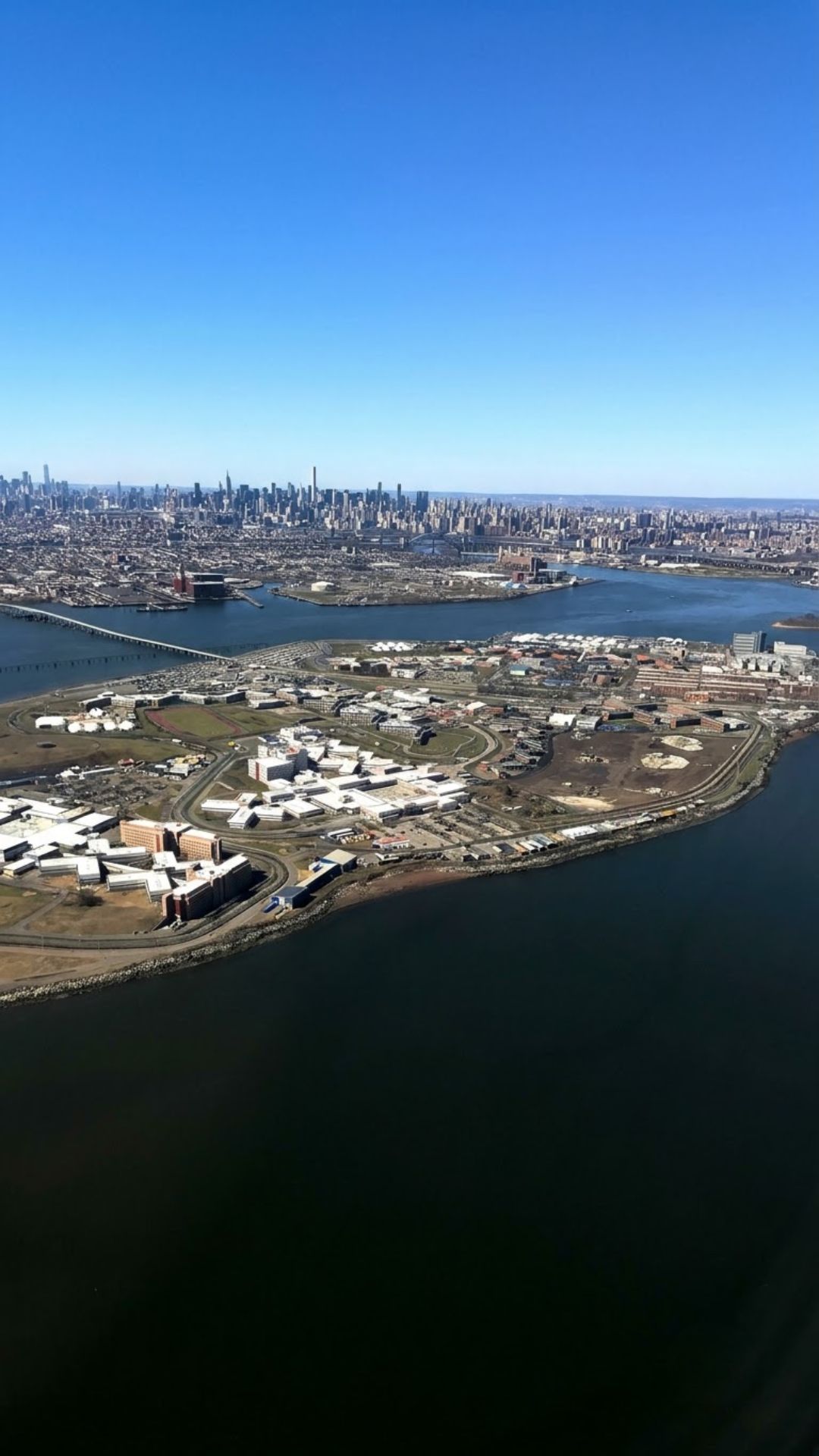
For decades, Rikers Island became one of the most notorious jail complexes in America, a sprawling symbol of violence, overcrowding and a criminal justice system that New York increasingly wanted to leave behind. Then the city proposed something that sounded almost like a dystopian movie: replace the island jails with four new facilities inside New York City, including towers that could rise as high as 45 stories. The designs were later reduced to a maximum of about 29 stories, but the image had already captured the public imagination. New York was trying to close one of its most troubled jails. The strange question was whether the replacement would simply turn the old problem into a skyscraper.
Rikers Island Had Become A Symbol Of Everything That Was Wrong
Rikers Island is not an ordinary jail. Located in the East River between Queens and the Bronx, the complex grew into a vast network of detention facilities that at its height held nearly 22,000 people in 1991. By 2019, the population had fallen to around 7,000, but the island’s reputation had become almost impossible to separate from stories of violence, abuse, overcrowding and institutional failure. For generations of New Yorkers, Rikers had come to represent not simply incarceration, but a system that seemed to have lost control of its own purpose.
The island itself had an unusual history long before it became synonymous with jail. During the Civil War, it was used for military training, and later much of the island became a landfill. The first jail opened there in 1932 with a planned capacity of 2,200 people, but the population quickly exceeded that number. As the city expanded the complex, Rikers became increasingly isolated from the communities, courts, lawyers and families connected to the people being held there. By the time reformers began seriously demanding its closure, the physical location of the jail had become part of the problem.
Ever wondered how a jail can become a skyscraper? New York is building the world’s tallest correctional facility right in the heart of Chinatown. Is this a revolutionary step for justice or a disaster for the community? Dive into the controversy and see the design behind the ‘jail-scraper’ right now!
New York Finally Decided The Island Had To Go
The pressure to close Rikers intensified after the death of Kalief Browder, a teenager from the Bronx who spent three years on the island awaiting trial after being accused of stealing a backpack. Browder spent part of that time in solitary confinement, suffered abuse and beatings, and struggled with severe mental health problems after his release. He died by suicide in 2015 at the age of 22, becoming one of the most powerful symbols of the human cost of the system. His story helped transform the debate over Rikers from a question about old buildings into a question about what incarceration in New York was supposed to accomplish.
In 2017, New York committed to closing the Rikers jails and replacing them with a smaller network of facilities located in the city’s boroughs. The reasoning was partly practical and partly philosophical. Instead of sending people awaiting trial to an isolated island, the new system would place detention facilities closer to courthouses, lawyers, public transportation, medical care and families. The city argued that a smaller jail population and better-designed facilities could create a safer and more humane system.

Then Came The Idea Of A Prison Skyscraper
The replacement plan immediately created a strange visual problem. New York did not have the enormous empty spaces that Rikers occupied, so the new jails had to be built on much smaller urban sites. The solution was obvious from an engineering perspective but startling when translated into architecture: if there was not enough room to spread the jail outward, the building could grow upward. The original designs included towers reaching as high as 45 stories, with the Manhattan and Brooklyn facilities rising dramatically above their surrounding neighborhoods.
The images were difficult to forget. Instead of a sprawling prison hidden on an island, the proposed facilities looked like giant fortified office towers, their small windows creating a stark contrast with the glass skyscrapers surrounding them. Critics argued that this amounted to stacking prisoners vertically, turning detention into a form of architectural storage. The city eventually reduced the proposed maximum height to about 295 feet, or roughly 29 stories, but by then the phrase “skyscraper jail” had already become part of the public debate.
Why Put A Jail In The Middle Of Manhattan?
The obvious question was why New York would move a controversial jail from an isolated island into dense neighborhoods at all. The answer was that the new system was supposed to solve one of Rikers’ greatest weaknesses: its distance from almost everything that could help someone navigate the justice system. Families had to travel to an isolated complex, lawyers faced difficult journeys and people awaiting trial could be physically separated from the courts where their cases were being decided.
The proposed borough-based system therefore represented a fundamental change in philosophy. Instead of treating detention as something that should be hidden from the rest of the city, planners wanted to put the facilities closer to ordinary civic life. That idea was deeply uncomfortable for many residents, particularly in neighborhoods chosen for the new jails, but supporters argued that proximity could make the justice system more accessible and less isolating. The debate was no longer simply about where to put prisoners. It was about whether a modern city should hide incarceration or force itself to confront it.
The Problem With Stacking Prisoners 29 Floors High
A high-rise jail creates problems that do not exist in the same way inside a low-rise or sprawling correctional complex. Windows have to be carefully designed to protect security and privacy, elevators and mechanical systems must be heavily reinforced, and moving people between different floors becomes an important part of everyday operations. Outdoor space is also difficult to provide when the building occupies a small urban footprint.
There is an even deeper problem. People held in jails are not simply units that can be placed efficiently inside a building. Many need medical care, mental health treatment, legal visits, exercise, family contact and access to programs that can help them after release. As the incarcerated population ages, the idea of arranging detention across many vertical levels becomes even more complicated. A building can be engineered to move hundreds of people efficiently, but that does not automatically make it a good place for human beings to live.

One Chicago Prison Had Already Shown What Could Go Wrong
New York did not have to imagine every possible problem from scratch. Chicago already had one of the country’s most famous examples of high-rise incarceration: the Metropolitan Correctional Center, a 28-story triangular building constructed in 1975. Designed as a striking piece of Brutalist architecture, the building demonstrated how dramatically different a jail could look when architects were forced to build upward rather than outward.
But the building also showed the limitations of the concept. Its windows were extremely narrow, and its outdoor exercise space was confined to a small rooftop yard. From the outside, it looked like a severe piece of modern architecture; from the perspective of prison design, it raised a much more basic question about whether security could coexist with the privacy, movement and access to outdoor space that incarcerated people need. Similar high-rise correctional facilities were built in New York and San Diego, but the model was never widely replicated.
Could New York Build Something Completely Different?
This is where the story becomes more interesting than the frightening images of concrete towers suggest. Not everyone involved in the debate believed that a borough-based jail system had to reproduce the worst characteristics of Rikers. The Van Alen Institute, working with architects, environmental psychologists, criminal justice experts, former detainees and community members, explored a different idea: what if the new facilities were designed as “justice hubs” rather than simply as prisons?
The idea began with something surprisingly simple: accessibility. Rikers had been difficult for families and lawyers to reach, and the journey itself could become part of the punishment. A new system located near courthouses and public transportation could make it easier for defendants to meet attorneys, appear in court and maintain contact with their families. Instead of treating isolation as a necessary feature of incarceration, the design could deliberately reduce it.

What If A Jail Could Become Part Of The Community?
The “justice hub” concept went even further. Rather than making every part of the building inaccessible to the public, planners imagined spaces that could serve both incarcerated people and local residents at different times. Libraries, medical facilities, exercise spaces, art studios, community gardens and social services could become part of a larger civic environment. The underlying idea was radical: a jail could still be secure without becoming a completely separate world.
That approach challenged one of the oldest assumptions about prisons. Society often treats incarcerated people as a separate category of human beings who should be physically removed from ordinary life. But if rehabilitation is supposed to prepare people to return to that life, total isolation can work against the goal. Architecture cannot solve violence, poverty, addiction or mental illness, but it can either reinforce isolation or make rehabilitation and human contact easier.
The Real Goal Was Supposed To Be Fewer Prisoners
There was another important detail hidden behind the spectacular architecture. The new buildings were not supposed to house the same number of people as Rikers. In 2019, the city said its plan was based on reducing the jail population from around 7,000 to roughly 3,300, reflecting lower crime and a broader shift away from mass incarceration. The idea was therefore not simply to replace one enormous jail complex with four smaller versions of the same thing. It was to build a smaller system for a city that expected to incarcerate fewer people.
That principle remains part of New York’s current borough-based jail program. The city’s present plan calls for four facilities in Manhattan, Brooklyn, Queens and the Bronx, with a combined capacity of 4,160 beds, and describes the new system as smaller, safer and more humane than the old one. Construction is ongoing, while the city continues taking steps toward closing the Rikers complex.

But The Neighborhoods Were Not Convinced
The people living around the proposed sites did not necessarily see the project as a bold experiment in humane justice. In Manhattan’s Chinatown and Brooklyn’s Cobble Hill, residents organized against the proposed towers, and community meetings became intensely confrontational. All four affected community boards ultimately rejected the plans in the 2019 debates. For residents, the issue was not an abstract question about prison architecture. It was about putting large correctional facilities directly into their neighborhoods.
The backlash also exposed a difficult contradiction. New York wanted to move away from the idea of hiding incarceration on an island, but placing jails in ordinary neighborhoods meant asking communities to live beside them. A system that was more accessible to families and courts could simultaneously feel more intrusive to the people living nearby. The city was discovering that a prison does not become socially invisible simply because its architecture becomes more modern.
Rikers Is Closing, But The Argument Is Not Over
The original 2019 timetable imagined Rikers closing by the end of 2026. Reality has been more complicated. The borough-based facilities have taken years to design and construct, while conditions on Rikers have remained a major issue for city officials, courts and reform advocates. In 2026, the city was still advancing construction of the replacement system and taking concrete steps toward transferring unused Rikers properties away from the Department of Correction.
In June 2026, the city permanently closed the North Infirmary Command and transferred it, along with portions of two other unused facilities, to the Department of Citywide Administrative Services. The move was presented as a milestone toward eventually shutting down the jail complex entirely. At the same time, the city appointed a dedicated official to oversee the closure process, reduce the jail population and coordinate the transition to the borough-based system.
The Strange Future Of New York’s Jails
What makes the story of the proposed skyscraper jails so compelling is that the architecture is really a symptom of a much larger transformation. New York is trying to move away from a sprawling jail system built around isolation and toward a smaller system embedded within the city. But once incarceration is brought closer to ordinary life, the city has to confront questions that Rikers allowed it to keep at a distance. What should a jail look like? What should it feel like? And can a building designed to restrict freedom also be designed to help people eventually regain it?
There is no architectural solution that can answer all of those questions. A beautiful building can still contain a broken system, just as an ugly building can sometimes house effective programs and humane staff. But the design matters because buildings shape what people can see, where they can go, whom they can meet and how easily they can maintain connections with the world outside. The challenge facing New York is therefore larger than replacing old concrete with new concrete. It is trying to decide what the physical environment of justice should communicate about the people inside it.
From An Island Prison To A Civic Experiment
Rikers Island was created in a very different era, when separating prisoners from the rest of the city seemed like an obvious solution. Over time, that separation became part of the problem. Families struggled to visit, lawyers faced difficult journeys and the island developed a reputation that made it synonymous with brutality rather than rehabilitation. Closing it is therefore about more than replacing aging buildings. It is an attempt to change the relationship between incarceration and the city itself.
That is why the original skyscraper designs generated such an intense reaction. They appeared to offer a frighteningly literal solution to an impossible urban problem: take a prison that once sprawled across an island and stack it vertically inside Manhattan. Yet behind that unsettling image was a more ambitious idea—that the justice system could become smaller, more accessible and potentially more connected to the communities around it. Whether that promise can survive the realities of construction, security and politics remains one of New York’s great urban experiments.
The Prison Skyscraper Was Never Really The Story
The most memorable image from New York’s 2019 jail debate was a tower with tiny windows rising over the city. It looked like something from a dystopian film, and the reaction was understandable. But the image concealed the deeper reason the city was considering such an unusual building in the first place: New York was trying to end its dependence on Rikers Island and rethink what incarceration should mean.
The real test will not be whether the new buildings look modern. It will be whether the people inside them experience something fundamentally different from the system they replaced. If the new jails simply reproduce the isolation, violence and despair associated with Rikers, then New York will have spent billions changing the architecture without changing the institution. But if the buildings genuinely improve access to courts, families, healthcare, education and rehabilitation, the strange skyscrapers could become something more interesting than prisons. They could become evidence that a city once famous for isolating its jails finally decided to bring its justice system back into public view.
New York spent decades trying to escape the failures of Rikers Island, one of America’s most notorious jail complexes. Its proposed replacement initially looked like something out of a dystopian future: enormous correctional towers rising dozens of stories above ordinary city streets. Yet behind the controversial architecture was a more ambitious idea—fewer people in jail, smaller borough-based facilities and better connections to families, courts and services. Whether that vision succeeds will depend on far more than concrete and steel. The real question is whether New York can build a justice system that is not only newer, but genuinely different.
Source: https://www.theguardian.com/cities/2019/dec/09/new-yorks-high-rise-prisons-what-could-go-wrong