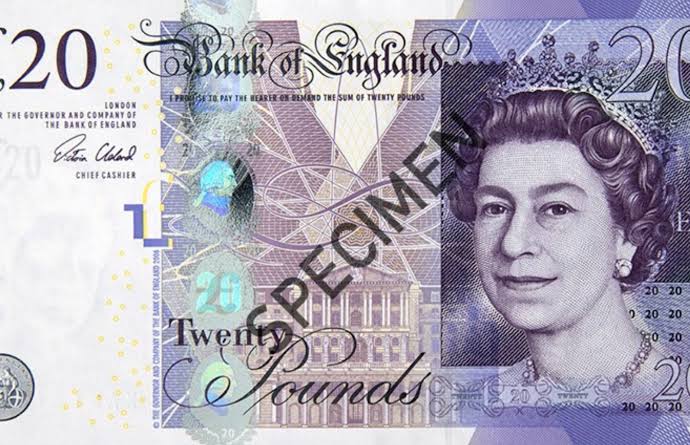
For years, Kenneth Mainstone looked like the kind of businessman nobody would have a reason to suspect. He had no previous convictions, ran a printing company and lived in a £400,000 house in Upminster, Essex. But hidden in an outbuilding on his property was something far more remarkable: a sophisticated four-colour printing press that police said had been used to produce millions of pounds in counterfeit banknotes. By the time investigators uncovered the operation, the gang had produced an estimated £50 million in fake money. Then detectives found the clue that connected the respectable businessman to the secret operation. It was nothing more than a tiny piece of paper inside a bundle of counterfeit notes.
The Man Nobody Expected To Be A Counterfeiter
The scale of the operation was extraordinary. Prosecutors said the gang was responsible for around two-thirds of the forged currency circulating in Britain between 1994 and 1998. The group produced convincing £20 and £50 notes, as well as counterfeit postage stamps, gas stamps and television licence stamps. They were not simply making a few fake bills in a back room; investigators believed they had created an organized operation capable of producing counterfeit money on an industrial scale.
At the center of it was Kenneth Mainstone, a 61-year-old businessman who had no previous convictions. His respectable background was part of what made the case so unusual. He already worked in the printing industry, understood printing equipment and had access to the kind of machinery that could produce high-quality printed material. To the outside world, he appeared to be running a legitimate business. Behind that respectable image, police believed, was a very different enterprise.
Mainstone’s connection to the criminal world came through Stephen Jory. Jory had already been convicted after being found with £1.5 million in counterfeit notes and had served an 11-month prison sentence in 1995. The two men reportedly met after Jory approached Mainstone about printing a book, but their relationship eventually developed into something far more dangerous. Mainstone had the technical side of the operation, while Jory had contacts who could distribute what came off the presses.
That combination gave the counterfeiters something many small-time criminals never had: the ability to manufacture the product and a network capable of moving it into the wider criminal economy.
Ever wonder how one man turned a garden shed into a multimillion-pound money factory? Discover the true story of Kenneth Mainstone, the printer who outsmarted the Bank of England with incredible precision. Don’t miss this gripping true crime documentary—watch now to see how the world’s biggest heist unfolded!
The Secret Printing Press Was In His Garden
The most astonishing part of the investigation was where police eventually found the machinery. Hidden in an outbuilding at Mainstone’s home was a Heidelberg four-colour offset lithograph printing press. This was professional printing equipment, not a crude home setup, and it gave the operation the ability to produce counterfeit notes in significant quantities.
The contrast was extraordinary. Mainstone lived in a valuable suburban property and operated a legitimate printing business, yet the same world of printing expertise had apparently been turned toward counterfeiting. His legitimate company had access to a two-colour press, while the hidden machine had four-colour capability. To anyone passing the property, there was little reason to imagine that one of its outbuildings contained equipment connected to one of Britain’s largest counterfeiting operations.
The counterfeiters had also put considerable effort into making their notes look genuine. Their forged £20 and £50 notes contained features designed to imitate security elements found on real Bank of England notes, including a simulated watermark and metal strip. The fakes were not perfect, but they were convincing enough that an ordinary person could have difficulty spotting the difference without careful examination.
There were weaknesses that experts could identify. The fake £20 notes lacked the raised intaglio lettering used on genuine currency, while the supposed metal security strip had been created by printing it onto the paper and covering parts of it with opaque white ink. But counterfeit money does not need to survive a detailed examination by a specialist to be useful. It only needs to look convincing long enough to change hands.
They Sold Fake Money Into The Underworld
The counterfeiters did not necessarily need to spend every forged note themselves. According to the investigation, fake currency could be sold to criminal contacts for roughly 5% of its face value. A forged £20 note could therefore be worth about £1 to the person producing it, while the person who bought it could potentially try to pass it on at its full value.
That arrangement created a remarkably efficient criminal business. The people making the money did not need to stand in shops and risk being caught using it. The distributors did not need to own an expensive printing press. Each participant could concentrate on a different part of the operation, creating layers between the people producing the notes and the people eventually attempting to spend them.
Police eventually found evidence of the scale of that distribution network at the home of Bernard Farrier on the Isle of Wight. Detectives discovered a carrier bag containing counterfeit notes and stamps. In a shed outside, they found another printing press and sealed packages of uncut fake £20 and £50 notes, including Scottish notes, with a face value of approximately £1.5 million.
The discovery showed investigators that they were dealing with more than a handful of forged notes. The counterfeit currency was being produced in sheets, packaged and prepared for distribution. The operation looked increasingly like a manufacturing business, except that its product was money that did not actually exist.
Then detectives noticed something that had nothing to do with banknotes.
The Tiny Piece Of Paper That Changed Everything
Among the bundles of counterfeit material was an ordinary advertisement for Cranham Caravans. At first glance, there was nothing suspicious about it. But investigators noticed that the advertisement had been printed by Intec Graphics, a company of which Kenneth Mainstone was a director.
That tiny piece of paper gave police an important connection. They had already uncovered counterfeit currency and printing equipment, but now they had a physical link between the operation and a legitimate printing company associated with Mainstone.
The irony was remarkable. The counterfeiters had spent enormous effort reproducing security features, hiding equipment and keeping their communications secret. Yet something completely genuine—a piece of ordinary advertising material—helped point investigators toward the man behind the hidden press.
Police subsequently raided Mainstone’s home and discovered the Heidelberg printing press in the outbuilding. The respectable businessman was now directly connected to the machinery that investigators believed had been used to produce counterfeit money.
The operation that had been concealed behind an ordinary business had suddenly become much harder to explain away.

Mainstone Had An Explanation For The Press
Mainstone denied knowing about the counterfeiting operation. His explanation was that Jory had been using the printing equipment to produce pornography, while another man, whom he identified as Eric, had operated the presses. Police could not trace this supposed Eric.
The explanation placed Mainstone in a difficult position because the existence of the sophisticated equipment itself was not in dispute. The question was whether he knew what was being produced with it. The prosecution argued that he was not an innocent businessman whose equipment had been secretly misused, but a participant in a deliberate conspiracy to manufacture counterfeit currency and forged stamps.
The evidence presented at trial included the printing equipment, counterfeit notes, connections between members of the group and the wider distribution network. Mainstone was eventually convicted by a jury of conspiracy to counterfeit currency notes with intent and conspiracy to forge stamps.
Another defendant, Anthony Wilkie, was convicted of offences involving counterfeit stamps and protected coins. Three other members of the wider group had already admitted their involvement and did not stand trial alongside Mainstone and Wilkie. But the case did not end with every person accused being convicted. Edward Burns, who had been alleged to have supplied paper for the counterfeit operation, was acquitted.
The distinction mattered. The investigation had uncovered a network, but the evidence against individual members was not identical.
Hundreds Of Thousands Changed Hands In A Car Park
In August 1998, police caught Jory in a car park at a TGI Friday’s in Enfield, north London, after he handed counterfeit cash to Martin Watmough. Watmough was found carrying £735,000 in forged notes, arranged in bundles of £1,000. Jory had £15,000 in genuine money, which investigators believed represented a down payment.
The scene was a striking contrast to the hidden printing press at Mainstone’s home. There was no sophisticated machinery and no respectable suburban facade. There were simply bundles of counterfeit currency being transferred from one criminal to another in a public car park.
The money itself told investigators something about how the operation worked. A counterfeit note could begin its journey in a hidden printing room, move through a distributor and eventually reach someone who intended to spend it. By the time it entered an ordinary shop or passed between unsuspecting members of the public, its origins could be almost impossible to see.
That was the real power of the operation. The criminals did not have to convince the entire country that their money was genuine. They only needed enough people to accept individual notes before they moved on.
The Gang Was Forging More Than Money
Investigators discovered that the group’s ambitions extended into other forms of printed value. Alongside counterfeit £20 and £50 notes, the gang produced fake postage stamps, gas stamps and television licence stamps. At least two members were also planning to manufacture counterfeit £1 coins.
Police found enough brass at Wilkie’s home to produce an estimated £40,000 worth of fake £1 coins. The plan never developed into another large-scale operation because the arrests intervened before it could get properly underway.
The variety of counterfeit products showed how the group viewed its printing capabilities. A banknote was not the only thing that could be turned into a source of illegal profit. Anything that represented value and could be reproduced convincingly was potentially useful.
The printing press was therefore more than a machine for making fake money. It was the technological center of a criminal enterprise that could imitate several different forms of official currency and payment.
£50 Million In Fake Money Had Flooded Britain
By the time the case reached Winchester Crown Court in December 1999, the scale of the operation had become clear. The counterfeit currency involved was estimated to have a face value of around £50 million, and investigators said the gang accounted for roughly two-thirds of the forged money circulating in Britain between 1994 and 1998.
That figure sounds enormous, but it needs to be understood correctly. The £50 million represented the face value of the counterfeit notes, not necessarily £50 million in genuine money that the criminals had earned. The gang reportedly sold counterfeit currency into the underworld for about 5% of its face value, meaning the actual proceeds would have been much lower.
Even so, the significance of the operation was enormous. A criminal group had created tens of millions of pounds worth of paper that claimed to be genuine currency and successfully introduced enough of it into circulation to become a major national problem.
The operation had also lasted for years. That meant counterfeit notes could have traveled far beyond the people who originally handled them. A single forged £20 note could pass through several hands before anyone recognized it as fake.
And even after the arrests, there was a possibility that the story was not completely over.
Some Of The Fake Notes May Have Survived
The Guardian reported at the time that some counterfeit notes might still have been in circulation. That possibility was one of the most unsettling aspects of the case because shutting down the printing operation did not automatically remove every forged note that had already entered the economy.
A press can be seized. A criminal network can be dismantled. But once counterfeit currency has been distributed, finding every individual note becomes a very different challenge.
Some would be discovered quickly. Others might be accepted without suspicion. Some could pass through several people before reaching a bank or retailer capable of identifying them.
For ordinary members of the public, the distinction between genuine and counterfeit money might come down to details they never thought to examine. That is what made the operation so effective. The criminals did not need to create perfect money. They only needed to create money that looked real long enough.
The Businessman Who Printed Money In His Garden
What makes the case memorable decades later is not simply the amount of counterfeit money involved. It is the extraordinary contrast between the criminal operation and the people and places surrounding it.
There was no movie-style underground factory hidden beneath a remote warehouse. There was a businessman, a legitimate printing company, a valuable home and an outbuilding containing professional equipment. The criminal enterprise existed alongside ordinary life, concealed by the fact that the people involved appeared to have legitimate reasons to own printing machinery.
That is precisely what made the operation so difficult to spot.
The counterfeiters understood printing. They understood distribution. They understood that most people would never examine a banknote as closely as an expert. For several years, their system worked well enough to put an enormous quantity of forged money into circulation.
But eventually, the details began to connect: a criminal with previous counterfeiting convictions, a printing company, a hidden Heidelberg press, bundles of forged notes, a car-park exchange and finally a tiny piece of legitimate paper that helped detectives connect the world of counterfeit money to the respectable businessman behind the operation. The gang had spent years making fake money look real. In the end, it was something real that gave them away.
The British counterfeiting operation of the 1990s produced an estimated £50 million in fake currency and accounted for a huge share of Britain’s forged notes. Kenneth Mainstone appeared to be a respectable businessman, yet police found a sophisticated printing press hidden at his home. The gang’s operation eventually collapsed after investigators connected the counterfeit notes to his legitimate printing company through a tiny scrap of paper. The criminals had gone to extraordinary lengths to make fake money look real, but one completely genuine piece of paper helped expose them.
This story draws on contemporary reporting from The Guardian about the 1999 Winchester Crown Court case, including the £50 million estimate, the hidden printing press, the counterfeit distribution network and the evidence presented against the defendants. The original report also distinguishes between those convicted, those who admitted involvement and the defendant who was acquitted. Source: https://www.theguardian.com/uk/1999/dec/23/willwoodward