A prison cell can reveal far more about a country than its walls, bars and locked doors. Around the world, inmates live in spaces that range from highly controlled concrete cells to surprisingly comfortable rooms designed around rehabilitation, family and daily responsibility. These differences are not simply about comfort—they reflect very different ideas about punishment, security and what society believes should happen after a prison sentence ends.
When a Prison Is Designed to Prepare You for Life Outside – Norway’s Different Approach
Some of the world’s most unusual prisons are found in countries where incarceration is viewed not simply as a way to punish people, but as an opportunity to prepare them for life after release. Norway is perhaps the most frequently cited example. Facilities such as Halden Prison and Bastøy Prison place considerable emphasis on rehabilitation, responsibility and maintaining some connection with ordinary life.
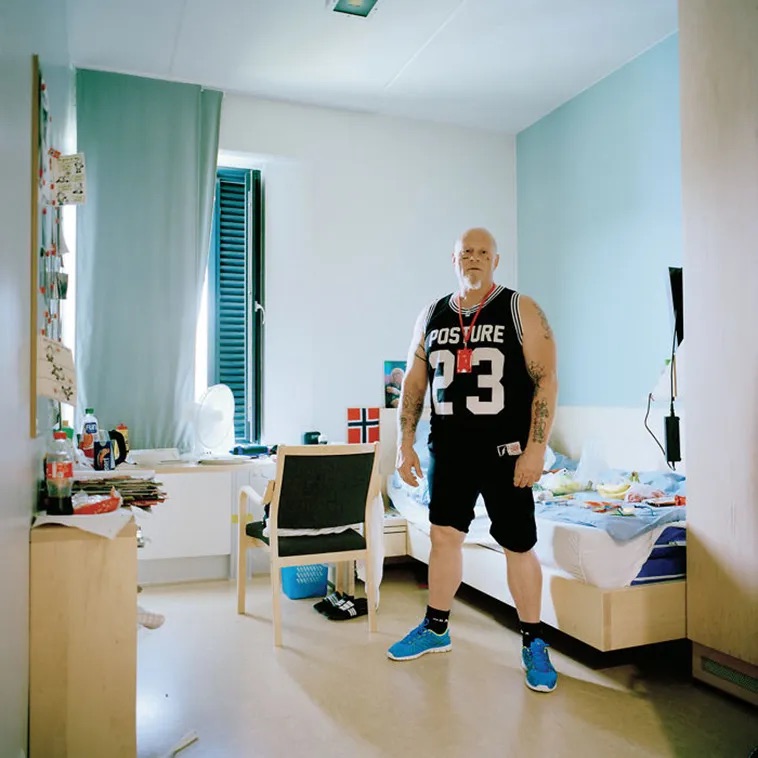
At Halden, cells are designed with natural light, basic furniture and private bathrooms, while the wider facility includes areas for sports, education, music and other activities. The architecture is deliberately less intimidating than the traditional image of a maximum-security prison. Bastøy takes the idea even further, operating across a large island where inmates can work, farm and participate in everyday responsibilities within a controlled community.
The philosophy behind these environments is relatively straightforward: most prisoners will eventually return to society. If that is the case, then a prison can be designed to give people opportunities to develop routines, skills and responsibilities that may help them function once they are released.
That raises an interesting question. Why would a prison deliberately make parts of incarceration resemble ordinary life?
The answer is that the cell itself is not necessarily intended to be the entire punishment. The restriction comes from the loss of freedom, while the conditions inside are designed to maintain a person’s ability to live responsibly when that freedom is eventually restored.
If a person is going back into society, perhaps prison should teach them how to live in it.

The Prisons Where Space Becomes Part of the Punishment
Black Dolphin, Russia
The philosophy changes dramatically in facilities designed for some of the most dangerous prisoners. Russia’s Black Dolphin prison, officially known as Penal Colony No. 6, is associated with inmates convicted of extremely serious crimes and is known for its strict security measures. Prisoners are subjected to close surveillance and heavy restrictions on movement, with multiple layers of security separating them from the outside world.
Here, architecture is primarily about control. Heavy doors, confined spaces, surveillance and carefully managed movement are not secondary details; they are fundamental to the purpose of the facility.
The contrast with Norway is striking. In one system, the environment is designed to preserve as many elements of ordinary life as possible. In the other, the architecture constantly reminds inmates that they are confined and that their movements are controlled.
Neither approach can be understood simply by looking at whether a cell has a comfortable bed or a window. The deeper difference lies in what the prison is trying to accomplish.
Watch the video for a closer look inside prison cells around the world and see just how dramatically their design, conditions and approach to incarceration can differ from one country to another.
When There Isn’t Enough Space
There is another situation in which a cell can become part of the punishment, and that is overcrowding.
Some prisons around the world were designed for far fewer people than they eventually had to accommodate. When dozens of inmates are forced into spaces intended for a fraction of that number, even basic privacy, ventilation and personal space can disappear.
The conditions described at Ciudad Barrios prison in El Salvador illustrate the problem. Cells designed for a limited number of prisoners have at times held vastly more people, turning the lack of physical space into one of the defining features of daily life.
At that point, the architecture itself is no longer functioning as intended. A cell can be designed to contain a person. Overcrowding transforms it into a space where people are simply packed together.
In some prisons, the cell is designed to control you. In others, there simply isn’t enough room for everyone.

From Family Rooms to Prisons Built Around Aging Inmates
When Children Become Part of the Equation
Prison systems also have to confront a difficult reality: prisoners are not isolated from the rest of society simply because they are incarcerated. They remain parents, spouses and members of families.
Spain’s Aranjuez prison is an unusual example. It has facilities designed to allow some incarcerated parents to live with their young children, including spaces intended to make the environment less psychologically harsh for children who have done nothing wrong themselves. Nursery facilities and child-friendly areas help create a setting in which young children can maintain a relationship with their parents despite the incarceration.
This introduces a question that a traditional prison cell rarely considers: what should a prison look like when the person experiencing it is not the only person affected by it?
A steel door may be necessary for security, but a child does not understand the concept of incarceration in the same way an adult does. The architecture therefore has to accommodate two completely different realities at once.
When Prisoners Grow Old
Japan faces another challenge: an aging prison population. Facilities such as Onomichi Prison have adapted parts of their environment and daily routines to accommodate elderly inmates, including features such as handrails and activities suited to older prisoners.
The change is significant because it shows how quickly the meaning of a prison cell can change depending on the person living inside it.
A staircase that presents no difficulty to a healthy 25-year-old may be a serious obstacle for someone in their seventies. A standard prison routine may become difficult when inmates have mobility problems or require additional assistance.
In other words, prison architecture is not designed for an abstract category called “criminals.” It has to deal with actual human beings of different ages, physical conditions and family circumstances.
That makes the design of a prison far more complicated than simply deciding how high the walls should be.

What Should a Prison Actually Be?
Looking at prison cells around the world reveals a fundamental disagreement about the purpose of incarceration.
One philosophy places greater emphasis on punishment, security and deterrence. Under this approach, the prison must create a clear separation between the inmate and the outside world, with architecture designed around surveillance, restriction and control.
Another philosophy puts greater emphasis on rehabilitation. It still removes a person’s freedom and maintains security, but it attempts to preserve enough normality for inmates to develop skills, routines and responsibilities that can help them return to society.
Neither approach can be reduced to a single piece of furniture or a particular type of cell door. But architecture makes these philosophies visible.
A window can represent natural light and a connection to the outside world. A desk can provide a place to study. A shared kitchen can teach responsibility. A heavy steel door can represent security. A crowded cell can reveal a system struggling simply to accommodate the number of people it has incarcerated.
This is why looking at prisons through architecture can be so revealing. Two countries can both call their facilities “prisons,” yet the experience of incarceration can be radically different.
The question ultimately goes beyond whether a cell is comfortable.
It is about what society believes should happen to a person after the prison door closes.
Do we build prisons to punish people for what they did—or to prepare them for what they will do after prison?

A Look Inside Prison Cells Around the World
The differences become even more striking when you see the spaces themselves. From highly controlled maximum-security cells to facilities designed around rehabilitation, family life and aging prisoners, these rooms offer a rare glimpse into how different societies approach incarceration.
Take a look at these prison cells from around the world.


What a Prison Cell Reveals About a Society
A prison cell may look like a simple room, but it represents a much larger decision about justice. The bars, walls, furniture, windows and amount of personal space all reflect what a society believes incarceration should accomplish. Some systems emphasize punishment and control, while others try to preserve dignity and prepare inmates for life beyond the prison walls.
There is no single design that can answer every question about justice. But the next time you look at a prison cell, it is worth asking what its designers were trying to achieve. The room may be small, but the philosophy behind it is anything but.
A prison cell is more than a room with four walls and a locked door. Its size, design and conditions reflect how a society understands punishment, security and rehabilitation. From highly controlled facilities to prisons built around education, family and daily responsibility, these spaces reveal very different ideas about what should happen after someone is sentenced. In the end, the way a country treats its prisoners can tell us something important about how it views justice—and what it believes a second chance should look like.