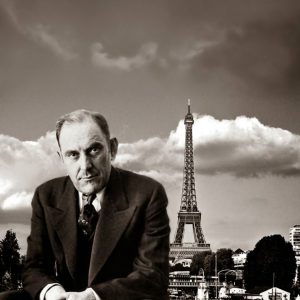
In the 1990s, writer Andrew Nette met an elderly Corsican named Joseph Pantalacci living beside the Mekong River in Vientiane, Laos. He ran a restaurant and seemed far removed from the criminal world of his youth, yet his past belonged to a network that once stretched from French Indochina to Marseille and New York. Decades earlier, that network had helped connect opium producers, Corsican traffickers and American organized crime. The story became known as the French Connection—but the real network reached much farther than Hollywood ever showed.
The French Connection Was A Real Heroin Network
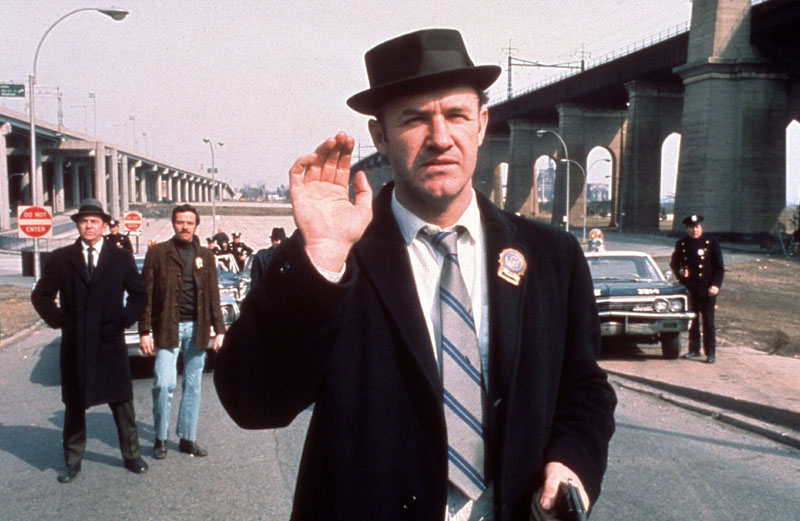
In 1971, The French Connection transformed a real New York narcotics investigation into one of the most famous crime films of its generation. The movie followed detectives Eddie Egan and Sonny Grosso as they uncovered a major heroin-smuggling operation linked to French traffickers.
The real investigation had begun nearly a decade earlier. In 1962, American authorities discovered roughly 64 pounds of pure heroin hidden inside a Buick Invicta that had been imported from France. The passenger, French actor Jacques Angelvin, was arrested, and investigators began exposing the remarkable supply chain connecting Marseille to the American drug market.
Marseille had become one of Europe’s most important centers for refining heroin. Opium grown largely in Turkey could be converted into morphine base, moved into France and processed in clandestine laboratories before the finished heroin was shipped toward the United States.
But there was never a single organization sitting at the top of the entire operation. Corsican traffickers, American Mafia figures, smugglers, corrupt officials and other intermediaries operated through overlapping relationships. That decentralized structure was part of the network’s strength. Authorities could arrest individuals and destroy laboratories, but the wider business was capable of rebuilding itself.

Marseille Was Losing The Heroin War
By the late 1960s, American authorities were attacking the French Connection from several directions. Washington put pressure on Turkey over the production of opium, while American and French investigators worked together against the traffickers and clandestine laboratories operating around Marseille.
The campaign began to produce results. French authorities arrested important figures and dismantled laboratories, while international pressure eventually contributed to major restrictions on Turkish opium production.
For the traffickers, however, the problem was becoming a question of supply rather than demand.
American consumers had not suddenly stopped buying heroin. The market remained enormously profitable, and that meant someone would eventually find another source.
Thousands of miles away, such a source was already developing across the mountains where Laos, Thailand and Burma met. The region would become known as the Golden Triangle, one of the world’s great opium-producing areas. The old route was under attack. The new one was taking shape.
Experience one of the most iconic, heart-pounding car chase scenes in cinema history from The French Connection. Gene Hackman’s unforgettable performance will keep you right on the edge of your seat. Don’t miss out on this classic thriller moment—watch the full clip now!
The Heroin Trade Moved Into Southeast Asia
Opium had been cultivated in the mountains of Southeast Asia for generations. But the Vietnam War dramatically changed the environment in which the trade operated. Remote valleys became connected to cities by military aircraft, private charter planes and expanding commercial networks, while enormous amounts of money poured into the region.
Moving opium overland from isolated mountain areas was difficult. Aircraft offered a much faster alternative.
Historian Alfred W. McCoy documented the involvement of Corsican interests in small airlines and charter operations in Indochina that could transport opium from remote production areas toward cities such as Saigon. The system became associated with the nickname “Air Opium.”
Saigon was particularly important. The city had become a major military and commercial center during the war, and its Chinese district, Cholon, was already home to extensive black-market activity. Narcotics could move through this urban environment before entering larger regional trafficking networks.
This was one of the most important transformations in the history of the French Connection.
The geography was changing, but the underlying business model remained remarkably familiar: find an abundant source of opium, establish transportation routes, process the drug near major population centers and move the finished product toward wealthy consumers.
The supply chain had simply moved thousands of miles east.
The CIA Controversy Began In The Mountains Of Laos
The history becomes considerably more complicated when the secret war in Laos enters the picture.
During the Vietnam War, the CIA supported anti-communist forces in Laos, including Hmong fighters operating in mountainous regions where opium cultivation was widespread. The agency relied heavily on aircraft for covert operations, while Air America served as an important transportation network.
McCoy argued that the covert war and the regional opium economy became deeply intertwined. His research also examined allegations that aircraft associated with Air America had been used to transport opium. Those allegations remain controversial.
The CIA’s involvement in the secret war in Laos and Air America’s logistical role are well documented. But the stronger claim that the CIA itself deliberately ran or controlled a heroin-trafficking operation is disputed, and it should not be presented as an established fact. What is less controversial is the environment created by the war.
Military aircraft were operating across remote regions. Armed groups depended on outside support. Local economies were increasingly connected to international markets. Opium farmers had access to transportation networks that had not existed on anything like the same scale before the war.
In such an environment, the boundaries between military logistics, legitimate commerce, local survival and criminal trafficking could become dangerously blurred. For traffickers, that confusion created opportunities.
Corsican And American Criminal Networks Found New Opportunities
The French Connection did not simply disappear when Marseille came under increasing pressure. Some of the people and relationships associated with the old Corsican networks already had long-standing connections in Southeast Asia.
Corsican involvement in Indochina dated back to the French colonial period. Criminal networks had reportedly operated around activities ranging from opium and prostitution to gold and currency smuggling. Some figures had remained in the region even after French colonial rule collapsed.
Then the Vietnam War created an entirely new commercial environment.
Saigon became a city where huge sums of money moved through hotels, restaurants, transportation businesses, entertainment venues and military supply networks. Most of those businesses were legitimate. But wherever enormous amounts of money move quickly, organized crime tends to look for opportunities.
American criminal interests also had connections to the region. The emerging Southeast Asian heroin trade offered access to a new source of supply at precisely the moment when the traditional Mediterranean pipeline was becoming harder to operate.
McCoy described a 1971 gathering at Saigon’s Continental Hotel involving Corsican syndicate figures connected to Marseille, Saigon, Phnom Penh and Vientiane, along with American Mafia representatives. Whether every detail of such accounts can be independently established, they illustrate the international character of the trade.
The important point is that there was no simple handoff in which one cartel replaced another. The network adapted.

The Connection Survived After The Network Was Broken
By the time Andrew Nette encountered Joseph Pantalacci in Vientiane during the 1990s, the great Marseille heroin network was already part of the past.
Pantalacci was an elderly Corsican restaurateur with an intriguing history. Nette learned that he had likely arrived in Indochina with French colonial forces and had remained connected to a world shaped by the old Corsican presence in Southeast Asia.
Yet Pantalacci denied involvement in Corsican criminal organizations. There was no confession waiting to explain his past, and no simple piece of evidence that could transform the mysterious old restaurateur into a proven crime boss. He died carrying those secrets with him.
His story nevertheless offered a remarkable human link between two eras of the international narcotics trade.
The Corsican underworld had established itself in French Indochina decades before the Vietnam War. Later, Southeast Asia became one of the world’s most important sources of opium, while the Marseille pipeline that had supplied American cities was coming under increasing pressure.
The French Connection was therefore never just a road from France to New York.
It was a network capable of changing direction.
When Turkey became harder to exploit, traffickers looked toward Southeast Asia. When Marseille laboratories were attacked, other processing and transportation routes became more valuable. When individual criminals were arrested, relationships and methods could survive them.
That is what makes the real history more disturbing than the movie.
Hollywood gave the French Connection a dramatic chase through the streets of New York. The historical record reveals something much larger: an international market that could survive the destruction of the people and routes that had once made it famous. The French Connection was broken. But the connection itself survived.
The story of the French Connection was never simply about a group of French criminals smuggling heroin into New York. It was about a constantly changing international network shaped by organized crime, politics, war and enormous consumer demand. When authorities disrupted the Marseille pipeline, the trade did not disappear; its center of gravity began moving toward Southeast Asia. And decades later, an old Corsican living beside the Mekong offered one last connection to that vanished world. The movie ended with a criminal chase. The real story continued long after the cameras stopped rolling.
The history behind this story draws on firsthand recollections and historical research into the French Connection, the Corsican networks in Indochina, and the changing heroin trade during the Vietnam War. Source: https://crimereads.com/50-years-real-french-connection/