On a November afternoon in 1957, a small-town police sergeant noticed something that did not make sense. Expensive cars with license plates from across the country were crowding a rural estate in Apalachin, New York, and the gathering looked suspicious enough to investigate. What Sergeant Edgar Croswell did not know was that he was looking at a meeting of some of the most powerful Mafia figures in America. By the time police closed the roads around the property, 58 men had been detained and dozens more had fled into the woods. The raid did more than disrupt a secret meeting. It forced the FBI to confront a national criminal network it had spent years refusing to recognize.
The Cars That Looked Out Of Place
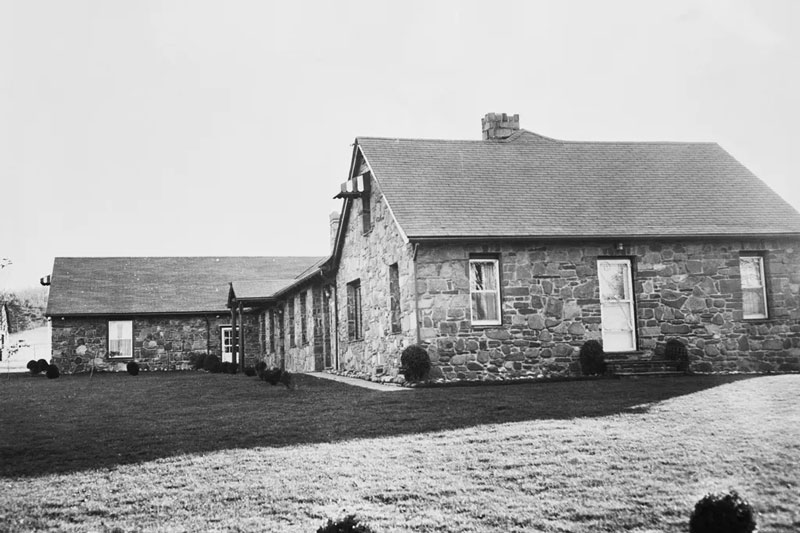
Apalachin was not the kind of place where a parade of luxury cars would normally attract national attention. The small town, west of Binghamton, was quiet and rural, which made the sudden gathering at the home of local beverage distributor Joseph Barbara even more conspicuous.
Barbara himself was not exactly unknown to police. He had an extensive criminal record that included several murder charges, making his property a place Sergeant Edgar Croswell of the New York State Police already knew deserved attention. The day before the gathering, Croswell overheard Barbara’s son booking rooms at a nearby hotel, adding another reason to wonder what was about to happen.
Then the cars began arriving. They carried license plates from states far beyond New York. Croswell and Trooper Vincent Vasisko started recording the plate numbers as the visitors gathered at the Barbara estate.
They still did not know they were watching the country’s Mafia leadership assemble in one place.
What happens when the biggest mob bosses in America gather for a secret meeting? Uncover the true story of the 1957 Apalachin Meeting and how it changed the FBI’s approach to organized crime forever. Watch now!
The Meeting That Was Supposed To Stay Secret
The gathering was presented as a private meeting, with Barbara reportedly describing it as a sort of soft-drink convention. In reality, the men arriving in Apalachin included major figures from organized-crime families around the country.
The meeting was intended to discuss matters involving the Mafia’s criminal operations and relationships. Attendees came from different regions, but investigators would later recognize that many had close business and family connections.
That made the gathering important for one reason above all others: it provided something the federal government had struggled to establish for years.
Evidence that organized crime was not simply a collection of independent local gangs. There was a network. And it was operating across state lines.
The police did not discover this through a sophisticated federal intelligence operation. They discovered it because one state trooper thought the cars looked wrong.
Then Everyone Started Running
As police presence around the Barbara property increased, the people attending the meeting realized they had been noticed.
The response was immediate.
Some guests rushed toward their cars. Others ran directly into the surrounding woods. New York State Police moved to block the roads, catching dozens of people who were trying to leave.
Smithsonian reports that 58 men were captured, while dozens of others escaped on foot.
Among those detained were men who would become some of the best-known names in American organized crime, including Joseph Bonanno, Russell Bufalino, Carlo Gambino, Vito Genovese and Santos Trafficante. FBI historical records similarly describe the gathering as a meeting of representatives from several Mafia families.
The scene was extraordinary: a quiet rural property suddenly surrounded by police, expensive cars abandoned in haste and suspected mobsters running through the countryside.
But the most important consequences would not happen in Apalachin. They would happen in Washington.
The FBI Had Been Looking The Other Way
By 1957, the idea that organized crime existed in America was hardly new. Newspapers had covered gangsters since Prohibition, and a Senate investigation led by Estes Kefauver had already exposed interstate gambling, narcotics trafficking and the penetration of legitimate businesses and law enforcement by criminals.
The Kefauver Committee’s televised hearings in 1951 drew about 30 million viewers.
Yet J. Edgar Hoover, the powerful director of the FBI, continued to resist the idea that an American Mafia operated as a coordinated national organization. The FBI had other priorities, especially as the Cold War intensified and federal agencies focused heavily on communism and suspected subversion.
The disparity inside the FBI’s own New York office was revealing. Smithsonian reports that roughly 400 agents were assigned to investigating “subversives,” while only four were working on organized crime.
The problem was not that nobody in America had ever warned about the Mafia. The problem was that the federal government had not fully accepted what those warnings meant.

Apalachin Made Denial Much Harder
The Apalachin raid changed that. The men captured there did not look like members of unrelated local gangs. They had traveled from different parts of the country to attend the same gathering, and investigators quickly recognized many of them as powerful figures in organized crime.
Suddenly, the theory of a nationwide criminal syndicate had a physical location, a guest list and dozens of people standing in police custody.
The FBI could no longer easily dismiss the Mafia as an old-fashioned collection of neighborhood gangsters. The evidence was standing in front of them.
According to Smithsonian, the Apalachin meeting forced Hoover and the FBI to acknowledge the Mafia as a real national organization. The meeting also demonstrated that the people involved maintained business and family relationships across state lines.
Within four days, on November 18, Hoover ordered the creation of an anti-Mafia initiative. The FBI later established the Top Hoodlum Program, which gathered information on prominent organized-crime figures and their activities.
A meeting in the countryside had finally forced Washington to change its priorities.
The Raid Was Not A Legal Victory
There is an important irony in what happened next.
The Apalachin arrests produced surprisingly little immediate success in court. Prosecutors needed years to build cases connected to the gathering.
Eventually, 20 men were charged with obstruction of justice and convicted. But all of those convictions were later overturned, and the men went free.
So the raid itself did not deliver the sweeping criminal convictions that its dramatic images might suggest. But its importance was never really about how many people went to prison. It was about what the government could no longer pretend it had not seen. The Mafia had been meeting in a single location, and its leaders had traveled there from across the country. That was enough to change the conversation.
From Apalachin To The Modern Fight Against Organized Crime
The federal government still lacked many of the tools investigators would eventually use against organized crime.
The FBI’s stronger legal and investigative powers developed over the following decade. Federal laws in the 1960s and 1970s provided authorities with new ways to investigate and connect criminal organizations, helping the Bureau move beyond pursuing isolated crimes toward targeting entire networks.
That later evolution would become critical in the fight against the Mafia.
But Apalachin was the moment when the government had to admit what it was dealing with.
The meeting demonstrated that organized crime was not simply a leftover from Prohibition. It was an adaptable, interconnected system capable of operating across state lines while building legitimate businesses around illegal activities such as racketeering, loansharking and narcotics distribution.
The system had been there before the raid. What changed was America’s willingness to look at it as a national problem.
The Man Who Noticed The Cars
Sergeant Edgar Croswell never set out to expose the American Mafia.
He saw a suspicious gathering, remembered the history of the house, noticed the out-of-state plates and called for help. His investigation began with a simple question: why were so many expensive cars from around the country gathering at this one property?
That question led to a roadblock. The roadblock led to dozens of arrests.
And those arrests helped expose the structure of a criminal network that federal authorities had spent years underestimating.
It is one of the stranger turning points in American law enforcement history: a national criminal syndicate was not first exposed by an elaborate intelligence operation, but by a policeman paying close attention to an unusual driveway.
The Apalachin meeting of November 14, 1957, became a turning point in America’s fight against organized crime almost by accident. New York State Police Sergeant Edgar Croswell became suspicious after seeing expensive cars with license plates from across the country gathering at Joseph Barbara’s rural estate. When police closed in, 58 men were detained and dozens more fled into the woods. Many of those captured were later identified as important Mafia figures from different parts of the United States. The raid did not produce major lasting convictions—20 men were eventually convicted of obstruction of justice, but all those convictions were overturned. Its larger impact was political and institutional: within four days, J. Edgar Hoover ordered an anti-Mafia initiative, and the FBI began treating organized crime as a national problem. The Mafia had not suddenly appeared at Apalachin. America had finally been forced to look directly at it.
P.S. This story draws primarily on Smithsonian Magazine and FBI historical records about the 1957 Apalachin meeting, Sergeant Edgar Croswell’s investigation, the Mafia figures captured there and the changes that followed. Sources: Smithsonian Magazine; Federal Bureau of Investigation – https://www.smithsonianmag.com/history/1957-meeting-forced-fbi-recognize-mafiaand-changed-justice-system-forever-180967204/