The robbery began before anyone entered the bank. On December 19, 2004, masked men posing as police officers arrived at the homes of two Northern Bank executives in Northern Ireland and took their families hostage. The next day, the two men were ordered to report for work and behave normally, knowing their loved ones could be killed if they refused. That evening, the bank’s vaults were opened from the inside, and a white van quietly carried away £26.5 million. The money disappeared. So did the people who took it.
The Robbery Started With Two Families
The gang’s plan depended on something much more powerful than explosives or sophisticated technology: fear.
The men first targeted Northern Bank executives Chris Ward and Kevin McMullan at their homes. According to the Guardian’s account, the attackers posed as police officers to gain entry before taking the men and their relatives hostage. Ward’s family remained captive while he was taken to McMullan’s home, and McMullan’s wife was transported to a forest south of Belfast.
The following morning, both employees were told to go to work as usual. Their instructions were simple and terrifying: cooperate with the robbery or their families would be killed.
That meant the two bank workers had to spend the day inside Northern Bank while knowing that armed men were holding their loved ones elsewhere. Nothing about the operation was supposed to look unusual. And that was exactly the point.
Two bank employees. Two families held hostage. One impossible heist. You won’t believe how this massive crime was pulled off from the inside. Click to watch the untold story of the Northern Bank robbery.
The Vault Was Opened From The Inside
When the bank closed that evening, the operation moved into its most important stage.
Ward and McMullan were key-holders for the bank’s vault and were forced to give the robbers access. At around 7 p.m., money was loaded into crates and taken to a white van positioned near the building’s loading area. The van returned about an hour later for a second collection.
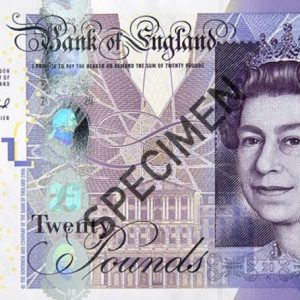
The total haul was estimated at £26.5 million, making it one of the largest bank robberies in British history at the time. The stolen money included £10 million in newly issued Northern Bank notes, £5.5 million in used Northern Bank notes, another £4.5 million in notes issued by other banks, plus smaller amounts in euros, U.S. dollars and other currencies.
The remarkable part was how little the operation resembled a Hollywood bank robbery.
There was no dramatic assault on the vault and no prolonged gun battle. The money was simply brought out from inside the bank and loaded into vehicles while employees followed orders under threat to their families. The robbery worked because the real leverage was being applied somewhere else.

One Wife Escaped And Raised The Alarm
The gang’s control began to unravel later that night.
McMullan’s wife, Karyn, had been taken from the family home and held at an undisclosed location. After spending more than a day blindfolded, she eventually escaped from the area where she had been held.
Despite suffering from exposure, she managed to raise the alarm at about 11:45 p.m. By then, the robbers had already escaped with the money.
The authorities were now dealing with something much larger than a bank robbery. A huge amount of cash had vanished, several people had been held hostage, and the timing had enormous political implications.
Northern Ireland was still in the delicate aftermath of decades of conflict known as the Troubles. Any major organized crime operation linked to paramilitary groups had the potential to affect the fragile peace process. Soon, the robbery became a political crisis as well as a criminal investigation.
The IRA Was Blamed. The Evidence Never Settled It.
Police and British and Irish officials soon said they believed the IRA was responsible. The Police Service of Northern Ireland issued an interim report blaming the organization. Sinn Féin rejected the accusation and said the IRA had neither carried out nor authorized the robbery.
The political argument became intense because of what the robbery represented. If the IRA had organized such a large criminal operation, it raised difficult questions about whether the organization had genuinely moved away from violence and criminal activity.
But there was a critical problem: investigators never produced enough evidence to establish the involvement of a single organization beyond doubt.
The robbery had clearly been carried out by a competent and organized group. Yet identifying who ordered it, who planned it and who physically carried it out proved far more difficult. That uncertainty would follow the case for years.
The Investigation Produced Strange Clues
Police made a series of arrests and recovered some of the stolen money, but the discoveries did not lead them cleanly to the people responsible.
In February 2005, seven suspects, including a member of Sinn Féin, were questioned and later released. Investigators also recovered about £2 million during raids in Cork and Dublin.
Then came one of the strangest finds in the investigation.
About $100,000 in U.S. currency connected to the robbery turned up in the toilet of a police athletics association club at Newforge, outside Belfast. Police said they believed the money had been deliberately planted there to distract detectives and draw attention away from what was happening elsewhere.
If that assessment was correct, the people behind the robbery were not merely trying to escape. They were also trying to shape the investigation after they were gone.
The Alleged Inside Man Went On Trial
Eventually, investigators focused on Chris Ward, one of the bank employees whose family had been taken hostage.
Prosecutors accused him of being the robbery’s “inside man”, alleging that he had helped facilitate the theft and had been involved in the false imprisonment of his colleague and McMullan’s wife. Ward denied the accusations and maintained his innocence.
The prosecution argued that Ward’s position inside the bank and access to the vault made him central to the operation. But the case relied heavily on circumstantial evidence.
During the 2008 trial, prosecutors acknowledged problems surrounding the circumstances in which Ward had been placed on the late shift that evening. After examining the remaining evidence, they decided not to present further submissions.
The judge accepted that decision and found Ward not guilty of the charges before the court. The verdict did more than clear one man. It left the robbery itself without a successful prosecution.
£26.5 Million Vanished, But No One Was Convicted
By October 2008, the scale of the failure was striking.
Ten people had been arrested and three had been charged at different stages of the investigation, yet no one had been convicted of actually carrying out the robbery. The Guardian reported that the robbers themselves remained unidentified.
The Northern Bank robbery therefore became one of those rare crimes in which almost every part of the story seemed to have been reconstructed except the identity of the people who actually carried it out.
Investigators knew the basic sequence. They knew two families had been taken hostage. They knew bank employees had been forced to cooperate. They knew millions had been loaded into vans and driven away.
They even recovered some of the money. But knowing what happened is not the same as knowing who was responsible.
The Real Legacy Of The Northern Bank Robbery
The Northern Bank robbery remains extraordinary not simply because £26.5 million disappeared, but because the entire operation was built around a simple vulnerability: people will do almost anything when their families are threatened.
The thieves did not have to blast open a vault. They did not need to overpower an entire bank. They turned two employees into unwilling participants by holding their loved ones hostage, then used them to gain access to the money.
The case also demonstrated how a major crime can become much larger than the crime itself. In Northern Ireland, the robbery collided with the politics of the peace process, allegations about paramilitary involvement and years of investigation.
Yet the final answer remained elusive. More than two decades after the money disappeared, the most striking fact about the case is still the simplest one: £26.5 million was taken from a Belfast bank, numerous people were arrested or investigated, and the actual robbers were never brought to justice.
For a crime that seemed so carefully planned, its biggest mystery was the identity of the people who planned it.
The Northern Bank robbery began with two families being taken hostage and ended with £26.5 million disappearing from a Belfast vault. On December 20, 2004, two bank executives were forced to go to work and help the robbers gain access to the cash while their relatives remained captive. The money was carried away in a white van, and one hostage eventually escaped and raised the alarm. Police later blamed the IRA, but the organization denied involvement and investigators never produced enough evidence to establish who was ultimately responsible. Years of arrests, raids and a failed prosecution followed, yet no one was convicted of carrying out the robbery. The money made headlines. The people who took it remained a mystery.
P.S. This story is based primarily on The Guardian’s reporting and later coverage of the Northern Bank robbery, including the hostage-taking, £26.5 million theft, investigation and collapse of the prosecution against alleged insider Chris Ward. Source: The Guardian — “Northern Bank robbery: the crime that nearly ended the peace process.” – https://www.theguardian.com/uk/2008/oct/09/northernbankrobbery.background