Los Angeles is known for Hollywood glamour, but some of its most fascinating stories are hiding in places that look completely ordinary. A road trip through the city can take you from Charlie Chaplin’s old studio and a silent-film alley to a legendary Hollywood hotel, a 19th-century building made famous by Blade Runner, storybook cottages near Walt Disney’s former studio, and the massive Queen Mary. Together, these six stops reveal a side of Los Angeles where movie history and real American history are impossible to separate.
The Cinema Road Trip Through Hollywood’s Hidden History
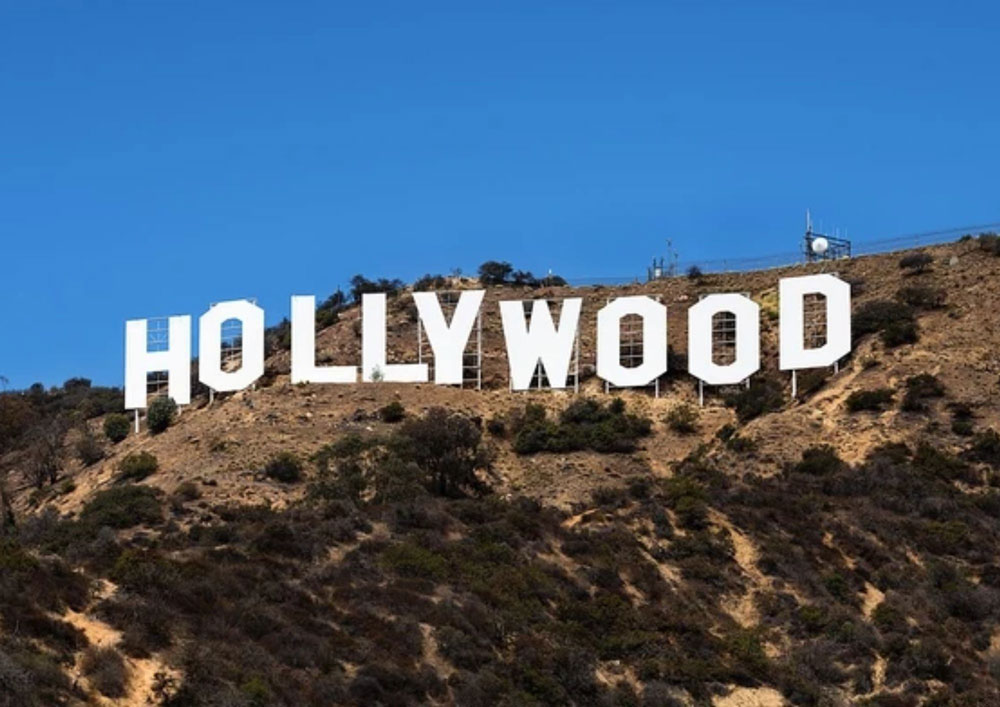
Los Angeles is famous for Hollywood, but some of its most fascinating movie stories are hiding in places that look completely ordinary. Drive beyond the Hollywood Sign and celebrity attractions, and you can find an old studio built by Charlie Chaplin, an unassuming alley where three silent-film legends worked, a hotel tied to the birth of the Academy Awards, and a Victorian building that became part of the futuristic world of Blade Runner.
The journey gets stranger as you continue. In Los Feliz, a cluster of storybook cottages sits near the original site of Walt Disney’s studio. Farther south, a massive ocean liner from the golden age of transatlantic travel waits permanently in Long Beach, carrying with it stories of luxury, war and alleged hauntings.
These aren’t simply movie locations.
They are pieces of Los Angeles history that happened to find second lives on screen.
And that’s what makes this road trip different. You’re not just looking for famous scenes. You’re looking at the places themselves—and discovering what they were before Hollywood turned them into something else.
What if some of Hollywood’s greatest stories are hiding in places you could drive past without noticing?

1. Where Charlie Chaplin Built His Hollywood
Long before Hollywood became an industry worth billions of dollars, filmmakers were working with a much simpler set of tools: cameras, physical sets, actors and the streets of Los Angeles.
One of the most important surviving reminders of that era is the site of Charlie Chaplin Studios.
Chaplin built the studio in 1917, creating a place where he could develop and produce some of his most important films. The property became associated with classics including The Gold Rush and Modern Times, two films that helped establish Chaplin as one of the defining figures of early cinema.
But the story didn’t end when Chaplin’s era faded.
Over the decades, the studio property passed through different film and television uses. From 1960 to 1963, it was home to the Hanna-Barbera animation studio during its early years, when the company was producing shows including The Flintstones and The Yogi Bear Show. Eventually, the property became associated with the Jim Henson Company.

That gives the location an unusual history.
Chaplin’s silent comedies.
Hanna-Barbera’s animated television.
And later, the world of the Muppets.
The gate may no longer look like the entrance to Chaplin’s original studio, but the property has continued to be part of Hollywood’s creative machinery for more than a century.
And nearby, the story becomes even more remarkable.
Watch the story of Charlie Chaplin’s legendary Hollywood studio, from its early days as a film production site to its later life as a recording and creative space. John Mayer, McG and Hollywood historian Marc Wanamaker explore why preserving this piece of Hollywood history still matters today.
2. The Alley Where Three Silent-Film Legends Worked
There is nothing particularly spectacular about Chaplin-Keaton-Lloyd Alley.
It’s a modest passageway just south of Hollywood Boulevard. If you didn’t know its history, you could easily walk past without giving it a second look.
But this single stretch of Los Angeles was used by three of the greatest comedians of the silent-film era.
Charlie Chaplin filmed scenes from The Kid there in 1921. Buster Keaton used the location for Cops in 1922. Harold Lloyd followed with Safety Last! in 1923. All three films are now part of the Library of Congress’s National Film Registry.

Think about what that means.
Within the space of only a few years, three men who would become icons of cinema were using the same ordinary-looking corner of Los Angeles to create comedy that would survive for generations.
Chaplin’s films relied on the Tramp’s physical humor and emotional storytelling. Keaton became famous for his almost expressionless face and extraordinary stunt work. Lloyd brought a different kind of energy, combining comedy with some of the most dangerous-looking sequences of the era.
Today, the alley carries their names.
But its real significance isn’t the plaque.
It’s the realization that Hollywood history wasn’t always created in glamorous places.
Sometimes it happened in an alley.
Some of Hollywood’s most famous scenes were created in places that look completely ordinary today.
3. The Hotel Where Hollywood’s Golden Age Still Lingers
From the streets of silent-film Los Angeles, the journey moves into the era when Hollywood became synonymous with glamour.
The Hollywood Roosevelt Hotel opened in 1927, at a time when the movie business was rapidly becoming one of America’s most powerful cultural industries. Its founders included Douglas Fairbanks, Mary Pickford and studio executive Louis B. Mayer.
Just two years later, the hotel hosted the first Academy Awards ceremony.
The Oscars that people know today—with enormous television audiences, red carpets and global attention—were still a very different institution then. But the Roosevelt was already positioned at the center of Hollywood’s emerging social world.
Over the years, the hotel became associated with some of the biggest names of the era.
Marilyn Monroe stayed there early in her career. Clark Gable and Carole Lombard were also associated with the hotel, and the rooms where they stayed now bear their names.
That gives the Roosevelt something a modern hotel cannot easily reproduce.
Its history isn’t displayed behind glass.
It happened in the rooms, hallways and public spaces around you.
Then there is the darker side of the building.
The Roosevelt has developed a reputation for paranormal activity, with stories involving former guests including Marilyn Monroe and actor Montgomery Clift. Whether you believe those accounts or not, they have become part of the hotel’s mythology.
Hollywood has always sold dreams.
At the Roosevelt, some of those dreams apparently never left.
What would it feel like to spend a night in a hotel where Hollywood’s golden age actually happened?

4. The 1893 Building That Became the Future
Downtown Los Angeles offers one of the strangest examples of Hollywood’s ability to manipulate time.
The Bradbury Building was completed in 1893. Its interior is unlike most buildings from the period, with ornate wrought-iron staircases, open-cage elevators and a vast central atrium beneath a massive skylight.
It was commissioned by mining magnate Lewis L. Bradbury and designed by draftsman George Wyman. Even the building’s creation carries an unusual story: local legend says Wyman consulted a spirit board before agreeing to take on the project.
But the building’s most remarkable transformation happened decades later.
Ridley Scott’s Blade Runner used the Bradbury Building as part of its vision of a dark, dystopian future.
That creates an extraordinary contrast.
A building from 1893 became part of cinema’s imagined future.
The iron balconies and Victorian architecture were not futuristic at all. Yet on screen, lighting, production design and camera work transformed them into something strange and almost otherworldly.
And just across Broadway stands another historic movie palace, the Million Dollar Theatre, which also appears in Blade Runner. The theater opened in 1918 and was the first grand movie palace built by Sid Grauman in Los Angeles.
Together, these buildings demonstrate something special about the city.
Los Angeles doesn’t always need to build a futuristic set.
Sometimes it can take an old building, change the way you see it, and make the past look like the future. How did a building from 1893 become one of cinema’s visions of the future?

5. The Storybook Houses That Look Like They Belong in a Disney Film
The next stop looks completely different.
In Los Feliz, the Snow White Cottages form a cluster of eight storybook-style homes built in 1931. Their steep roofs, timber framing and fairy-tale details make them look almost too whimsical to be real.

Their location makes the story even more interesting.
The cottages stand only a few blocks from the original site of Walt Disney’s studio, where Disney worked from 1926 to 1940. That proximity has helped fuel speculation that the cottages may have influenced the visual language of Snow White and the Seven Dwarfs.
There is no need to prove that connection to appreciate what makes the cottages remarkable.
They look like movie sets without actually being movie sets.
And that is one of the recurring themes of this entire road trip.
Los Angeles contains places that already possess the atmosphere filmmakers spend enormous amounts of money trying to create.
The cottages later appeared in films including Mulholland Drive, adding another chapter to their cinematic history.
They also reveal something about the relationship between Los Angeles and fantasy.
Disney didn’t invent the idea of turning a real place into a fairy tale.
Sometimes the city itself was already doing it. What if one of Los Angeles’ most cinematic places was never designed to be a movie set at all?

6. The Ship That Went From Luxury to War to Hollywood Legend
The final stop takes the road trip far beyond traditional Hollywood.
Permanently moored in Long Beach is the RMS Queen Mary, one of the most famous ocean liners of the 20th century.
Launched in 1934, the ship represented the height of transatlantic luxury. Before commercial air travel transformed international transportation, crossing the Atlantic aboard a ship like the Queen Mary was itself an event.
Then World War II changed everything.
The ship was converted for military service and transported hundreds of thousands of Allied troops. Its wartime appearance earned it the nickname “The Gray Ghost.”
After retiring from service in 1967, the Queen Mary found a permanent home in Long Beach. It was transformed into a hotel and museum, preserving much of its Art Deco character while opening another chapter in its unusual life.
And then came the ghost stories.
The ship has developed a worldwide reputation for paranormal activity, with reports of unexplained sounds, apparitions and strange encounters attributed to its long and sometimes tragic history.
Whether you see the Queen Mary as a historic ship, a wartime relic, a hotel or a haunted attraction, one thing is undeniable:
It has lived several different lives. And that makes it the perfect ending for this road trip.
- You begin with Charlie Chaplin.
- You pass through silent-film history.
- You enter Hollywood’s golden age.
- You walk through Victorian architecture transformed into science fiction.
You discover cottages that look like fairy tales. And you finish aboard a ship that once carried soldiers across the Atlantic. Los Angeles isn’t simply a city where movies were made.
It is a city where places themselves became stories. The best cinema road trip through Los Angeles isn’t just a journey through movies. It’s a journey through the many lives of the city itself.

Los Angeles can make movie history feel surprisingly close. A quiet alley can lead back to Chaplin, Keaton and Lloyd. A hotel can reveal the glamour of Hollywood’s golden age. A Victorian building can become the future in Blade Runner, while a storybook cottage can evoke Disney’s world. Even the Queen Mary carries a history far beyond the movies. These places remind us that Hollywood isn’t confined to studios or screens. Sometimes, the most fascinating stories are waiting just around the corner.