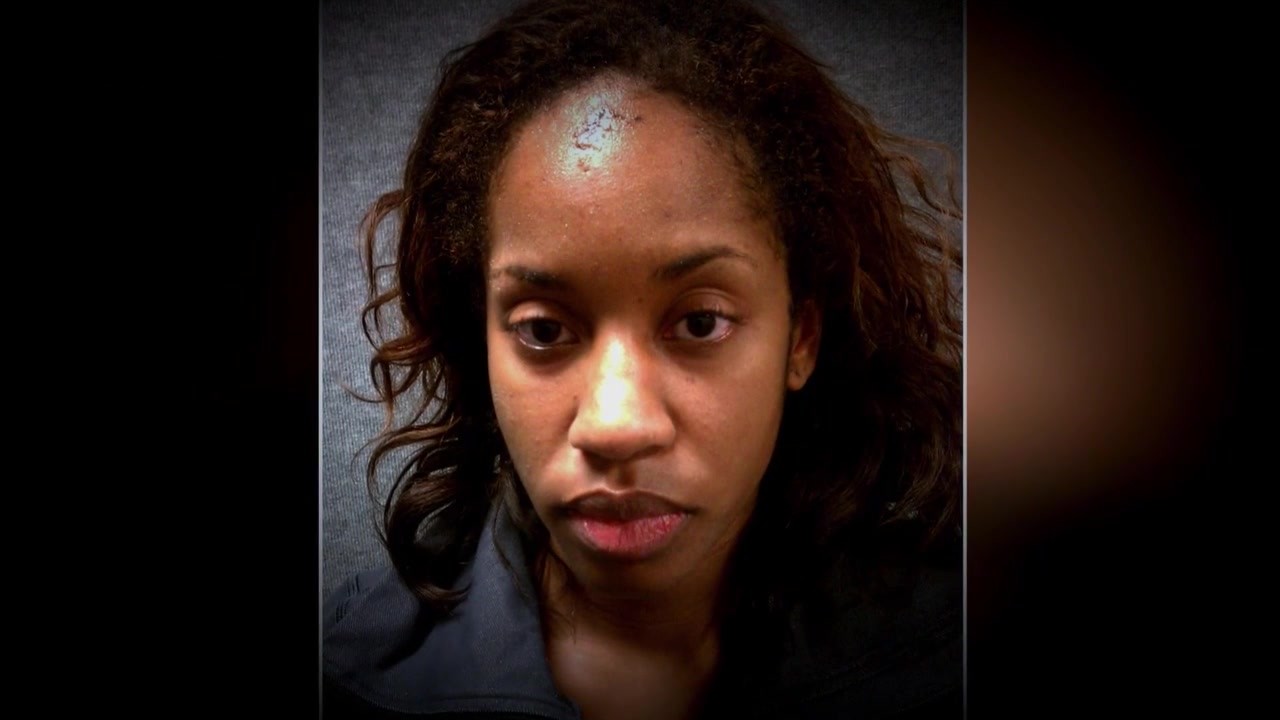
On a Saturday morning in March 2011, an employee arrived at a Lululemon store in Bethesda, Maryland, and immediately knew something was wrong. The store was unlocked, the lights were still on and the building was in disarray. Inside, 30-year-old Jayna Murray was dead, while coworker Brittany Norwood was found injured and tied up in a bathroom. Norwood said two masked men had attacked them. The investigation soon began pointing in a very different direction.
The Story Police Were First Asked to Believe
The night before, on March 11, 2011, Norwood told police she had returned to the store with Murray after closing because she had forgotten her wallet. According to her account, two masked men then entered, attacked both women and sexually assaulted them.
Norwood said Murray resisted and was stabbed to death. The story immediately raised fears in Bethesda that two dangerous men were still at large, while Murray’s family struggled to understand why she had been killed at her workplace.
At first, Norwood appeared to be another victim of the attack. But detectives quickly noticed that some of the details did not fit, particularly the extraordinary level of violence inflicted on Murray and the way Norwood described the two alleged attackers. Instead of confirming her story, the physical evidence began to undermine it.
She told police two masked men had attacked them. But investigators soon began asking a far more disturbing question: was the woman they rescued actually the killer? Watch the video below for a deeper look at the Lululemon murder and the evidence that helped unravel the staged crime scene.
The Crime Scene Started Telling a Different Story
One of the most important discoveries was surprisingly simple: the footprints. Investigators found only two sets at the scene—one belonging to Norwood and another associated with a size 14 shoe that had been found inside the store.
That was difficult to reconcile with the story of two masked male attackers. Police also found Norwood’s DNA in Murray’s car, which had been moved, while investigators said the way Norwood had been tied—with her hands bound above her head—suggested she could have bound herself.
The medical evidence created another major problem. Examiners found no evidence that either woman had been sexually assaulted, while police said Norwood’s injuries were consistent with being self-inflicted. By then, detectives were no longer asking only who had attacked the women; they were asking whether the entire attack had been staged.

The “Masked Men” Were Disappearing
Another clue came from the Apple Store next door. Employees told investigators they had heard two women arguing on the night of the attack, rather than hearing evidence that two unknown men had entered the store. That information fit increasingly poorly with Norwood’s account.
Police began to reconstruct what may have happened inside the store, and prosecutors later argued that Norwood had created a false trail to make detectives believe an outside attacker was responsible. They said she had even put on a shoe from the store to create the large footprints discovered at the scene.
As the evidence accumulated, Norwood’s position changed completely. She was no longer the surviving victim who could help identify two killers; she was the main suspect. On March 18, 2011, exactly one week after the attack, police arrested her.
The Argument That May Have Started It All
The investigation later produced a possible explanation for why Murray was killed. According to the case presented at trial, Murray had discovered that Norwood had stolen a pair of leggings from the store during a bag check conducted under company policy.
The two women argued about the suspected theft, and prosecutors said Norwood then picked up a weapon inside the store and attacked Murray. The violence that followed was fatal.
That theory also gave prosecutors an explanation for the elaborate staging that followed. Instead of simply leaving the store, they argued, Norwood created a completely different story—one involving masked intruders, robbery and sexual assault—to make the killing look like an outside attack.
What had initially looked like a random and terrifying crime was therefore presented at trial as something much more personal: a confrontation between two coworkers followed by an attempt to conceal what had happened.
The Case Ended With a Life Sentence
In November 2011, a jury found Brittany Norwood guilty of first-degree murder. The conviction ended the search for the two supposed masked attackers because prosecutors had argued from the beginning that they never existed.
Several months later, in January 2012, Norwood was sentenced to life in prison without the possibility of parole. She later appealed her conviction in 2015, but a Maryland court rejected the appeal. She remains incarcerated.
The case became known in the media as the “Lululemon murder,” but its most striking feature was not the brand or the location. It was the speed with which the crime scene seemed to change meaning: what looked like an attack by strangers gradually became a case built around one victim, one suspect and a story investigators said had been deliberately constructed.

The Lululemon murder began with what looked like a terrifying attack by two masked men. But footprints, DNA, medical evidence and inconsistencies in the survivor’s story gradually pointed investigators toward Brittany Norwood, who was arrested seven days later and ultimately convicted of first-degree murder. Prosecutors argued that the killing followed a confrontation over a stolen pair of leggings and that the crime scene had then been staged to mislead police. Norwood was sentenced to life without parole and remains behind bars.