Some of America’s most famous criminals are responsible for a crime that is remarkably rare. Yet their names became household words, their faces appeared on television, and their stories turned into movies, books and collectibles. How did killers who should have been forgotten become cultural celebrities? The answer is stranger than simple morbid curiosity—and it begins with the moment America learned to put a name, a face and a story around its darkest fears.
Before America Had a “Serial Killer”
Americans were fascinated by notorious murderers long before the term “serial killer” became common. The case of Jack the Ripper in 1888 attracted enormous attention in the United States, where newspapers and popular fiction followed the mystery and even entertained the possibility that the killer could be American.
A few years later, H.H. Holmes became one of America’s own infamous figures. Holmes was accused of murdering people in and around his Chicago property, later known as the “Murder Castle,” and the Hearst newspapers reportedly paid him $10,000 for his confession. These early cases established something that would become central to the culture surrounding serial killers: the more mysterious the criminal, the more compelling the story became.
The fascination continued into the 20th century. Ed Gein’s crimes in the 1950s shocked the country and later inspired Robert Bloch’s novel Psycho and Alfred Hitchcock’s film, helping move real-life murder further into American popular culture.
But the country still lacked a recognizable framework for understanding this type of criminal. That changed when the FBI stepped in.
Serial killers are rare—but their names became household names. Watch the video below to explore how murderers went from notorious criminals to cultural celebrities, and why America still can’t seem to look away.
The FBI Gave America a Name for the Fear
The phrase “serial murder” had existed before the 1980s, but it was not yet part of everyday American language. In October 1983, the Justice Department held a news conference on FBI research into serial murder and warned that dozens of active serial killers could be operating across the country.
The figures presented at the time dramatically overstated the scale of the threat, but the effect was enormous. Newspapers and television programs suddenly had a new category of criminal to report on, and serial murder became a subject of national fascination.
That moment mattered because giving a phenomenon a name also gives the public a way to recognize it. Americans could now look at apparently unrelated murders and imagine a single predator moving from victim to victim.
Fear became easier to understand—and, just as importantly, easier to package into a story.

Ted Bundy Gave the Serial Killer a Face
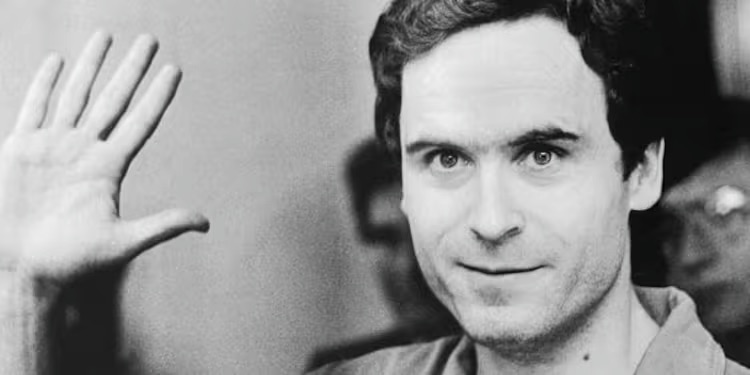
Ted Bundy helped take that story to another level because he did not resemble the monster many people expected. He was educated, articulate, politically ambitious and widely regarded as attractive, qualities that seemed completely incompatible with the crimes for which he was eventually convicted.
That contradiction became part of his appeal to the media. Bundy suggested that a dangerous criminal did not necessarily look dangerous, and the possibility that someone outwardly ordinary could conceal a violent life made the subject feel much closer to home.
The question therefore changed. Instead of asking only what kind of person could commit such crimes, Americans began wondering whether they could recognize such a person standing right in front of them.
The killer was no longer just a criminal. He was a mystery.

Then the Profiler Became the Hero
Popular culture soon introduced another figure to stand opposite the serial killer: the FBI profiler, or “mind hunter.” This character offered audiences the comforting idea that even the most frightening criminal mind could be studied, understood and eventually caught.
The concept became especially influential through writers such as Thomas Harris. His character Jack Crawford in The Silence of the Lambs was inspired by real FBI Behavioral Science Unit figures including John Douglas and Robert Ressler, helping bring the image of behavioral profiling into mainstream entertainment.
This changed the experience of watching a murder story. The audience was no longer simply witnessing violence; it was following an investigation, studying clues and trying to understand the mind of the person being hunted. In other words, serial murder had become a puzzle. And puzzles are much easier to keep watching than facts that have already been explained.
Why Watching Started to Feel Like Learning
There was another reason the subject became so durable. True-crime audiences could view these stories as a way to learn about criminal psychology, investigative techniques and the work of law enforcement, rather than simply consuming stories about violence.
That distinction gave the genre a kind of cultural legitimacy. Viewers could be horrified by the killer while identifying with the investigators, which made the fascination easier to justify.
Over time, the formula became familiar: a mysterious criminal, a psychological explanation, an investigation and the possibility of a final answer. The same structure could then be repeated across television, books, movies and documentaries.
When the Killer Became the Celebrity
Eventually, the criminal himself could become more recognizable than the investigation. Figures such as Jeffrey Dahmer and John Wayne Gacy became cultural touchstones, while fictional characters such as Hannibal Lecter and Dexter pushed the idea even further by allowing audiences to spend time inside the mind of a serial killer.
The strange endpoint of that process was murderabilia—objects connected to famous killers that people collect or buy. HISTORY points to examples such as Gacy’s paintings, a brick from the building where Dahmer lived and a lock of Charles Manson’s hair.
At that stage, the serial killer had crossed a line from criminal subject to cultural commodity. The fascination no longer depended entirely on the original crime; the killer’s identity itself had become something the public could consume.

Why America Still Can’t Look Away
Serial killers remain compelling because their stories bring together several powerful ingredients: fear, mystery, psychology and the promise that a frightening person can eventually be understood. The crimes are rare, but the question behind them is universal: how well can we really judge the people around us?
That may be why the fascination has lasted far longer than any individual case. America created a recognizable mythology around the serial killer—a mysterious predator, an investigator trying to understand him and an audience watching the hunt unfold.
The uncomfortable part is that the culture did not simply discover these criminals. It helped turn them into celebrities.
America’s fascination with serial killers was built over more than a century. Sensational murders created the stories, the FBI gave the phenomenon a name, Ted Bundy gave it a recognizable face, and the profiler gave audiences a hero to follow. Movies, television and collectibles eventually transformed criminals into cultural icons. The strange result is that a form of crime that remains remarkably rare has become one of America’s most enduring forms of popular entertainment.