In 1955, a tiny electric train ran through New York’s Holland Tunnel—not to carry passengers, but to monitor traffic. More than 300 years earlier, someone had built a machine that could hold seven books open at once. And in 1959, engineers were already imagining a robot vacuum. These 10 old technologies may look primitive today, but many were solving problems that sound surprisingly familiar.
The Machine That Held Seven Books Open
More than 300 years ago, researchers at the Palafoxiana Library in Puebla had a problem that anyone working with information would still recognize today: sometimes one book is not enough.
The solution was a remarkable mechanical device that allowed as many as seven books to remain open and within reach at the same time.
Today, the same task might involve opening multiple browser tabs or arranging several documents across computer screens.
Centuries ago, the solution was made of wood and mechanics.
The technology changed completely. The basic need did not.

A Pocket Watch Carved From a Single Emerald
Long before smartphones, smart homes and AI, inventors were already building machines that looked impossibly futuristic for their time. From early robot vacuums to strange mobile phones and futuristic TVs, these forgotten technologies prove that the past was far more inventive than we remember. Watch the video.
One of the more extraordinary objects in the collection is a 350-year-old pocket watch carved from a single Colombian emerald.
Its appeal is not only technological. It represents a time when mechanical engineering and luxury craftsmanship were often inseparable.
Modern watches can contain astonishingly complex technology in a tiny space. This object reminds us that miniature engineering was already pushing boundaries centuries before the digital age.
The materials may be different today.
The fascination with fitting extraordinary complexity into something small has not changed.

The Tiny Train That Watched Traffic
In 1955, New York installed a small electric narrow-gauge train inside the Holland Tunnel to help monitor traffic speed.
It is one of those inventions that sounds fictional until you see it. Instead of relying entirely on modern cameras and electronic sensors, authorities used a dedicated rail vehicle moving through the tunnel as part of a traffic-monitoring system.
Today, the task would likely be handled by cameras, radar and computer networks. But the miniature train is a reminder that engineers often solve modern problems using the technology available at the time—even when the solution involves building a railway inside a road tunnel.

The Shelter That Became a Bed
During the German bombing raids of World War II, British families needed protection inside homes that could collapse around them.
The Morrison shelter was designed for that terrifying possibility. It was essentially a heavily reinforced steel cage that could function inside a house, allowing people to sleep beneath its protective structure during air raids.
The image of a family going to bed inside what looks like an industrial table is unsettling. But it also captures wartime engineering at its most practical: take an ordinary domestic space and turn it into a survival system.

The French Car Only One Person Could Buy
Some automobiles were designed to be machines. The Delahaye 175S Roadster was designed to be an event.
Introduced in 1949, this dramatic French car combined advanced mechanical engineering with extravagant postwar coachwork. Its flowing fenders and sculptural body made it look less like transportation than a machine imagined by an artist.
Only one example of this particular car was made, and it later sold for around $5 million. It represents an era when wealthy buyers could commission automobiles with almost no practical limitations—and when a car’s body could be as individual as a painting.

The Robot Vacuum That Arrived Decades Early
Robot vacuums feel like a product of the smartphone era. Apparently, Whirlpool had other ideas.
At the 1959 American National Exhibition in Moscow, the company displayed a futuristic kitchen concept that included Robo-Vac, a self-propelled vacuum cleaner. The idea was unmistakably ahead of its time: a machine that could move independently around the home and perform a household task without being pushed by a person.
The technology was primitive compared with today’s autonomous cleaners, but the dream was already there. The future simply took another half-century to make it practical.

The Television That Looked Like a Science-Fiction Prop
The Philco Predicta television from the late 1950s remains one of the most recognizable examples of mid-century industrial design.
Its screen sat apart from the main cabinet, giving the television an appearance that still feels futuristic—and slightly strange.
Today, television screens are so thin that they can hang almost flat against a wall.
The Predicta came from a completely different technological world.
Yet it reveals something fascinating about old technology: the future was once imagined through many competing designs.
Not every strange-looking design was a mistake.
Sometimes it was simply a vision of a future that never became standard.

The Diving Suit That Looks Like Something From Another Planet
Known as the “Old Gentleman,” this diving suit dates from 1860 and is described as the world’s oldest surviving diving suit.
To modern eyes, it looks almost otherworldly.
But underwater exploration required engineers to solve a problem that still challenges technology today: how can a human survive and work in an environment the human body was never designed to enter?
The answer in the 19th century was heavy, mechanical and cumbersome.
Modern diving equipment may look entirely different, but the underlying challenge remains one of the oldest in engineering:
How do you take a human somewhere nature never intended them to go?

The Portable Phone That Wasn’t Really Portable by Today’s Standards
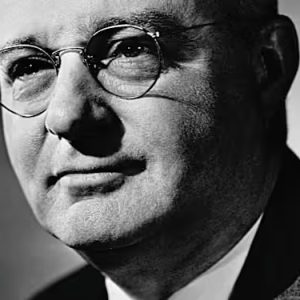
In 1973, Motorola vice president John F. Mitchell helped demonstrate what would eventually become one of the most important technologies of the modern world: the portable cellular telephone.
By today’s standards, the device looks enormous. It was heavy, bulky and almost comically impractical compared with a modern smartphone.
But the idea behind it was revolutionary. Communication was no longer tied permanently to a house, office or car. A person could carry the phone with them.
The object looks primitive because the future eventually becomes much smaller.

The Camera Built to See the War From Above
During World War II, photography was not just about preserving memories. It was an intelligence tool.
The Kodak K-24 was used for aerial reconnaissance, allowing military crews to photograph terrain, installations and enemy positions from the air. Large-format cameras like this produced images with far more detail than ordinary handheld equipment.
Its size and complexity reveal how serious photography once had to be. Today, a drone can capture high-resolution aerial images with equipment small enough to fit inside a backpack. The K-24 required an aircraft.

These 10 technologies are reminders that the past was never as simple or primitive as it appears in old photographs. Engineers and inventors were already experimenting with automation, mobility, communication and futuristic design long before the digital age arrived. Some ideas disappeared because the technology around them was not ready. Others eventually evolved into the devices we use every day. What looks awkward now may simply have been a glimpse of the future—built decades too early.