Some of the world’s greatest engineering achievements began as ideas that seemed almost impossible. Engineers had to cut through mountains, cross deep oceans, control powerful rivers and connect places separated by vast distances. These projects demanded new technologies, enormous financial resources and thousands of workers willing to confront risks that had never been faced before. From tunnels beneath the sea to waterways connecting oceans, these 10 engineering marvels did more than reshape the landscape. They transformed trade, transportation, communication and the way millions of people live.
1. The Panama Canal: The Shortcut That Connected Two Oceans
For centuries, ships traveling between the Atlantic and Pacific Oceans faced an enormous problem. Without a canal across Central America, they had to sail thousands of additional miles around the southern tip of South America.
The Panama Canal changed that forever.
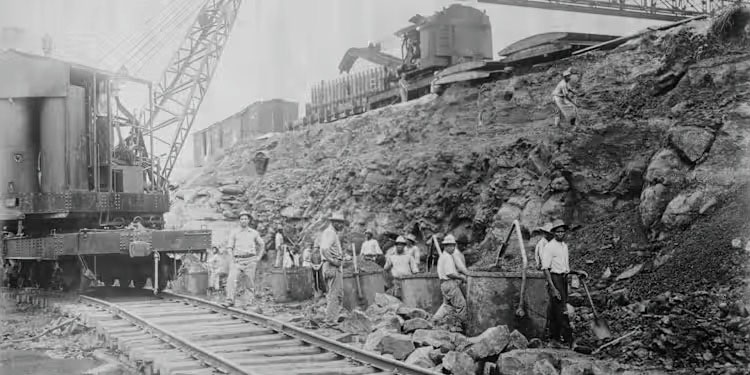
The idea of cutting a passage through Panama had fascinated engineers for decades, but the project proved far more difficult than expected. A French attempt during the nineteenth century ended in disaster. Construction was overwhelmed by engineering problems, landslides and deadly diseases, including malaria and yellow fever.
When the United States took control of the project in 1904, engineers abandoned the original plan for a sea-level canal and instead developed a massive lock system. Ships would be lifted and lowered through a series of enormous chambers while artificial lakes and controlled waterways became part of the route.
The canal finally opened in 1914.
Its impact was immediate and permanent. A journey that once required ships to travel around South America could now be dramatically shortened. The Panama Canal became one of the most important trade routes on Earth and remains a powerful example of how engineering can change global geography without moving a single continent.

2. The Golden Gate Bridge: The Bridge That Challenged Wind and Water
When the Golden Gate Bridge was proposed, the idea seemed almost absurd.
The bridge would have to cross a deep and dangerous strait connecting San Francisco Bay with the Pacific Ocean. Engineers had to deal with powerful currents, strong winds, deep water and frequent fog.
Yet the bridge was completed in 1937.
At the time, its main span was the longest suspension-bridge span in the world. The structure relied on enormous steel cables, massive towers and an engineering design capable of allowing the bridge to move under changing environmental conditions.
Construction was also dangerous. Workers operated hundreds of feet above the water, but a safety net installed beneath the bridge saved the lives of several men who would otherwise have fallen to their deaths.
The Golden Gate Bridge became more than a transportation project. It became an international symbol of American engineering, proving that even an apparently impossible location could be connected when technology and determination came together.

Watch the video below to discover 10 extraordinary engineering marvels that pushed human ambition beyond what once seemed possible. From bridges and tunnels to canals and railways, these projects changed the world forever.
3. The Interstate Highway System: The Roads That Remade America
Not every engineering marvel is a single structure.
Sometimes the greatest achievement is a system.
The Interstate Highway System became one of the largest infrastructure projects in American history. Supported by President Dwight D. Eisenhower and launched through the Federal-Aid Highway Act of 1956, the project aimed to create a vast network of high-speed roads connecting cities and regions across the country.
The system changed how Americans traveled.
Long-distance road journeys became faster and more predictable. Truck transportation expanded dramatically. New suburbs, shopping centers and businesses developed around highway networks.
The project also had a strategic purpose. During the Cold War, an interconnected road network was considered valuable for national defense and emergency transportation.
But the system also came with major consequences. Highway construction transformed cities and, in many cases, displaced established communities.
The Interstate Highway System demonstrates that engineering projects do not merely change the physical environment. They can reshape economies, communities and the daily lives of entire nations.

4. The Transatlantic Cable: The Day Messages Stopped Traveling by Ship
Today, sending a message across the Atlantic takes only seconds.
In the nineteenth century, communication between Europe and North America could take more than a week because information had to travel by ship.
The transatlantic telegraph cable changed everything.
The project required engineers to place thousands of kilometers of cable across the floor of the Atlantic Ocean. Early attempts were filled with technical failures. A cable successfully laid in 1858 operated for only a short period before failing.
But engineers continued.
In 1866, a durable transatlantic telegraph cable finally created a reliable connection between Europe and North America.
The consequences were revolutionary.
News, financial information and diplomatic messages could suddenly travel across the ocean in hours rather than days or weeks. The world became more connected long before the invention of the internet.
The transatlantic cable was one of humanity’s first major victories over distance, proving that engineering could make the physical barriers of geography far less powerful.

5. Hoover Dam: The Concrete Giant That Helped Build the American Southwest
Few engineering projects demonstrate the power of large-scale construction more clearly than Hoover Dam.
Built on the Colorado River and completed during the Great Depression, the dam required an enormous effort involving thousands of workers. Engineers first had to divert the river through massive tunnels before the main structure could be constructed.
When completed in 1935, Hoover Dam was the tallest dam in the world and one of the largest concrete structures ever built.
Its purpose went far beyond simply stopping water.
The dam helped control the Colorado River, provided hydroelectric power and supported water management across the American Southwest. The reservoir created behind it, Lake Mead, became one of the largest artificial lakes in the United States.
The project played an important role in the development of the region and demonstrated how engineering could fundamentally transform an environment shaped by water scarcity and unpredictable river systems.

6. The Channel Tunnel: The Railway Beneath the Sea
For thousands of years, the English Channel separated Britain from continental Europe.
In 1994, engineering changed that relationship.
The Channel Tunnel created a fixed rail connection between the United Kingdom and France. Building it required engineers to construct a complex system of tunnels beneath the seabed, using massive tunnel-boring machines to excavate through challenging geological conditions.
The project involved digging from both sides of the Channel and ensuring that the underground tunnels met with extraordinary precision.
The result was one of the world’s most famous underwater engineering achievements.
For the first time since the Ice Age, Britain had a permanent land-based transportation connection to continental Europe.
The tunnel dramatically changed travel between London and Paris and became a symbol of what modern engineering could accomplish when geography was no longer accepted as an unchangeable barrier.

7. The Transcontinental Railroad: The Tracks That United a Nation
Before the Transcontinental Railroad, crossing the United States was a long and dangerous journey.
Travelers could spend months traveling by wagon, or they could take expensive and difficult routes around the continent.
The railroad changed the meaning of distance.
Construction began with two companies working from opposite directions. The Central Pacific Railroad pushed eastward from California, while the Union Pacific Railroad moved westward.
The project required workers to cross some of North America’s most difficult terrain. Mountains had to be blasted and tunnels excavated. Harsh weather and dangerous working conditions claimed many lives.
Chinese immigrant laborers played an essential role in the construction of the Central Pacific route through the Sierra Nevada.
In 1869, the two rail lines met at Promontory Summit, Utah, where the famous Golden Spike ceremony marked the completion of the railroad.
A journey that had once taken months could now be completed in days.
The Transcontinental Railroad did not merely connect two coasts. It transformed migration, commerce and the development of the American West.

8. The Statue of Liberty: The Monument Held Together by an Invisible Skeleton
The Statue of Liberty is often remembered as a symbol of freedom, immigration and the United States.
But behind its famous appearance is an extraordinary engineering achievement.
The enormous statue was designed in France before being disassembled and shipped across the Atlantic to the United States. Hundreds of pieces had to be transported and reconstructed in New York Harbor.
The challenge was not simply to build a giant statue.
Engineers had to create an internal framework capable of supporting the enormous copper exterior while allowing the outer structure to move and respond to wind and temperature changes.
The result was a sophisticated combination of art and structural engineering.
The Statue of Liberty demonstrates that some of the world’s greatest engineering achievements are hidden. Visitors see the copper surface, the torch and the crown, but much of the technology that makes the monument possible remains invisible beneath the exterior.

9. The Netherlands’ Battle Against the Sea
Most nations adapt to geography.
The Netherlands did something far more ambitious.
It changed the geography itself.
Large areas of the Netherlands are located at or below sea level, making the country vulnerable to flooding and powerful storms. For centuries, Dutch engineers developed increasingly sophisticated systems of dikes, pumps, dams and barriers to control water.
One of the most important projects was the Zuiderzee Works, which included the construction of a massive dam known as the Afsluitdijk. The project helped transform a dangerous inlet into a controlled body of water and created opportunities for land reclamation.
Later engineering projects, including the Delta Works, strengthened the country’s defenses against devastating storm surges.
The Dutch approach is one of the clearest examples of engineering as a form of national survival.
Instead of abandoning vulnerable land, generations of engineers developed ways to live beside—and below—the sea.
The Netherlands did not defeat nature.
It learned how to negotiate with it.

10. The Subways That Took America’s Cities Underground
As American cities expanded during the nineteenth century, streets became increasingly crowded.
Horse-drawn vehicles, pedestrians and later automobiles competed for limited space. Elevated railways provided one solution, but engineers eventually looked underground.
Boston opened America’s first subway system in 1897. New York followed with its own system several years later.
Building underground railways required engineers to solve problems involving excavation, ventilation, structural support and the disruption of busy city streets.
The construction method known as cut-and-cover involved digging through streets, constructing underground tunnels and then restoring the surface above.
The results transformed urban life.
Subways allowed cities to move enormous numbers of people without requiring additional space on the surface. They helped expand metropolitan areas and changed where people could live and work.
The engineering was hidden underground, but its influence could be seen everywhere above it.

Why These Projects Changed More Than the Landscape
The greatest engineering projects are not important simply because they are large.
Their true importance comes from what they allow people to do.
The Panama Canal changed international trade. The Transatlantic Cable changed communication. The Interstate Highway System and Transcontinental Railroad transformed transportation. The Channel Tunnel challenged the barrier created by the sea.
Hoover Dam helped control water and generate electricity. Dutch flood-control systems allowed millions of people to live in vulnerable areas. Subways created new possibilities for urban growth.
Each project changed the relationship between humans and geography.
Mountains became obstacles that could be crossed. Oceans became distances that could be shortened. Rivers became forces that could be managed.
That is the real power of engineering.
It does not merely build structures.
It changes the range of possibilities available to civilization.
These 10 engineering marvels were built in different countries and different centuries, but they share one powerful idea: human beings are willing to challenge limits that once appeared permanent. Engineers crossed oceans, cut through mountains, controlled rivers and built beneath the ground and sea. Many of these projects seemed impossible before construction began, yet they eventually changed how people travel, trade, communicate and live. The greatest engineering marvels are not simply the structures that stand tallest or stretch farthest. They are the projects that permanently change what humanity believes it can build—and redefine what the world can become.