For generations, the American West was shaped by outlaws who knew how to disappear into mountains, deserts and remote valleys where the law struggled to follow. Today, many of those same places can still be visited, from the rugged San Juan Mountains to the legendary Hole-in-the-Wall. What was once a network of escape routes for men like Butch Cassidy and the Wild Bunch has become a remarkable journey through some of the most remote and fascinating landscapes of the Old West.
The Outlaw Trail Wasn’t One Road
Despite its name, the Outlaw Trail was never a single road running across the American West. It was a figurative term for a network of routes that connected remote regions where outlaws could hide, travel and escape from pursuing authorities. According to writer Mike Bezemek, these places were not necessarily secret caves or individual hideouts. They were often entire regions far enough from major towns and transportation routes that an outlaw could disappear into the landscape.
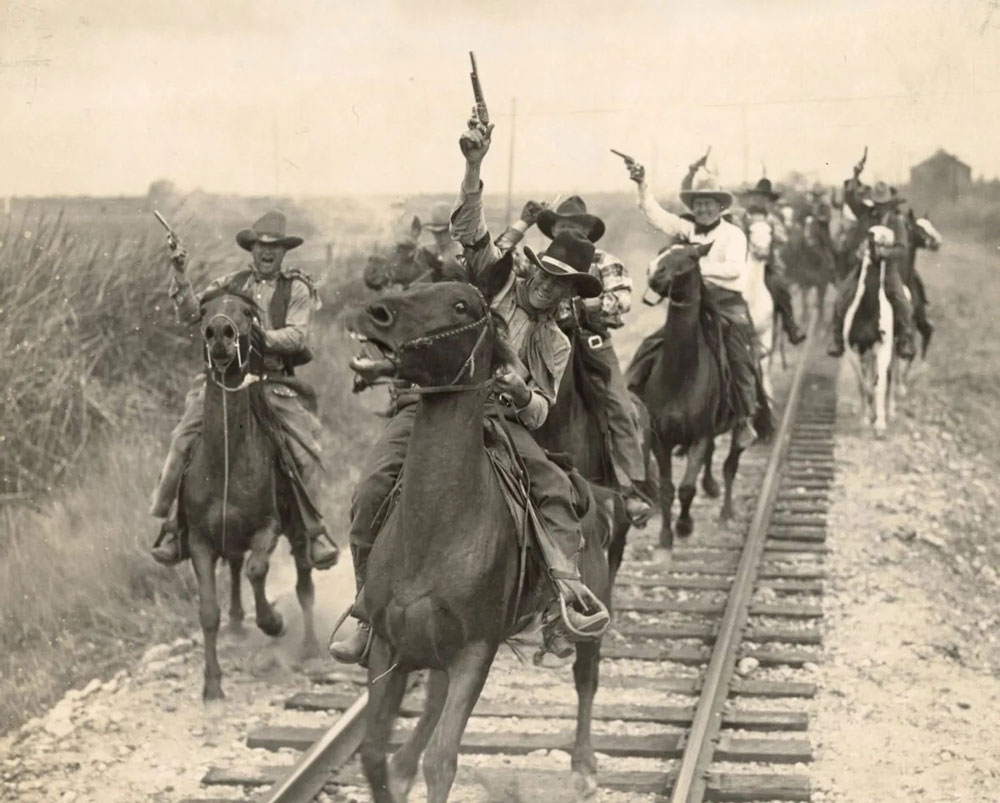
That geography was essential to the lives of people such as Butch Cassidy and his Wild Bunch. The American West offered enormous spaces where someone could remain beyond the immediate reach of law enforcement. Mountains, canyons, deserts and isolated ranching communities created natural escape routes, while sympathetic residents could sometimes provide food, shelter or information.
Today, those same characteristics make the Outlaw Trail appealing to travelers. Places that once offered isolation to fugitives now offer dramatic scenery and opportunities for hiking, driving, biking, paddling and exploring historic sites. Bezemek’s book Discovering the Outlaw Trail combines historical stories with modern travel routes, allowing visitors to experience the landscapes behind some of the most famous stories of the Wild West.
Want to explore the Green River and the rugged landscapes of Dinosaur National Monument? Watch the video for a closer look at the rafting adventure and the scenery along one of the most remarkable stretches of the Outlaw Trail.
The San Juan Mountains Were Where Butch Cassidy’s Story Began
One of the most important regions along the Outlaw Trail lies in Colorado’s San Juan Mountains. During the early 1890s, the area was experiencing a mining boom, attracting workers, businesses and fortune seekers to rugged mountain communities. It was also the setting for some of the earliest exploits associated with Butch Cassidy and the emerging Wild Bunch.
Today, the San Juan Mountains offer a very different experience. The 235-mile San Juan Skyway connects several historic mountain towns, including Telluride, Ouray, Silverton and Durango. These communities now attract visitors for their scenery, historic buildings and outdoor recreation, but their streets and surrounding mountains preserve connections to the era when the West was still a much rougher place.
Telluride provides one of the most striking examples. Today, it is famous as a mountain resort town with a National Historic Landmark district. In 1889, however, it was the location of Butch Cassidy’s first known robbery. Visitors can now walk through the same broad landscape that once formed part of the backdrop to the beginning of his outlaw career.
The contrast is difficult to miss. A place once associated with a young criminal beginning his career is now known primarily for skiing, tourism and historic preservation.
Utah Is Filled With Outlaw Hideouts and Old West History
The Outlaw Trail continues into Utah, where the Uinta Basin and eastern Uinta Mountains contain a mixture of natural scenery, Indigenous rock art, dinosaur fossils and Wild West history. Much of the region is associated with Dinosaur National Monument, where visitors can explore trails, petroglyph sites and the famous Quarry Exhibit Hall, where thousands of fossilized dinosaur bones remain embedded in the original rock face.
The area also contains connections to the outlaw world.
One of the most interesting is the Josie Bassett Morris Cabin at Cub Creek. The well-preserved cabin was associated with Josie Bassett, who came from the Browns Park area and was the sister of Queen Ann Bassett, another woman connected to the world of Western outlaws.
The cabin provides a reminder that the history of the Outlaw Trail was not exclusively about famous gunmen. Women, ranchers, families and local communities were also part of the environment in which these figures lived and operated.
That broader history makes places such as the Josie Bassett Morris Cabin particularly interesting. Visitors are not simply looking at an old building. They are seeing a physical reminder of the communities that existed around the outlaw networks of the American West.

The Wildest Parts of the Outlaw Trail Are Still Hard to Reach
If there is one place that captures the isolation of the Outlaw Trail, it may be Hole-in-the-Wall in Wyoming’s Red Wall Country.
Located in the foothills of the southern Bighorn Mountains, Red Wall Country takes its name from a series of dramatic red sandstone cliffs stretching for more than 25 miles. The landscape is remote, rugged and visually spectacular, but its most famous historical feature is Hole-in-the-Wall, an isolated valley carved into the surrounding rock.
The location became famous as an outlaw hideout because its geography made it difficult for authorities to reach. Groups of outlaws could use the surrounding terrain as protection while remaining close enough to routes across the region.
Today, the isolation is still part of the attraction.
Getting there can be an adventure in itself. Visitors who do not join an organized tour from nearby Buffalo or Kaycee may need a high-clearance four-wheel-drive vehicle to navigate the rough clay and dirt roads. The difficulty of reaching the site helps preserve something that many other historical locations have lost: a genuine sense of remoteness.
Standing in a landscape like this, it becomes easier to understand why the area once appealed to people trying to stay out of sight.
There are no modern city streets surrounding Hole-in-the-Wall and no convenient urban infrastructure waiting nearby. The same emptiness that once made the region useful to fugitives remains one of its most striking characteristics today.
The Outlaw Trail Eventually Reaches Billy the Kid’s New Mexico
The trail also extends into New Mexico, where the roughly 75-mile Billy the Kid Scenic Byway connects several locations associated with the history of the Old West. One of the major attractions is Fort Stanton, a 19th-century military outpost located in the Snowy River Cave National Conservation Area.
Another important stop is the Lincoln Historic Site, which preserves the history of the Lincoln County War. The conflict became one of the most notorious episodes of New Mexico’s frontier history, and Billy the Kid became its most famous combatant.
Billy the Kid’s story is different from Butch Cassidy’s, but the connection between them is clear. Both became larger-than-life figures whose real histories were eventually mixed with legends, stories and popular culture.
That process helped create the romantic image of the Wild West that remains popular today.
The modern scenic byway offers visitors a chance to see these places in person while separating the physical landscape from the mythology that developed around it. A historic fort, an old town or a remote mountain road may look peaceful today, but these places were once part of a much more unsettled world.

The Outlaw Trail Is Still There—Just Without the Outlaws
One of the most fascinating sections of the journey runs through the Grand Staircase and South Lake Powell region of Utah and Arizona. The Grand Staircase is a vast series of sedimentary rock formations stretching across roughly 100 miles of southwestern Utah. Its landscape changes dramatically as the terrain descends from high plateaus through hoodoos, canyons and cliffs toward Lake Powell and eventually the Grand Canyon.
The region also has connections to Butch Cassidy. His boyhood home was located near the upper part of the Grand Staircase, adding another personal connection between the famous outlaw and the landscape that later became a destination for travelers.
Farther south lies Lees Ferry, an important crossing of the Colorado River. Before modern roads and bridges transformed travel across the region, crossings like this were strategically important. Lees Ferry was once known as Pahreah Crossing and served as the main Colorado River crossing for miles. Outlaws passed through the area, and ferry operator John D. Lee, himself a fugitive, played a role in its history.
Today, the region is better known for hiking, paddling, scenic landscapes and national park attractions.
That transformation is perhaps the best way to understand the Outlaw Trail as a whole.
The places that once helped fugitives disappear have become places where visitors deliberately go looking for them.
The isolated mountains are now scenic drives. The hidden valleys are hiking destinations. Old cabins have become historic sites. Former outlaw territory has become public land where travelers can explore the same landscapes without having to worry about a posse following them.
The outlaws are gone, but their geography remains.

The Outlaw Trail Is Still There—Just Without the Outlaws
The Outlaw Trail is no longer a route used by fugitives trying to escape the law, but the landscapes that once protected them are still there. From the San Juan Mountains and Telluride to Hole-in-the-Wall and the remote canyons of Utah, these places preserve a physical connection to the people and stories that shaped the Old West. Today, travelers can explore the same rugged country once used as a refuge, turning a legendary chapter of American history into a journey they can experience for themselves.