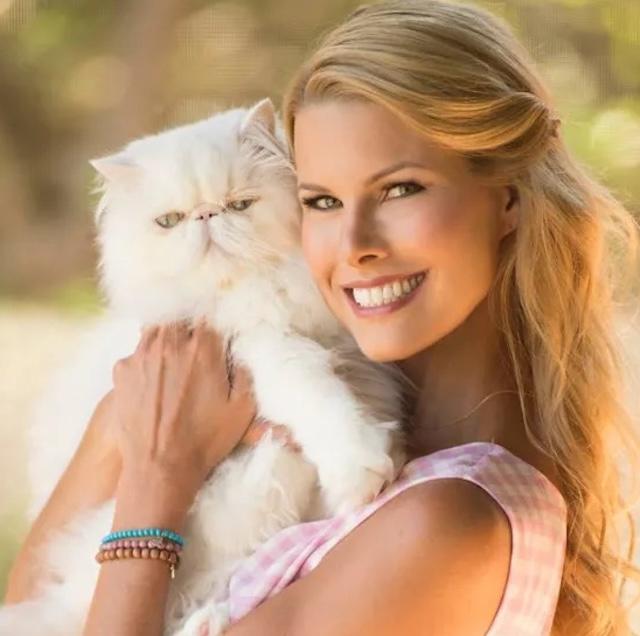
Beth Ostrosky Stern first became widely known through modeling and television, but the work that now defines her life happens far away from the spotlight. For more than two decades, she has used her public profile to help rescue homeless animals, care for vulnerable kittens, and encourage families to adopt pets rather than overlook them in shelters. Working alongside North Shore Animal League America, she has helped thousands of animals find loving homes. Her journey shows how a personal passion can grow into a lasting mission with a tangible impact.
Growing Up in a Home Full of Animals
Born on July 15, 1972, in Pittsburgh, Pennsylvania, Beth Ostrosky grew up in a family where animals were considered members of the household. Her parents regularly adopted rescue animals, introducing her to the idea that dogs and cats deserved care, protection, and a permanent place in a loving home.
In her profile for North Shore Animal League America, Stern recalls that the family dog, a collie mix named Suzie Dog, was among the first animals she encountered as a baby. Her childhood home also welcomed other animals, including cats, chickens, and guinea pigs. Rather than treating animal care as an occasional responsibility, her family made it part of everyday life.
That upbringing helped establish the values that would later guide her professional life. Long before animal rescue became a central part of her public identity, Stern had experienced the companionship animals could provide and understood that adopting a pet meant accepting responsibility for another living creature.
Her early interests, however, extended beyond animal welfare. She pursued a career in modeling and entered the entertainment industry, developing the public visibility that would eventually help her reach a much larger audience. The combination of professional ambition and a longstanding affection for animals would later become central to her story.
Discover the heartwarming true story behind Beth Stern’s new children’s book, “Coco and Steven Together Forever.” In this inspiring interview, Beth shares her lifelong passion for animal rescue, her incredible journey fostering over 3,000 pets, and the magical bond between a rescued cat and bunny. Watch now to learn how you can make a difference for animals in need!
From Modeling to Television and Entertainment
Stern built her early career through modeling, appearing in magazines and promotional campaigns before expanding into television. Her modeling work included recognition from FHM, which named her among its Top 100 Sexiest Women multiple times during the 2000s, according to her official publisher biography.
She gradually developed a broader entertainment profile, appearing on television programs and working as a correspondent. Her credits included EXTRA, while she also hosted programs and specials for networks such as HGTV, Spike TV, National Geographic, and Hallmark Channel. These opportunities allowed her to become familiar to audiences beyond the modeling industry.

One of her best-known television projects was Hallmark Channel’s Kitten Bowl, a Super Bowl Sunday special featuring adoptable kittens in a playful football-inspired competition. Stern served as host, bringing her enthusiasm for animal rescue into a format designed to entertain viewers while encouraging pet adoption.
The program was more than a television novelty. By placing rescue animals at the center of an accessible entertainment format, it introduced viewers to pets in shelters and helped make adoption part of the conversation surrounding a major annual sporting event.
For Stern, this was a natural extension of her interests. Television had given her the ability to reach large audiences, and animal-focused programming offered a way to direct that attention toward a cause she genuinely cared about. Over time, her identity as an advocate would become increasingly prominent alongside her work in entertainment.

The Meeting That Changed Her Relationship With Animal Rescue
A major turning point came in 2003, when Stern volunteered at a fashion show during an annual luncheon organized by North Shore Animal League America. At the time, she was modeling in New York City and was asked to participate in the event by carrying puppies while walking the runway.
The experience introduced her to the organization’s work and the scale of the challenges faced by homeless animals. According to Stern’s account, she became so involved in the adoption event that she stayed until every animal had found a home. She subsequently began volunteering regularly.
Founded in 1944, North Shore Animal League America is a major no-kill animal rescue and adoption organization. Its work includes rescuing animals from overcrowded shelters and other difficult circumstances, providing medical care, and placing them with responsible adopters. The organization also promotes spaying and neutering, humane education, and responsible pet ownership.

Stern’s involvement grew from event volunteering into a much more personal commitment. In 2013, she became a foster parent for the organization, opening her home to cats and kittens that needed care before they could be adopted.
Fostering is particularly important for very young, sick, abandoned, or otherwise vulnerable animals. A shelter may provide essential medical care and protection, but some animals benefit from living temporarily in a quieter home environment where they can receive individual attention and become comfortable around people.
Stern took on that responsibility directly. Instead of simply promoting adoption through public appearances, she began caring for foster animals herself, helping prepare them for their eventual homes.

Catch a rare glimpse into the private life of Howard Stern and his wife, Beth. Watch this candid 60 Minutes interview as they discuss their relationship, family challenges, and the unique dynamics of their life together in Manhattan. Don’t miss it!
Saving Thousands of Cats and Kittens One at a Time
Stern’s fostering work has become the defining feature of her animal advocacy. North Shore Animal League America reported in 2026 that she had rescued, nurtured, and rehomed more than 2,000 cats and kittens since beginning her formal foster work in 2013. In a separate blog post published in May 2026, Stern wrote that she and her husband had fostered nearly 3,000 animals over the preceding decade.
The work involves considerably more than providing food and a safe place to sleep. Foster caregivers may need to monitor an animal’s health, help young kittens become socialized, administer prescribed treatments, and give frightened animals time to develop confidence around people. Some also care for animals with special needs who require more patience and attention before adoption.
Stern has described calling her foster kittens her “nuggets,” a term that captures the affection she brings to the process. She also helps review adoption applications and, in many cases, personally delivers the animals to their new families. These steps allow her to remain involved throughout the transition from rescue to adoption.
Her social media accounts provide another important part of the process. By sharing photographs, updates, and adoption information, she introduces individual animals to potential adopters who might never otherwise encounter them. A kitten that begins life as an anonymous shelter resident can become a recognizable personality with followers eager to see it find a permanent home.
There is also an emotional challenge to fostering: letting an animal go. Caregivers often develop strong connections with the pets they temporarily house, yet successful fostering means making room for the next animal in need once an adoption is completed.
For Stern, the purpose is clear. Each adoption creates space and resources that can help another animal, allowing a series of individual acts of care to produce a much wider effect.

Honoring Bianca Through a New Approach to Adoption
One of the most meaningful projects in Stern’s advocacy emerged after the death of Bianca, the family’s beloved dog, in 2012. Stern has described how deeply the loss affected her and how it encouraged her to expand her foster work in a way that would honor Bianca’s memory.
She and her husband, Howard Stern, helped make possible Bianca’s Furry Friends Feline Friends Adoption Center, a distinctive, cage-free adoption facility operated by North Shore Animal League America. The center was named in memory of Bianca and reflects the couple’s belief that the experience of finding a home can be improved by creating a more welcoming environment for cats.
A cage-free setting allows cats to move around, interact with their surroundings, and display more of their individual personalities. Such environments can also help prospective adopters observe an animal’s behavior and form a connection before making a commitment.
The center represents a particularly personal side of Stern’s philanthropy. Rather than responding to grief solely through private remembrance, she helped turn the loss of a family pet into a project intended to benefit other animals.
The idea also reflects a broader principle in animal welfare: adoption facilities should focus not just on housing animals safely, but on helping them transition toward permanent homes. Environment, enrichment, social interaction, and opportunities for potential adopters to connect with pets can all be meaningful parts of that process.
Bianca’s legacy therefore extends beyond the memories of a single beloved dog. Through the adoption center named in her honor, the family’s experience of loss became connected to the possibility of new beginnings for countless cats.

Books, Kitten Bowl, and the Power of Public Awareness
Stern has used several forms of media to make animal welfare accessible to different audiences. Her television work brought rescue pets into viewers’ homes, while her books introduced animal care and adoption through stories intended for readers of different ages.
In 2010, she published Oh My Dog: How to Choose, Train, Groom, Nurture, Feed, and Care for Your New Best Friend. The book offered practical guidance for prospective and existing dog owners, addressing the responsibilities that come with caring for a companion animal. It became a New York Times bestseller, according to her publisher’s biography.
Her later book Yoda: The Story of a Cat and His Kittens drew on the story of Yoda, a rescue cat who became part of her family. Another children’s book, Yoda Gets a Buddy, follows a blind foster kitten named Buddy and explores acceptance, friendship, and the idea that an animal’s disability does not determine its worth.

In May 2026, Stern released Coco and Stephen, Together Forever, a children’s book inspired by the unexpected friendship between a special-needs cat and an abandoned rabbit. She wrote on Animal League America’s website that she would donate her author proceeds to the organization, connecting the book directly to its rescue and adoption work.
These projects reveal why storytelling has become an effective part of her advocacy. Children can learn about adoption and humane treatment through relatable characters, while adults can discover practical advice and real examples of animals that have benefited from rescue.
Instead of relying only on statistics or appeals for donations, Stern presents animal welfare through individual stories—animals with recognizable personalities, specific challenges, and the possibility of a happier life.

A Partnership Built Around Compassion
Stern’s animal welfare work has also been strengthened by the support of her husband, radio and television personality Howard Stern. The couple married in 2008, and Howard has frequently supported her rescue activities by helping care for foster animals, naming kittens, and participating in adoption-related efforts.
North Shore Animal League America has highlighted his involvement in socializing and caring for the animals, as well as the couple’s decision to adopt several of their own foster pets. They have often chosen adult cats and animals with special needs, including those with vision impairment or other physical challenges.
Their partnership matters in practical terms. Fostering can require substantial time, consistent attention, and flexibility when unexpected medical or care needs arise. Having support at home makes it easier to sustain that commitment while continuing other professional responsibilities.
Their public profile also increases the visibility of rescue work. When a well-known couple shares stories about foster animals, potential adopters may be introduced to the idea of adopting an older cat, welcoming a kitten with a disability, or volunteering for a local shelter.
Celebrity involvement cannot solve every problem facing animal rescue organizations. Shelters still need trained staff, veterinary support, suitable facilities, and reliable funding. But public attention can help connect those organizations with more potential adopters, foster caregivers, volunteers, and donors.
Stern’s contribution is especially notable because it combines that broader visibility with hands-on work. The advocacy is not limited to an occasional appearance; it involves repeated, practical efforts to help vulnerable animals move toward permanent homes.
Discover how Beth and Howard Stern use their fortune to rescue hundreds of cats and kittens. Watch this heartwarming video to see their dedication to fostering animals and learn how you can help support their meaningful mission for pets.
What Beth Ostrosky Stern’s Story Really Teaches Us
Stern’s journey offers a clear example of how an individual’s interests can evolve into a sustained public mission. Modeling and television helped establish her visibility, but her early experiences with rescue animals gave that visibility a purpose beyond personal recognition.
Her work also highlights the importance of fostering, an often-overlooked part of animal rescue. Adoption is the desired outcome, but temporary homes can provide a critical bridge for animals that are too young, fragile, frightened, or medically vulnerable to thrive immediately in a permanent placement.
There are practical ways for people without celebrity resources to support the same mission. They can adopt from reputable shelters, volunteer to socialize animals, provide temporary foster care where appropriate, donate supplies or funds, and share accurate information about pets in need. Responsible adoption also means considering the long-term costs and care responsibilities before bringing an animal home.
Stern’s example is powerful because it turns a broad concern for animal welfare into repeatable actions. A foster kitten receives care, an adopter gains a companion, and a shelter gains the opportunity to help another animal. Across many individual cases, those actions can make a meaningful difference.
Her career ultimately demonstrates that public recognition can be used in more than one way. It can create professional opportunities, but it can also help bring attention to people and animals that might otherwise go unnoticed.

Beth Ostrosky Stern has built a life in which animal rescue is far more than a charitable interest. From her childhood surrounded by rescued pets to her hands-on fostering work with North Shore Animal League America, she has helped thousands of cats and kittens move toward loving homes. Through television, children’s books, social media, and the adoption center created in Bianca’s memory, she continues to make animal welfare visible and accessible. Her story shows how compassion becomes most powerful when it is translated into consistent action, one animal and one adoption at a time.