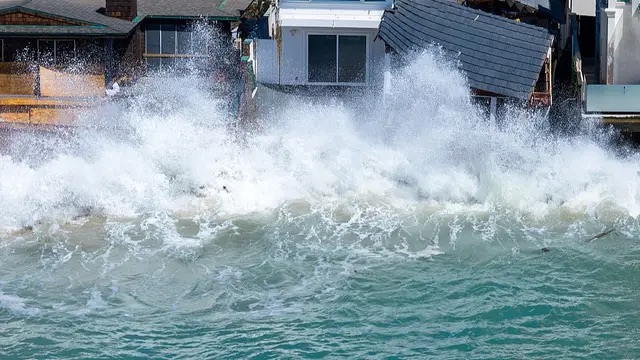
Scientists are raising concerns about an unusually powerful El Niño developing across the tropical Pacific, with new forecasts suggesting it could rival or exceed the strongest events recorded since 1950. The implications reach far beyond ocean temperatures: shifting atmospheric circulation can influence heatwaves, droughts, destructive storms, and flooding across multiple continents. Climate scientist Daniel Swain has publicly expressed growing concern, while US forecasters have sharply increased the probability of a historically strong event. The central question now is how communities can prepare for its possible consequences.
NOAA Raises the Odds of a Record-Strength El Niño
On October 8, 2026, the US National Oceanic and Atmospheric Administration (NOAA) released an updated assessment indicating that the developing El Niño was continuing to strengthen. Its Climate Prediction Center put the probability of an event reaching historic strength at 83% for October through December, up from 75% in the previous month’s forecast. The agency also said a strong-to-very-strong event was likely to persist through January–March 2027.
The measurements help explain the concern. During September, sea-surface temperature anomalies in parts of the eastern equatorial Pacific exceeded 4°C, while several established El Niño monitoring indices rose substantially. NOAA reported that its Niño-3.4 index, which measures sea-surface temperature conditions in a key region of the tropical Pacific, reached an anomaly of approximately 2.1°C. These readings indicate that the ocean-atmosphere system is developing into a particularly strong event.
The World Meteorological Organization (WMO) delivered a similar warning. In an October 8 bulletin reported by Reuters, the organization said El Niño was expected to intensify toward a December peak and was almost certain to continue through February 2027. Forecast sea-surface temperatures in the central and eastern tropical Pacific could reach approximately 3.7°C above normal during October–December, potentially exceeding the previous record anomaly cited by the WMO.
The term “super El Niño” has become popular in media coverage of the developing event, although it is not a separate formal category used in the same way as NOAA’s official classifications. What matters scientifically is the event’s intensity, duration, and associated atmospheric response—and what those conditions mean for weather patterns in different parts of the world.
Ever wondered what a ‘Super El Niño’ really is? Join Neil deGrasse Tyson and climate expert Adam Sobel as they break down the science behind this historic weather event. Discover why this is the biggest El Niño on record and how it reshapes our global climate. Watch now to learn more!
Why One Pacific Ocean Event Can Affect the Entire Planet
El Niño is the warm phase of the El Niño–Southern Oscillation, a naturally occurring climate pattern involving interactions between the tropical Pacific Ocean and the atmosphere. During this phase, trade winds weaken, unusually warm surface water spreads farther east, and the distribution of heat and moisture released into the atmosphere changes. Those changes can influence large-scale atmospheric circulation, shifting rainfall patterns and storm tracks far from the Pacific itself.
The consequences are not identical everywhere. Some regions become more vulnerable to heavy rainfall and flooding, while others face reduced rainfall, water shortages, or prolonged heat. Changes in ocean temperatures can also affect fisheries and marine ecosystems, particularly when conditions disrupt the normal distribution of nutrients and the species that depend on them.
El Niño also influences global average temperatures. It does not create all the heat associated with modern climate change, but it can add a substantial natural warming influence on top of the long-term warming caused by human greenhouse-gas emissions. With the planet already experiencing elevated temperatures, another strong El Niño could expose communities to more severe heat than they would otherwise experience.
That interaction is an important part of the current concern. The world is not entering this event with the same climate conditions that existed during previous major El Niño episodes. Warmer background temperatures can increase the risks associated with extreme heat, while changing rainfall patterns can place additional pressure on water systems, agriculture, infrastructure, and public health.

California Could Face a Dangerous Winter
One of the scientists drawing attention to the event is Daniel Swain, a climate scientist known for his communication about Western US weather extremes. In remarks reported by LADbible on October 8, Swain said he was “officially concerned” about the developing El Niño and the potential for a wet California winter. He warned that the latest data reinforced his concerns about the possible scale of the event.
For California, the prospect of a wetter winter brings both benefits and hazards. Rainfall can replenish reservoirs and ease drought pressure, but intense storms can also overwhelm drainage systems, flood roads, damage homes, and trigger landslides. The risk can be especially serious in areas where steep terrain, saturated soil, or previous wildfires leave communities more vulnerable to debris flows.
The connection between El Niño and California rainfall is real, but it is not a guarantee of a particular outcome. NOAA’s historical analysis shows that the relationship between El Niño and precipitation varies by region and event strength. Even a strong El Niño cannot determine exactly when storms will arrive, how long they will last, or where the heaviest rainfall will fall.
That distinction matters because seasonal forecasts describe changing probabilities, not a precise schedule of disasters. A forecast favoring wetter conditions does not mean every part of California will experience extreme rainfall, and it does not mean flooding is inevitable. The practical warning is that communities should review drainage, evacuation arrangements, flood exposure, and landslide risks before the most hazardous weather arrives.

Storms and Marine Changes Are Raising Wider Concerns
The Pacific is another major focus of attention. El Niño can reorganize atmospheric circulation over the ocean, changing conditions that influence tropical storms and hurricanes. In the current season, meteorologists have highlighted unusually active Pacific storm activity as one indication of the broader atmospheric changes unfolding alongside the warming ocean.
Matthew Cappucci, a senior meteorologist at MyRadar, told LADbible that the event could intensify both drought and flooding, depending on the location. Some places already prone to heavy rain could experience additional rainfall, while other areas could see conditions become significantly drier. Such uneven effects are characteristic of El Niño: the phenomenon shifts the distribution of weather hazards rather than producing one uniform global outcome.
Changing ocean conditions can also affect marine ecosystems. When water temperatures and currents depart from their normal patterns, the distribution of fish and other marine species can change. Unusual sightings may attract attention, but a particular observation cannot automatically be attributed to El Niño alone; ocean currents, seasonal patterns, local temperatures, and other environmental factors may also be involved.
The broader concern is that extreme weather does not remain an isolated ocean or meteorological issue. Strong storms can disrupt shipping, damage coastal infrastructure, affect fisheries, and threaten tourism-dependent communities. Heavy rainfall can contaminate water supplies and disrupt transportation, while drought can reduce agricultural production and increase pressure on already limited water resources.
The consequences therefore extend beyond the immediate weather forecast. For coastal communities and economies that depend on stable ocean conditions, preparedness can be just as important as monitoring the storms themselves.

Heat and Drought Could Put Millions at Risk
Although flooding attracts considerable attention, extreme heat may be one of the most consequential global risks associated with the developing event. El Niño tends to raise global temperatures, and its regional effects can intensify existing heat stress in places already vulnerable to hot conditions.
The University of Chicago’s Climate Impact Lab has published a particularly stark estimate. Its analysis projects approximately 451,000 additional heat-related deaths globally between June 2026 and February 2027 compared with an average year. The researchers based the estimate on projected temperature changes and historical relationships between heat and mortality across 24,378 regions.
That figure requires careful interpretation. It is a model-based projection, not a count of deaths that have already occurred, and it does not mean that 451,000 people are certain to die directly because of El Niño. The estimate depends on forecasts of temperature and statistical relationships between heat and mortality, and the research team says further methodological details are to be published in a peer-reviewed journal. The forecast should therefore be understood as an assessment of potential risk, not a definitive outcome.
Even with those limitations, the analysis highlights a serious public-health challenge. Extreme heat can increase the risk of cardiovascular and respiratory complications, worsen existing health problems, and place heavy demands on electricity systems and healthcare services. People who work outdoors, older adults, and households without access to effective cooling can face particularly high risks.
The geographic distribution of the danger will not be uniform. Some countries may experience especially severe heat, while others face more immediate risks from drought, flooding, or storms. In Southeast Asia, shifting rainfall patterns are particularly relevant to agriculture, reservoirs, hydropower, and communities that rely on seasonal rains.
For Vietnam and its neighbors, it would be premature to predict specific local impacts from the global El Niño forecast alone. Regional seasonal outlooks and national meteorological updates will be needed to determine which areas are more likely to face drought, unusual rainfall, or heat during the months ahead.

The Climate Is Already Warmer Than During Past El Niño Events
One reason scientists are paying such close attention is the interaction between natural climate variability and long-term global warming. El Niño has occurred repeatedly throughout recorded history, and strong events in the past have already caused widespread disruption. What distinguishes the present situation is that the phenomenon is unfolding against a warmer global baseline.
In its October 8 report, the WMO noted that global mean temperatures in August 2026 had reached 16.96°C, matching July 2023 as the warmest month in the historical comparison cited by Reuters. The organization also emphasized that the tropical Pacific was drawing on an ocean environment containing exceptionally high levels of heat.
This does not mean every El Niño event will be more damaging than the previous one, nor does it mean climate change alone explains every storm or heatwave. Individual weather events emerge from multiple interacting influences. However, higher background temperatures can increase the severity of heat exposure, while changing precipitation patterns can make water management more difficult.
That is why preparedness requires more than trying to predict one particular storm. Governments and communities need to consider the combined effects of heat, water shortages, flooding, and infrastructure stress. Early warnings, public cooling facilities, reliable emergency communications, resilient power systems, and practical flood preparations can reduce the consequences even when the precise weather remains uncertain.
The forecast offers an opportunity to act before the highest-risk period arrives. Waiting until extreme temperatures or heavy rainfall have already begun makes protection much harder, especially for people with limited resources or access to emergency services.

What People Should Watch in the Months Ahead
The most useful information in the coming months will come from regularly updated seasonal forecasts and local warnings rather than dramatic predictions circulating without context. NOAA plans to continue updating its El Niño assessments, while the WMO and national meteorological services will refine their outlooks as more ocean and atmospheric measurements become available.
For residents, farmers, businesses, and public authorities, the practical response depends on local exposure. Communities facing potential flooding can review emergency routes, drainage systems, and evacuation plans. Regions vulnerable to heat can prepare cooling spaces, check on at-risk residents, and make sure public-health services can respond to periods of extreme temperature.
Water management will be especially important in areas where El Niño is associated with reduced rainfall. Farmers may need locally appropriate advice on irrigation and planting schedules, while water utilities and local governments can assess reservoir levels and contingency plans. Such decisions should be based on regional forecasts rather than assuming that every place will experience the same effect.
The wider lesson is that a strong El Niño is a risk multiplier, not a precise script for the future. Its effects depend on the location, the season, infrastructure, local climate conditions, and how well communities prepare. Forecasts cannot remove uncertainty, but they can provide valuable time to reduce avoidable losses.
The developing El Niño has become a major global climate concern, with NOAA estimating an 83% chance of a historically strong event during October–December 2026. From California’s potential winter flooding to dangerous heat and shifting rainfall elsewhere, the risks are varied rather than universal. Scientists cannot yet specify every consequence, and alarming projections should never be mistaken for certainties. What they can do is identify emerging dangers early enough for communities to prepare. The coming months will test not only forecasting systems, but also how effectively governments and individuals turn warnings into practical action.