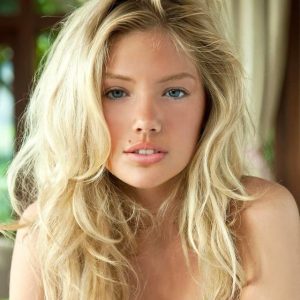
Before social media turned personal style into a global business, a model needed agencies, magazines, photographers, and traditional media to build a career. Estephania Ha followed a different path, using Instagram and visual content to develop an international audience around fashion, glamour, and carefully produced photography. Today, she is described as a German glamour model and influencer, with a large Instagram following and additional creator channels that extend beyond the platform where her public profile first grew.
Instagram Became the First Major Breakthrough
Ha’s public career is closely associated with Instagram, where her polished photographs helped her build a substantial audience. Social Blade currently lists the account associated with her public profile at roughly 1.9 million followers, illustrating the scale that a visual-first personal brand can reach without relying primarily on traditional media.
The appeal of her content is relatively straightforward: strong visual consistency, fashion and glamour photography, and an identifiable personal aesthetic. Rather than treating every photograph as an isolated post, she built a recognizable visual identity that made the account itself function almost like a constantly updated modeling portfolio. That approach fits the economics of Instagram, where consistency and recognizability can be as important as any single image.
The result was a change in the relationship between model and audience. Instead of waiting for an editor or agency to decide whether she deserved attention, Ha could publish directly and allow audience response to determine which images gained traction. That does not eliminate the work required to maintain a career, but it moves an important part of distribution from traditional gatekeepers to the creator herself.
Discover the story of Estephania Ha, the stunning German curvy model taking social media by storm! Watch the video to explore her bio, style, and secret to success. Don’t forget to like, share, and subscribe for more!
The Real Product Was More Than a Photograph
Successful visual influencers rarely sell only photographs. They sell a recognizable identity that can be reproduced across different shoots, outfits, locations, and platforms. Ha’s public profile has developed around glamour, fashion, styling, and carefully controlled imagery, creating a consistent aesthetic that makes her content immediately recognizable.
That consistency matters commercially because brands do not simply buy a photograph; they buy access to an audience that already understands the creator’s style. The stronger the identity, the easier it becomes to place a new collaboration inside that existing visual world. Ha’s career therefore illustrates a broader shift in modeling, where the ability to maintain a direct audience can become almost as valuable as traditional portfolio credentials.
Her current public activity also suggests that the visual identity remains central even as the formats change. In a 2026 Model-Kartei profile, Ha described herself as interested in creative shoots, cosplay scenarios, character looks, and staged settings, emphasizing image-making and visual storytelling rather than simply repeating the same type of photograph.

From Instagram Model to Creator With Multiple Channels
The biggest structural advantage of becoming an online personality is that one audience can support several channels. Ha’s public profiles connect her Instagram identity with additional platforms, while Wikidata records associated usernames for Instagram, TikTok, Threads, X, and other services. The exact size of each audience changes over time, but the underlying strategy is clear: maintain a recognizable identity while giving followers multiple ways to find the creator.
That approach reduces dependence on a single platform. Instagram can provide discovery and polished visual presentation, while other channels can serve different purposes, including short-form video, communication, or direct-to-fan material. In an environment where algorithms and platform policies constantly change, diversification gives a creator more control over where the audience can follow next.
Ha’s current work provides a practical example of this model. Her 2026 Model-Kartei profile says she was actively seeking creative collaborations and intended to use resulting images primarily for her Patreon page, showing how a traditional photoshoot can now become part of a direct-to-audience content business.

Get to know Estephania Ha! Everything you need to know about this inspiring model in one video. Click to watch now!
The Creator Economy Changed the Meaning of Modeling
Traditional modeling was largely built around commissioned work. A photographer or brand hired the model, the images were produced, and the finished campaign belonged to a publication or commercial client. Social media introduced a different possibility: the model could also become the publisher, distributor, and audience manager.
That shift is particularly important for visual creators because the same photograph can now serve several purposes. It can introduce the creator on Instagram, support a portfolio, appear in a collaboration, and later become part of a subscription-based collection. The production process does not necessarily change, but the economics around the image can become much more flexible.

Ha’s presence on Patreon illustrates this change directly. Public Patreon posts under her name show continuing releases of exclusive photo sets, turning photography into an ongoing membership relationship rather than a one-time publication.
The important distinction is ownership of the audience. A magazine can stop featuring a model, and a campaign eventually ends, but a creator with a direct audience can keep producing and publishing independently. That shift is one of the defining characteristics of the modern creator economy.

Why Keeping a Private Life Can Strengthen a Public Brand
One of the more interesting features of Ha’s public image is how limited her personal information remains. Recent profiles describe her online presence as highly curated, with the focus placed on visual work rather than extensive discussion of family, relationships, or private life.
That restraint can itself become part of a brand strategy. Social media often rewards constant disclosure, but a creator can also build curiosity by showing a carefully selected public identity while keeping the rest private. Followers see enough to recognize the person and the aesthetic, but not necessarily enough to know everything about the life behind the photographs.
For a visual creator, that separation can also make the brand more durable. The public image remains relatively consistent because it is not constantly being disrupted by personal controversies, changing relationships, or unrelated details. What audiences repeatedly encounter is the work.

Reinvention Keeps a Visual Brand From Becoming Stale
The danger for any image-based career is repetition. Once an audience has seen the same poses, styling, and visual formula too many times, attention can decline. Ha’s current focus on cosplay, character-based looks, and staged concepts shows one way a model can keep a familiar identity while experimenting with new visual formats.
That matters because reinvention does not necessarily mean abandoning an existing brand. It can mean expanding the vocabulary of that brand. A fashion shoot, a character concept, a themed setting, or a different photographic style can attract new viewers while still being recognizable as work from the same creator.
This is also where the distinction between influencer and entrepreneur becomes useful. An influencer depends heavily on attention; an entrepreneur tries to build systems that can turn attention into repeatable income. By combining modeling, social platforms, creative collaborations, and subscription content, Ha’s public career illustrates how those two roles can increasingly overlap.

Which hot tub did Estephania pick as her favorite? From setup difficulty to comfort, she tests them all so you can make the right choice!
From Bedroom Content to a Digital Business
Estephania Ha’s story reflects one of the biggest changes in modern modeling: the distance between a bedroom, a camera, and an international audience has almost disappeared. A creator can now build a recognizable visual identity from relatively modest beginnings, publish directly to millions of people, collaborate with photographers, and turn new images into products for paying followers. Ha’s career continues to evolve through that model, with Instagram providing visibility and direct-to-fan platforms offering additional ways to monetize the work.
The significance is not simply that one model became popular online. It is that the structure of the career changed around her. The audience became part of the business, the personal brand became the distribution channel, and new platforms made it possible to continue earning from content long after a traditional photoshoot would have ended.
That is why Estephania Ha is better understood as a case study in the evolution of digital influence than as an Instagram personality alone. The photographs created attention, but the audience created the career.


Estephania Ha’s career illustrates how modeling has changed in the social-media era. Instagram provided the platform to build visibility, a consistent visual identity turned that visibility into recognition, and newer creator platforms created additional ways to maintain a direct relationship with followers. Her current focus on creative photography and Patreon shows how that model continues to evolve. What began as visual content can become a lasting personal brand when the creator controls the image, the audience, and increasingly, the distribution.