In the summer of 1858, London had a problem that was impossible to ignore. The River Thames, already carrying enormous quantities of human waste and industrial pollution, became so foul in the heat that the smell reached the Houses of Parliament. Attempts to cover the stench with chemicals did little to help, and politicians began demanding action. What became known as the Great Stink was more than an unpleasant episode in Victorian London. It forced the city to confront a much larger infrastructure failure—and helped trigger the construction of one of the most ambitious urban sewer systems of the 19th century.
London Had Outgrown Its Old Waste System
Victorian London was expanding rapidly, but its system for handling waste had not kept pace with the growing population. Most homes did not have modern flush toilets, while existing sewers often functioned less like a treatment network and more like channels carrying waste toward the nearest watercourse. Solid waste could also accumulate in streets, drains and cesspools before eventually reaching the river.
The Thames therefore became the final destination for an extraordinary mixture of sewage, industrial effluent and other waste. At low tide, sections of the river exposed thick deposits along the foreshore, while the central river passed directly through one of the world’s largest cities.
By the middle of the 19th century, London had effectively built an enormous waste-disposal system without having deliberately designed one. The city was simply using its river as the place where everything eventually went. That worked only as long as the scale of the waste remained manageable. By 1858, it was not.
Ever wonder how a city nearly collapsed from its own smell? Discover the gross, fascinating history of London’s “Great Stink” of 1858. Learn how this massive environmental disaster changed public health forever. Watch now to uncover this smelly Victorian secret!
The Hot Summer Of 1858 Made The Thames Unbearable
The summer of 1858 was unusually hot, and the heat intensified the conditions in the heavily polluted river. Organic material accumulated in the Thames began to ferment and decompose, producing an overwhelming stench that spread through central London. Historic England describes the situation as reaching an “unbearable” level, turning the river into what was effectively a vast open sewer.
The smell was not a minor inconvenience. It became a problem that could be felt at the center of political life.
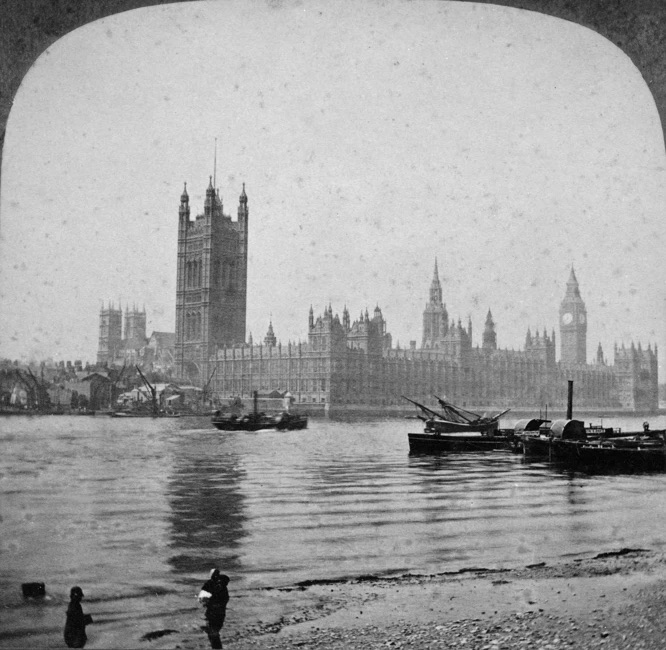
The newly rebuilt Houses of Parliament stood beside the Thames, putting politicians directly next to the source of the problem. Attempts were made to cover the smell, but the measures were ineffective. There was even discussion of moving Parliament away from Westminster because of the conditions.
For years, London had known that its sewage system was inadequate. But the Great Stink changed the political calculation.
The problem was no longer hidden in drains and back streets. It was sitting directly below the windows of the country’s lawmakers.

Even Parliament Could Not Escape The Smell
The Great Stink created an unusually powerful political moment because it made London’s infrastructure failure impossible for the government to ignore.
Members of Parliament were already debating how sewage could be intercepted before reaching the Thames. In a House of Commons debate on June 25, 1858, lawmakers discussed proposals to capture London’s sewage and carry it downstream, with engineers including Joseph Bazalgette involved in the planning.
There was also an important scientific misunderstanding behind the urgency. Victorian authorities widely believed that disease such as cholera was associated with foul-smelling air, a theory known as miasma. In reality, cholera is waterborne and spreads through contaminated water. The sewage entering London’s waterways was therefore a far more important danger than the smell itself.
Ironically, the wrong theory still helped produce a useful response. Politicians did not fully understand the biological mechanism of waterborne disease, but they understood that sewage in the city’s main river was a serious sanitation problem.
The Great Stink finally provided the political pressure needed to act on plans that engineers had been developing for years.

Joseph Bazalgette Was Given A Huge Engineering Problem
The man placed at the center of London’s response was civil engineer Joseph Bazalgette, chief engineer of the Metropolitan Board of Works.
His solution was not simply to clean up the river. It was to redesign the way London handled waste.
Bazalgette and his team developed an interconnected network of sewers that intercepted sewage before it could continue flowing through central London. Instead of allowing waste to move directly into the Thames within the city, the new system carried it eastward toward the Thames Estuary.
The project also required massive changes to the river itself. Sections of the Thames were embanked, creating space for the new sewer infrastructure while also reshaping the waterfront. Some older wharves, buildings and riverside communities disappeared during the construction process. This was not a small public-works project.
Parliament approved £2.5 million for Bazalgette’s scheme, equivalent to roughly £300 million in today’s money according to Historic England’s estimate. The project replaced more than 150 miles of existing sewers and added more than 1,000 miles of new ones, requiring approximately 318 million bricks.
London was essentially rebuilding its underground infrastructure while the city continued growing above it.

The New Sewers Changed The Thames And The City
Bazalgette’s system required more than underground tunnels. It included major pumping stations that moved sewage through the network and helped carry it toward the disposal points outside central London.
Crossness Pumping Station, completed in 1865, was one of the most spectacular examples. Designed by Bazalgette with architect Charles Henry Driver, it contained four enormous beam engines and was built with elaborate ornamental ironwork. Historic England describes it as a masterpiece of engineering and an example of how Victorian infrastructure could be treated almost like monumental architecture.
Abbey Mills Pumping Station served another major part of the network and became known as the “Cathedral of Sewage” because of its monumental design.
The new system fundamentally changed central London. Sewage was intercepted before reaching the river, new embankments transformed the waterfront, and the capital gained infrastructure capable of supporting a rapidly expanding population. The Great Stink had begun with an unbearable smell. Its answer was hidden beneath the streets.

One Of London’s Worst Smells Helped Build Its Modern Infrastructure
The Great Stink is memorable because the trigger was so ordinary and so difficult to ignore. London did not suddenly discover that its sewage system was inadequate in 1858. Engineers and politicians had already been discussing the problem for years. What changed was the visibility of the crisis.
A hot summer made the river impossible to ignore. The smell reached Parliament. Political pressure intensified. And a massive engineering program finally moved forward.
Bazalgette’s system was enormously successful at removing raw sewage from central London and reducing the contamination of water sources. But it was not the end of the story: the waste was largely carried farther downstream rather than fully treated, and communities near the new discharge points experienced the consequences. Even so, the transformation was profound.
The London that emerged from the Victorian sewer projects had a radically different relationship with its river and its waste. Streets could be connected to increasingly sophisticated drainage systems, while monumental embankments and pumping stations became permanent parts of the city. More than 160 years later, London still relies on the foundations of Bazalgette’s system. The Great Stink began as a smell. It ended by changing the city beneath people’s feet.

Take a look at the historical photographs below to see London before, during and after the transformation of its Victorian sewer system.


The Great Stink of 1858 was more than an embarrassing episode in Victorian London. The unbearable smell exposed how badly the capital’s waste system had fallen behind its rapid growth and forced politicians to act on a problem engineers had warned about for years. Joseph Bazalgette’s response transformed that crisis into a vast engineering project, creating hundreds of miles of new sewers, pumping stations and river embankments. What began as an environmental and sanitation failure ultimately helped build the infrastructure of modern London beneath its streets.
The original Historic England collection documents the Great Stink through photographs, engineering records and historical accounts of London’s Victorian sewer transformation. It provides a detailed look at how the Thames became the center of the crisis and how Joseph Bazalgette’s massive sewage scheme reshaped the city. Source: https://historicengland.org.uk/images-books/archive/collections/photographs/the-great-stink