Today, Manhattan is one of the most valuable and recognizable pieces of land in the world. But in 1667, its future was tied to a tiny Indonesian island that few people outside the Spice Islands had ever heard of. Under the Treaty of Breda, England kept New Netherland, including Manhattan, while the Dutch Republic retained Pulau Run in the Banda Islands. It is often remembered as a trade of Manhattan for a remote island, but the real story was more complicated—and much more revealing. Run was valuable because it was one of the world’s great sources of nutmeg, a spice that European powers were willing to fight over.
Run Was Tiny, But Its Nutmeg Was Extremely Valuable
Pulau Run, also known as Rhun or Run Island, is a small island in Indonesia’s Banda archipelago. Geographically, it is almost the opposite of Manhattan: remote, mountainous and surrounded by the Banda Sea rather than a major American harbor.
Its importance came from something much smaller than the island itself.
Nutmeg and mace were among the most valuable spices in the early modern world. Nutmeg is the seed found inside the fruit of the nutmeg tree, while mace comes from the red covering around that seed. European merchants prized both spices, and controlling the places where they grew naturally could create enormous commercial advantages.
The Banda Islands were particularly important because they were the principal source of nutmeg and mace. For the Dutch East India Company, known as the VOC, controlling the islands meant controlling a valuable part of the spice trade. That made Run far more important in 17th-century Europe than its size would suggest.
Ever wonder why the Dutch traded New York for a tiny island? Discover the wild story behind one of history’s craziest land swaps! From the spice trade wars to the rise of Manhattan, we uncover how a small deal shaped our world today. Watch the full story now!
The Dutch And English Fought Over The Spice Islands
The struggle over Run was part of a much larger rivalry between England and the Dutch Republic.
English merchants reached the Banda Islands in the early 17th century and established relationships with local communities on Run. The Dutch, meanwhile, were trying to establish a monopoly over the spice trade and viewed competing English activity as a direct threat to their commercial interests.
The conflict was not simply about owning an island on a map. It was about who would control access to a highly profitable commodity.
The Dutch East India Company had its own military forces, ships and fortified trading posts. In the Banda Islands, commercial competition could quickly become a struggle over territory and sovereignty. Run became one of the places where that competition played out most intensely.

Nathaniel Courthope Tried To Hold Run For England
In December 1616, English captain Nathaniel Courthope arrived on Run with a small force to defend the island against Dutch claims. He made an agreement with local inhabitants recognizing English sovereignty and strengthened the island’s defenses. The Dutch responded by blockading the island.
Courthope and his defenders held out for years despite being vastly outmatched in resources. The episode became one of the most famous chapters in the history of the Banda Islands because such a small piece of territory had attracted so much attention from two major European trading powers. The struggle demonstrated just how valuable the spice trade had become.
The Dutch eventually gained control of Run, but the dispute did not simply disappear. England continued to press its claims, while Dutch authorities remained determined to prevent the island from becoming an English foothold in the Banda Islands.
By the middle of the 17th century, Run had become more than a tiny spice island. It was a symbol of the much larger contest over global trade.

Then Manhattan Became Part Of The Peace Deal
Meanwhile, the English had seized New Netherland in North America in 1664. The Dutch settlement of New Amsterdam, located on Manhattan, was renamed New York after the English takeover. The seizure became part of the conflict between the two maritime powers.
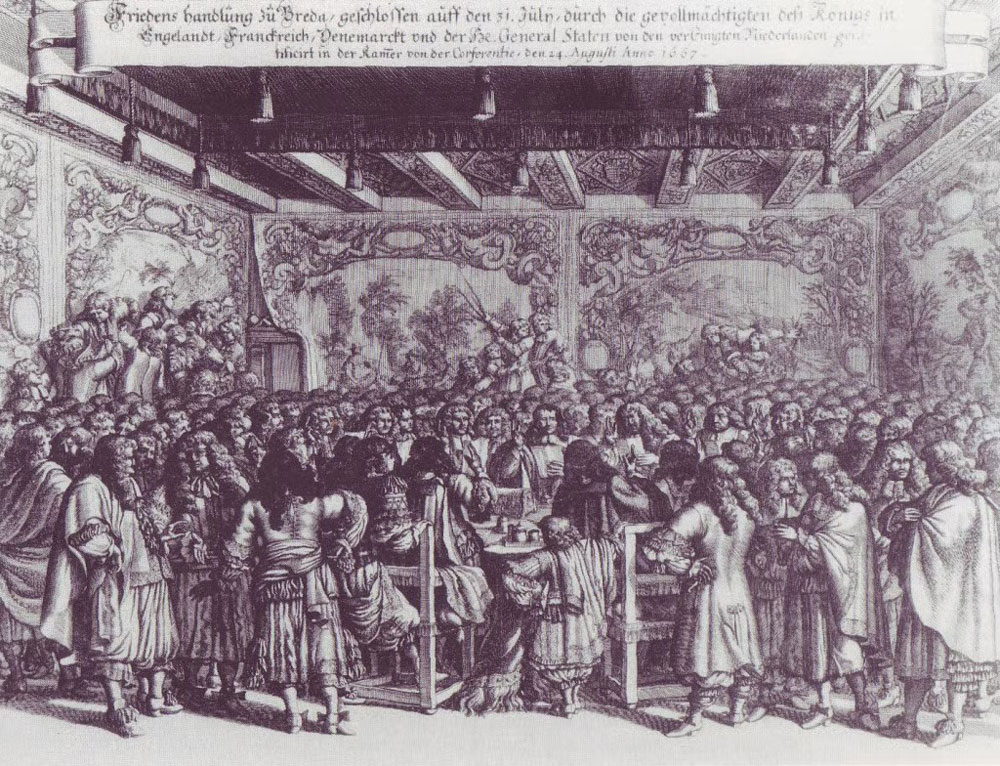
When the Second Anglo-Dutch War ended, both sides wanted peace, and the Treaty of Breda was signed in July 1667.
The agreement followed a simple principle: what each side controlled at the end of the conflict, it would generally keep. England kept New Netherland, including Manhattan, while the Dutch retained Run along with other territories they controlled. The Dutch National Archives explicitly notes that this was not a simple one-to-one swap, even though the story is often told that way. So the famous story contains a kernel of truth, but the reality was a little different.
The Dutch did not sit across a table and formally price Manhattan against Run. Instead, the peace settlement confirmed that England would keep Manhattan while the Dutch kept Run. And in 1667, the Dutch clearly believed Run was worth holding.

Why Nutmeg Made The Decision Make Sense In 1667
It is tempting to look at the treaty from the present and imagine that the Dutch made an extraordinary mistake.
Manhattan eventually became the center of one of the world’s most important cities. Run remained a small island in the Banda Sea.
But people in 1667 could not see that future.
Manhattan was a young colonial settlement on the edge of a vast continent. Run, by contrast, sat at the heart of the world’s lucrative nutmeg trade. Controlling the island helped the Dutch protect their position in the production and distribution of nutmeg and mace. The economic logic of the decision therefore looked very different in the 17th century.
The Dutch maintained control over the spice trade for generations. Their dominance eventually weakened after Britain captured the Spice Islands during the Napoleonic Wars and nutmeg trees were transplanted to other British-controlled territories, including Ceylon, Grenada and Singapore. In other words, the Dutch were not necessarily choosing a worthless island over a valuable city. They were protecting a strategic commodity whose value was immediately visible to them.

A Tiny Island Became Part Of New York’s Origin Story
The strange connection between Run and Manhattan lasted far beyond the treaty itself.
Manhattan went on to become one of the most important urban centers in the world. Run remained a remote Indonesian island where nutmeg trees still grow today. Yet the two places remain linked by the events of 1667.
That is what makes the story so fascinating.
The world of 1667 was organized around commodities, shipping routes and trading monopolies in ways that can be difficult to imagine today. A spice that fits in a kitchen cabinet could be valuable enough to shape military strategy and international diplomacy.
The Treaty of Breda did not literally record a simple “Manhattan for Run” exchange. But the outcome created one of the most memorable contrasts in economic history: England kept the settlement on Manhattan, while the Dutch secured their hold on a tiny island at the center of the nutmeg trade. Centuries later, the balance looks extraordinary.
Manhattan became a symbol of global finance and urban power. Run became a quiet island known far less widely outside Indonesia. But in 1667, the little island had something the Dutch desperately wanted. It had nutmeg.
The story of Manhattan and Run is fascinating because it shows how differently the value of land could be measured in the 17th century. England kept Manhattan while the Dutch retained Run, an island whose nutmeg and mace were among the most valuable commodities of the age. The Treaty of Breda was not a simple one-for-one land swap, but the outcome created a remarkable historical contrast. Manhattan eventually became a global metropolis, while Run remained a small island in Indonesia—yet both were once pieces of the same struggle for control of the spice trade.
The original Southeast Asia Society article explores the long rivalry between the Dutch and English over Run Island and explains why nutmeg made the tiny Banda island so valuable. Historical records and museum sources add important context about the Treaty of Breda and clarify how Manhattan and Run became part of the same 17th-century struggle over trade and territory. Source: https://seasoc.beehiiv.com/p/why-the-dutch-traded-manhattan-for-this-indonesian-island-in-1667