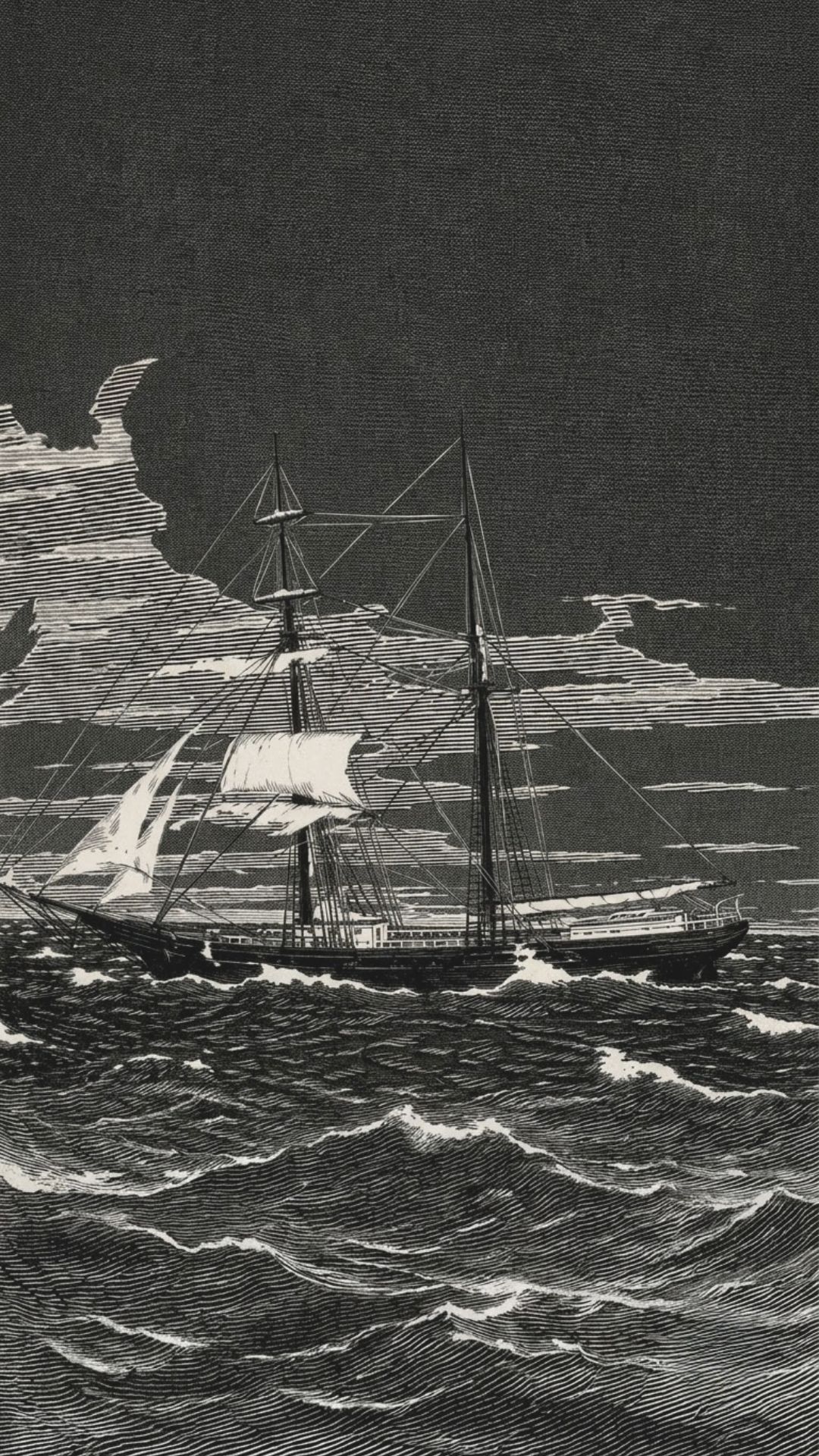
On December 4, 1872, sailors aboard the brigantine Dei Gratia spotted another ship drifting across the Atlantic, about 400 miles east of the Azores. It was the Mary Celeste, a merchant vessel that had left New York less than a month earlier with ten people aboard. When the sailors climbed onto the deck, they found the ship still afloat, much of its cargo intact and months of food and water remaining below deck. But everyone who had been aboard was gone. More than 150 years later, the circumstances surrounding their disappearance remain one of maritime history’s enduring mysteries.
The Voyage Began Like Any Other Atlantic Crossing
The Mary Celeste left New York on November 7, 1872, bound for Genoa, Italy, carrying 1,701 barrels of industrial alcohol. Captain Benjamin Spooner Briggs was aboard with his wife Sarah, their two-year-old daughter Sophia and seven crew members. Briggs was an experienced captain, and nothing about the departure suggested that the voyage would become one of the most famous maritime mysteries ever recorded.
The ship spent the next two weeks crossing the Atlantic in difficult weather. Its final recorded position came on November 25, when the ship’s log placed the vessel near the Azores. After that entry, there is no surviving firsthand account explaining what happened aboard the ship or why everyone eventually left it.
That missing period is the heart of the mystery. Historians know where the Mary Celeste was near the end of its voyage and where it was later discovered, but the crucial decisions made between those two moments were never recorded.
Dive into one of history’s greatest maritime mysteries! What really happened to the crew of the Mary Celeste? Join us as we explore the eerie facts, wild theories, and unsolved questions surrounding this ghost ship. Watch now to uncover the chilling truth behind the most famous disappearance at sea!
Another Ship Found The Mary Celeste Drifting Alone
On December 4, the crew of the Dei Gratia spotted the Mary Celeste approximately 400 miles east of the Azores. The vessel appeared to be drifting without anyone directing it, so Captain David Morehouse sent sailors aboard to investigate. What they found was unusual, but the ship itself was not a wreck.
The lifeboat was missing, one of the ship’s two pumps had been disassembled and about three and a half feet of water had accumulated in the bottom of the hull. Yet the cargo of 1,701 barrels of alcohol was largely intact, while food and water supplies remained aboard. Personal belongings were also still in the crew’s quarters.
The Dei Gratia crew eventually sailed the abandoned vessel to Gibraltar, where British authorities examined the circumstances surrounding the case. After more than three months, investigators found no convincing explanation for why the people aboard had left the ship. The Mary Celeste itself remained seaworthy enough to complete the journey to port.

The Missing Lifeboat Became The Biggest Clue
The fact that the lifeboat was gone suggests that the people aboard did not simply disappear from the deck. At some point, they appear to have left the Mary Celeste and transferred themselves to the smaller vessel. The question is what convinced an experienced captain to make such a decision.
Modern investigations have focused on the physical condition of the ship rather than the dramatic stories that later surrounded it. The disassembled pump is particularly interesting because it could have made it difficult for the crew to accurately judge how much water had entered the hull.
The ship had previously carried coal and had undergone extensive work before its final voyage. Researchers have suggested that coal dust or construction debris could have interfered with the pumping system. If Captain Briggs believed the ship was taking on more water than he could measure, he may have considered temporarily moving everyone into the lifeboat a safer option.
That explanation remains a reconstruction rather than a proven fact. But it fits several pieces of evidence found aboard the ship and provides a practical reason for an experienced captain to leave a vessel that later proved capable of continuing without him.
The Ship May Have Been Much Closer To Land When Everyone Left
Another important clue comes from navigation. Modern researchers used historical weather information, ocean conditions and the surviving records of the voyage to reconstruct the possible movement of the Mary Celeste. Their calculations showed that the ship could have drifted from its last recorded position near the Azores to the location where it was eventually discovered, even without anyone aboard directing it.
This matters because it suggests the ship may have been abandoned much closer to the Azores than the final discovery point. According to the reconstruction, Captain Briggs may have believed that the vessel was in a different position than it actually was, partly because of an inaccurate chronometer.
The ship had also experienced rough weather shortly before the final log entry. If Briggs believed the vessel was taking on water, could not confidently determine his exact position and was close enough to land to consider an emergency transfer, leaving temporarily may have seemed reasonable from his perspective.
The problem is that nobody knows what happened after that decision. The Mary Celeste continued drifting across the Atlantic, while the people who left it never provided another firsthand account.

The Real Story Became More Mysterious Over Time
The Mary Celeste became famous partly because later writers added details that were never established by the original investigation. Newspapers and storytellers proposed increasingly dramatic explanations, while Arthur Conan Doyle’s 1884 fictional story helped turn the abandoned ship into a cultural legend.
Those later stories are important because they show how historical mysteries can change as they are retold. A real event begins with a limited collection of evidence, but every new version can add assumptions that eventually become difficult to separate from the original record.
The actual Mary Celeste case does not need those additions to remain fascinating. A seaworthy merchant ship was discovered hundreds of miles from the Azores with its cargo, supplies and personal belongings still aboard, while the people who had sailed on it were no longer there. That basic fact is already extraordinary.
More Than 150 Years Later, The Final Answer Is Still Missing
Modern research can narrow the possibilities, but it cannot recreate the final moments of the voyage with certainty. The surviving evidence suggests that the crew left the ship, that the lifeboat was used and that the Mary Celeste was capable of drifting for hundreds of miles afterward. The condition of the pumps, the weather and the navigation records offer possible clues to why the decision was made.
What remains unknown is the exact sequence of events: what Captain Briggs believed was happening, when he ordered everyone into the lifeboat, how far the boat traveled from the ship and why the two vessels ultimately became separated.
That is what has kept the Mary Celeste fascinating for generations. The mystery is not simply that an empty ship was found in the Atlantic. It is that the physical evidence survived well enough to let researchers reconstruct parts of the voyage, while the people who could have explained the crucial decision were no longer there to tell the story.
The Mary Celeste therefore remains suspended between evidence and uncertainty. Modern research gives us plausible scenarios, but not a definitive ending—and that small gap between what can be reconstructed and what can never be known is exactly what keeps this 19th-century voyage alive in history. Source: https://devilshideout.com/case/mary-celeste-abandoned-at-sea/