He stood only 5 feet 5 inches tall, yet during World War II he was tasked with preparing U.S. Rangers for some of the closest and ugliest fighting of the war. Francois d’Eliscu built a combat-training system around one blunt idea: on a battlefield, there would be no referee, no rules and no guarantee that the strongest man would win. His exercises were punishing, his methods were unconventional and his reputation was extraordinary. Then he went to war himself—and had to prove that his methods worked.
The Unlikely Man Behind the Training
Francois d’Eliscu was hardly the obvious choice to teach elite soldiers how to fight. Born Milton Eliscu in New York, he had an academic background and a career that included teaching, athletics and radio. He later adopted the more French-sounding name Francois d’Eliscu and built a reputation as a physical-education expert.
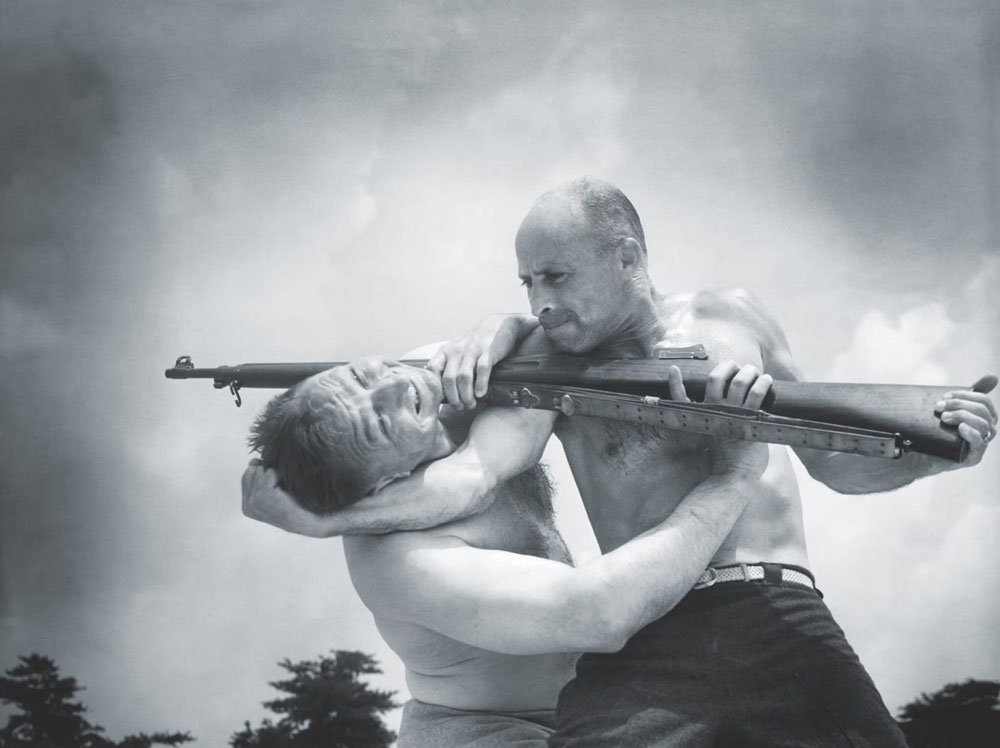
Yet d’Eliscu had developed a deep interest in fighting techniques, especially methods that could be used when a soldier lost his weapon or suddenly found himself in close quarters. His philosophy was very different from the controlled combat of boxing or wrestling. He wanted soldiers to understand that a real battlefield offered none of the protections found in a sport.
In 1942, he was brought to Fort Meade, Maryland, to help train Army Rangers. His task was to prepare men for the kind of fighting where speed, aggression and the ability to improvise could matter more than size.
D’Eliscu believed that if soldiers trained under uncomfortable and chaotic conditions, they would be better prepared when the real thing arrived.
Meet the “Little Professor” who transformed US Rangers into lethal combat experts during World War II. Discover how Lieutenant Colonel François d’Eliscu’s unconventional training and “dirty fighting” techniques changed the face of warfare forever. Watch this fascinating deep-dive into a forgotten military legend now. Don’t miss out on this story!
He Wanted Soldiers Ready for a Fight Without Rules
D’Eliscu combined techniques associated with jujitsu, wrestling and other forms of close combat into a program designed for military use. The emphasis was not on winning a sporting match. It was on surviving a sudden encounter at extremely close range.
During one demonstration, he reportedly asked a soldier to attack him with a bayonet-fixed rifle. D’Eliscu avoided the thrust, closed the distance and demonstrated how a smaller man could use timing and leverage to neutralize a larger opponent. He also used a simple length of cord during demonstrations, showing how ordinary objects might become useful in a desperate encounter.
His demonstrations helped build his reputation, and wartime newspapers portrayed him as an unusual kind of combat instructor. His methods were theatrical at times, but the philosophy behind them was serious: soldiers had to be mentally prepared for the sudden violence and confusion of close combat.
The training was designed to make discomfort familiar.
The Training Was Brutal on Purpose
At Fort Meade, a typical training day could begin with a two-mile run, followed by a 600-yard obstacle course. One obstacle was a deep pit with smooth sides that forced trainees to find a way out using strength, balance and teamwork. One officer reportedly spent about five hours trying to escape.
The trainees then moved on to physical-conditioning exercises, wrestling and other tests designed to keep them working after exhaustion had already set in. D’Eliscu wanted soldiers to become comfortable operating when their muscles were tired and their concentration was fading.
In 1943, he helped establish another training site in Hawaii known as “Mayhem Bowl.” The environment was deliberately punishing, combining mud, water, walls, tear gas and other obstacles. Trainees crawled for long distances and faced exercises intended to reproduce the confusion and physical exhaustion they might encounter in combat.
One drill required men to move a log weighing roughly 1,000 pounds uphill before continuing with close-combat exercises.
The program was so demanding that by March 1943, about 1,600 injuries had been recorded. D’Eliscu defended the philosophy behind the training: an injury during preparation was preferable to discovering on a battlefield that a soldier was not ready for what awaited him.

Then the Instructor Went to War
The most important test of d’Eliscu’s methods came when he stopped being an instructor and became a combatant.
In November 1943, he was sent to Makin Atoll in the Pacific. During the fighting, an American officer ahead of him was hit by Japanese small-arms fire. D’Eliscu responded by firing at the enemy position, then moving toward the shooter.
He eventually closed with the Japanese soldier and used the kind of close-combat techniques he had spent months teaching others. The encounter became the ultimate demonstration of his philosophy: when fighting moved into arm’s length, training and instinct had to take over.
For his actions at Makin, d’Eliscu was awarded the Silver Star.
The significance was larger than the medal. The man who had spent so much time telling soldiers what to do when a fight became chaotic had finally been placed inside that chaos himself.
And he had survived it.

The Strange Story Behind “Francois d’Eliscu”
D’Eliscu’s personality was almost as unusual as his training program.
He had built an eclectic life before the war, moving between education, sports and media. He had studied multiple subjects, worked in athletics and became involved in physical culture at a time when American interest in exercise and fitness was growing rapidly. He also had a connection to the swimming world and knew Johnny Weissmuller before Weissmuller became internationally famous as Tarzan.
His claimed exposure to Japanese martial arts also became part of his legend. Wartime accounts said he had encountered judo during a 1928 visit to Japan and brought ideas back with him. HistoryNet notes, however, that this version of his story should be treated cautiously because judo and jujitsu were already known in the United States before that trip.
That uncertainty actually makes his biography more interesting. D’Eliscu was clearly an inventive and ambitious man, but some of the mythology surrounding him came from wartime publicity as much as from firmly documented history.
Behind the dramatic image was someone who had spent years collecting ideas from sport, physical education and martial arts and turning them into his own system.

His Philosophy Was Bigger Than Fighting
D’Eliscu’s methods eventually evolved beyond the specific program he developed during World War II. He continued to serve in the military, including during the Korean War, and worked in training roles after the Second World War. Eventually, newer approaches replaced much of his system.
But the underlying lesson survived: soldiers could not be trained only for ideal conditions.
A battlefield could be muddy, exhausting, confusing and brutally unpredictable. Weapons could fail, formations could break apart and a soldier could suddenly find himself alone with an enemy at arm’s length. D’Eliscu’s contribution was to force trainees to experience some of that uncertainty before they ever reached combat.
That idea sounds obvious today. At the time, it helped push military training toward a more practical understanding of what close combat actually looked like.

The Man Who Taught Soldiers to Fight Without Rules
Francois d’Eliscu remains an unusual figure in World War II history because he seemed to come from several different worlds at once. He was an educator who became a combat instructor, a small man who specialized in teaching larger soldiers how to fight, and a showman whose unconventional methods were eventually tested in an actual battle.
His training program was controversial partly because it was so physically demanding. But the same harshness was central to his philosophy. He believed soldiers should encounter exhaustion, confusion and uncomfortable situations during training rather than discover their weaknesses for the first time under enemy fire.
The strongest part of his legacy is therefore not any single fighting technique. It is the idea that realistic preparation requires realistic discomfort.
At 5 feet 5 inches, d’Eliscu may not have looked like the stereotypical warrior. But he understood something that mattered on a battlefield: when conditions become chaotic, preparation can matter more than appearance.

Francois d’Eliscu was an unlikely military instructor: a 5-foot-5-inch former educator and athletics specialist who became known for teaching U.S. Rangers how to fight in the chaos of close combat. His training at Fort Meade and Hawaii pushed soldiers through exhausting obstacle courses, brutal conditioning and unconventional drills, producing thousands of injuries but preparing men for conditions far removed from sport. In 1943, d’Eliscu went to Makin Atoll and faced combat himself, earning a Silver Star. His methods eventually faded, but his central lesson endured: soldiers needed to prepare for the battlefield they would actually face, not the one they wished they would find.
P.S. This article is based primarily on HistoryNet’s account of Francois d’Eliscu, including his unusual background, Ranger training programs, “Mayhem Bowl” exercises and combat experience at Makin Atoll. The source also distinguishes documented history from some of the wartime stories later attached to his biography. Source: https://historynet.com/killer-instinct-how-one-man-taught-u-s-rangers-to-fight-dirty-in-wwii/