

In the rich history of Italian cinema, few careers illustrate transformation quite like that of Debora Caprioglio. She first became widely recognized as a striking young screen presence during an era when European cinema frequently celebrated the archetype of the glamorous screen siren. Yet her career did not remain confined to that image.
Over the decades, Caprioglio gradually expanded her work across film, television, and theater, demonstrating that an early association with beauty and glamour did not have to define an actress forever. Her journey is ultimately one of reinvention—a story about moving beyond an initial public image and developing a more mature artistic identity.
Venetian Origins: Where Performance Began
Debora Caprioglio was born on May 3, 1968, in Venice, Italy, a city whose artistic heritage has influenced generations of performers, filmmakers, and artists.
Growing up in Venice, Caprioglio was surrounded by an environment unlike almost anywhere else in the world. Its historic architecture, canals, theaters, festivals, and centuries of artistic tradition provided a distinctive cultural backdrop to her formative years.
From a young age, she showed an interest in the performing arts and gradually began moving toward professional entertainment. Her early appeal was not simply a matter of appearance. She possessed a natural camera presence and an ability to command attention—qualities that would become increasingly valuable as she entered the Italian entertainment industry.
Her path eventually took her beyond Venice and toward Rome, where the country’s film and television industries offered opportunities for a young performer determined to establish herself.
The Breakthrough Years: Entering the European Spotlight
The late 1980s marked the beginning of Caprioglio’s professional rise. She appeared in a number of European productions and quickly attracted attention for her distinctive screen presence.
The defining moment of her early career arrived in 1991 with Paprika, directed by Italian filmmaker Tinto Brass.
The film placed Caprioglio at the center of a provocative story set in post-war Italy. Its sensual visual style generated considerable attention, but it was Caprioglio’s performance that ultimately established her as one of the recognizable faces of Italian cinema during the period.
The role brought her international visibility and made her closely associated with the glamorous, provocative style of European cinema that was particularly prominent at the time.
Yet widespread recognition came with a complication. Once an actress becomes strongly associated with a particular screen persona, escaping that image can be difficult. For Caprioglio, the challenge was not simply becoming famous—it was determining what kind of career she wanted after fame had arrived.

The Turning Point: Moving Beyond the Screen Siren
By the middle of the 1990s, Caprioglio faced a decision familiar to many performers who achieve early recognition through a particular image. She could continue accepting roles that relied heavily on the qualities that had first made her famous, or she could deliberately broaden her artistic range.
She chose the latter. Caprioglio increasingly explored different genres and began taking on work that placed greater emphasis on character, dialogue, and emotional development. Her career expanded beyond the expectations created by her early films, allowing her to demonstrate a more versatile approach to performance.
The transition was not necessarily dramatic or instantaneous. Instead, it unfolded gradually through a succession of different projects.
She worked in comedy, drama, television, and theater, gaining experience in forms of performance that demanded different skills from those required by her early film roles. That willingness to change became one of the most important characteristics of her career.
From Film Icon to Established Performer
Caprioglio’s move toward more varied work demonstrated an important truth about longevity in entertainment: a successful early image can open the door, but versatility is what allows a performer to remain relevant.
Her later career increasingly reflected maturity rather than youthful glamour. Instead of depending on the persona that had originally attracted international attention, she explored characters with different personalities, motivations, and emotional dimensions.
The theater became particularly important in this evolution. Stage performance requires an actor to sustain a character in real time, without the editing, camera angles, and visual techniques available in film. For Caprioglio, working across theater and screen provided another opportunity to refine her craft.
This period represented a kind of artistic graduation. The actress who had once been primarily discussed in terms of her appearance was gradually being recognized for the breadth of her professional experience.
Embracing Maturity and Reinvention
One of the most compelling aspects of Caprioglio’s career is the way she approached the inevitable changes that come with age. Entertainment industries often place enormous emphasis on youth, particularly for actresses. The transition from young star to mature performer can therefore be challenging, especially for someone whose earliest success was strongly connected to a glamorous public image.
Caprioglio did not attempt to remain frozen in the period that first made her famous. Instead, she allowed her career to evolve. Her later work reflects an actress increasingly comfortable with roles that prioritize personality, experience, humor, and emotional depth. That evolution gave her career a longevity that cannot be explained by nostalgia alone.
She remained active by continuing to explore different forms of performance rather than attempting to recreate the circumstances of her early success.
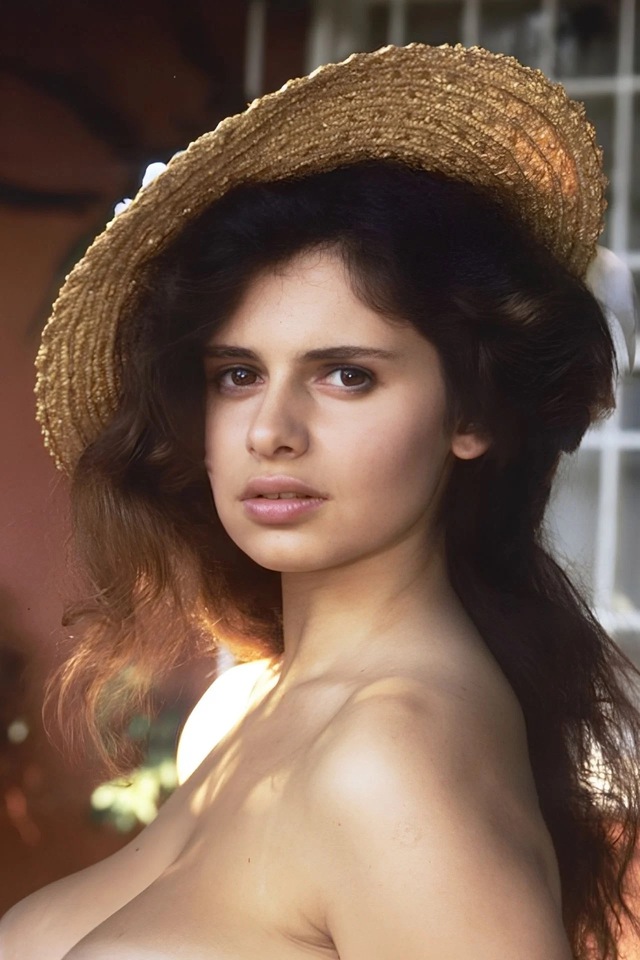
A Career Beyond One Defining Role
Debora Caprioglio’s legacy cannot be reduced to Paprika, even though the film remains an important milestone in her career. Its significance lies partly in what came afterward.
Rather than allowing one famous performance to become the beginning and end of her professional identity, Caprioglio continued searching for new opportunities. Film led to television; television connected with theater; and the glamorous young actress gradually developed into a seasoned performer with decades of experience.
That progression makes her career particularly interesting within the broader history of Italian entertainment. She represents an actress who successfully confronted the expectations created by early fame and gradually replaced a singular public image with something more enduring: professional versatility.
Final Thoughts: The Enduring Venetian Muse
Debora Caprioglio’s story is ultimately a story of reinvention. She emerged from Venice and entered Italian entertainment during a period when the image of the glamorous European screen siren was particularly powerful. Paprika transformed her into an internationally recognizable figure, but that recognition also created expectations that could easily have limited her future.
Instead, she continued evolving. By embracing drama, comedy, television, and theater, Caprioglio demonstrated that an actress’s career does not have to be defined by the period in which she first becomes famous.
Her journey from a celebrated young screen presence to an experienced performer reflects something larger than the changing fortunes of a single actress. It is a reminder that longevity in the arts comes from the willingness to adapt—to accept that careers change, audiences change, and artists themselves change.
The Venetian muse who once captivated European cinema eventually discovered something more valuable than the fleeting attention of fame: the freedom to keep becoming someone new.

Master of the Stage: Finding a Second Home in Theater
Perhaps the most important chapter in Debora Caprioglio’s artistic evolution came when she turned increasingly toward live theater.
The stage offered her something different from cinema. There were no camera angles to shape the audience’s attention, no editing room to refine a performance, and no opportunity to repeat a moment once the curtain was up. Every emotion, pause, movement, and line had to work in real time.
For an actress who had first become famous on the screen, theater represented both a challenge and an opportunity.
Caprioglio embraced it.
Her theatrical work allowed her to explore a broader range of characters and styles, from classical productions to contemporary plays and adaptations of Italian literary works. Working alongside experienced stage performers, she developed a different relationship with her audience—one based less on visual presence and more on voice, timing, emotional control, and sustained character development.
The experience also revealed another dimension of her abilities.
On stage, Caprioglio could move between dramatic intensity and lighter comedic performances, demonstrating a versatility that was not always visible in the roles that had defined her early film career. Theater gave her the freedom to step outside the expectations created by her youthful screen image and concentrate more directly on the craft of acting.
Over time, the stage became more than another line on her résumé. It became an important part of her artistic identity.
Graceful Maturity: Remaining Relevant in a Changing Industry
As the years passed, Caprioglio continued to maintain a presence across Italian entertainment. Her career gradually moved away from the intense spotlight surrounding her early film work and toward projects that reflected her experience and maturity.
Television became an important part of that transition. She appeared in a variety of programs and productions while also participating in interviews and cultural conversations that allowed audiences to see the person behind the actress.
Her later career carries a sense of deliberate balance.
Rather than attempting to recreate the circumstances of her early fame, Caprioglio has embraced the opportunities available to her at different stages of life. Her experience has become an asset, giving her a perspective that can only come from decades spent navigating film, television, and theater.
That perspective is particularly evident in her approach to live performance. Theater continues to provide a space where she can remain connected to the fundamentals of her profession: the relationship between performer and audience, the discipline of preparation, and the unpredictability of performing in real time.
Her career therefore feels less like a departure from her past than a continuation of it—one shaped by experience rather than nostalgia.
The Lasting Legacy of an Italian Performer
Debora Caprioglio’s journey from Venice to the Italian stage represents much more than the rise of a successful actress. Her early career brought considerable attention, particularly after Paprika established her as a recognizable figure in European cinema. But what ultimately makes her career distinctive is what she did after that initial success.
She refused to remain defined by a single period of her life. Instead, she continued experimenting with different forms of performance, gradually moving between film, television, and theater. Each transition allowed her to discover another aspect of her abilities and to build an identity that extended beyond the image associated with her youth.
That process is perhaps the most enduring lesson of her career. Fame can arrive quickly, but artistic longevity requires something different. It requires adaptability, discipline, and the willingness to accept that an artist’s identity can evolve over time.
Caprioglio’s story reflects that principle beautifully. She began her career as a young actress whose appearance attracted enormous attention, but decades of work allowed her to become something more substantial: an experienced performer whose career could no longer be reduced to a single role or image.
From the canals of Venice to the stages of Italy, her journey has been defined by continual growth. Her legacy is not simply that she was once a celebrated face of Italian cinema. It is that she continued working, learning, and reinventing herself long after that initial spotlight had changed.
In the end, Debora Caprioglio did more than build a career in entertainment. She built a lasting artistic identity—one shaped not only by the fame of her early years, but by the maturity, versatility, and resilience that followed.