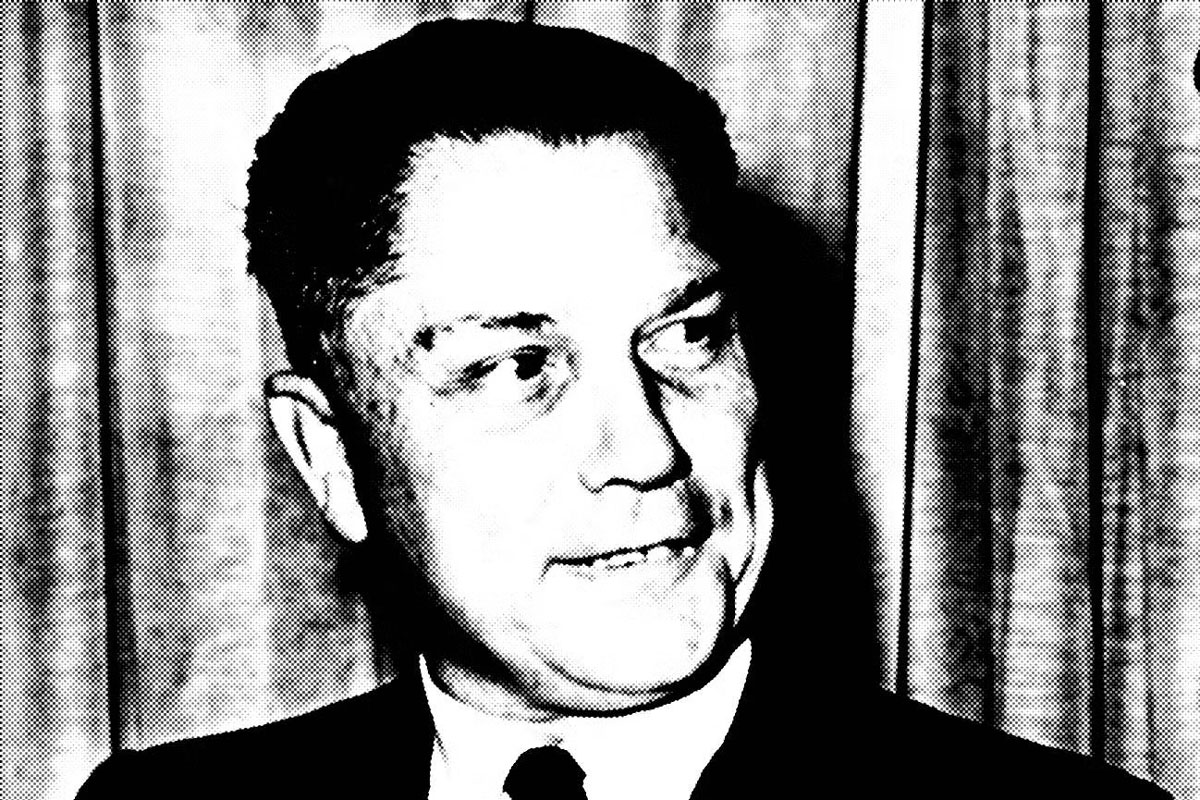
Jimmy Hoffa drove to a Detroit restaurant expecting to meet two powerful men. Instead, someone picked him up—and he vanished without a trace. More than five decades later, investigators still disagree over the same two questions: who killed Hoffa, and where did they put his body? One former Mafia hitman claimed to have the answer, while other investigators point to a different killer and an entirely different burial site. The deeper the case goes, the less certain the truth becomes.
Hoffa Was Trying to Take Back His Power
Hoffa had once been one of the most powerful labor leaders in America, but his career had been badly damaged after he was convicted of jury tampering and pension fraud and sent to prison. When he was released, he wanted to return to the presidency of the Teamsters union, a move that threatened the interests of people who had benefited from the leadership that replaced him.
By 1975, Hoffa was pushing back into Teamsters politics even though Frank Fitzsimmons, his former ally and successor, had no intention of giving up the position. Hoffa was also threatening to expose Mafia influence inside the union, giving organized crime another reason to view his comeback as a serious problem.
Then came the meeting. Hoffa was supposed to see Detroit mobster Anthony “Tony Jack” Giacalone and New Jersey mobster Anthony “Tony Pro” Provenzano, a figure tied to the Genovese crime family. Instead, the appointment fell apart, and Hoffa vanished from the parking lot without leaving behind a body or an obvious crime scene.

The Afternoon Hoffa Disappeared
It was July 30, 1975, and Hoffa had driven to the Machus Red Fox in suburban Detroit expecting the meeting to take place. He never met Giacalone or Provenzano there, and witnesses saw him waiting outside before he disappeared.
That detail has fueled the mystery for decades. Hoffa was not simply found dead somewhere; he disappeared in circumstances that suggested someone had arranged to get him into a vehicle or otherwise remove him from the area quickly. Yet the exact sequence of those final minutes has never been established with certainty.
Seven years later, a judge legally declared Hoffa dead, but the declaration solved only the legal problem. It did not solve the murder. No one has ever been charged with a crime in connection with his disappearance.
Jimmy Hoffa walked into a Detroit restaurant in 1975 and was never seen again. More than 50 years later, his body is still missing—and investigators still disagree about who killed him and where he was buried. Watch the video to dive into one of America’s most famous unsolved Mafia mysteries.
Then The Irishman Offered an Answer
For decades, investigators, journalists and organized-crime insiders produced different explanations. One of the most famous came from Frank “The Irishman” Sheeran, a former World War II combat soldier and Mafia hit man who later claimed that he had personally killed Hoffa on orders from organized crime.
Sheeran’s story became the foundation of the 2004 book I Heard You Paint Houses and later Martin Scorsese’s film The Irishman. According to the story, Sheeran was the man sent to eliminate Hoffa, and the phrase “painting houses” was Mafia slang for a contract killing.
There was just one major problem: other experienced investigators did not believe him. At a 2019 Mob Museum panel, veteran journalists Dan Moldea, Eric Shawn and Vince Wade challenged the claim that Sheeran was the killer and said the evidence they had gathered pointed instead toward New Jersey hit man Salvatore “Sally Bugs” Briguglio.
The Other Suspect Was Sally Bugs
Briguglio had a long association with organized crime and became one of the names repeatedly linked to the Hoffa case. The journalists at the Mob Museum argued that he was a more credible suspect than Sheeran, rejecting the idea that the celebrated “Irishman” confession should be accepted at face value.
Briguglio himself did not live long enough to resolve the question. In March 1978, he was shot five times in New York City’s Little Italy and killed by two unidentified gunmen; Sheeran later claimed he had been involved in that shooting as well.
But Briguglio’s death created another problem for anyone trying to establish the truth. One of the men believed by some investigators to have knowledge of Hoffa’s murder was now gone, leaving testimony, hearsay and competing accounts in his place. The case became a puzzle in which the people who might have known the answer often had little reason to tell it.
Then Came the Bigger Mystery: Where Is Hoffa?
Even if the killer could be identified, there was still another question: where did Hoffa’s body go?
Dan Moldea, one of the longtime researchers of the case, said his sources pointed toward New Jersey, where Hoffa was allegedly buried in a 55-gallon drum at a Mafia-controlled landfill. That theory has circulated for years, and later reporting by Moldea and Eric Shawn returned to the idea with a more specific proposed location.
Vince Wade, the Detroit reporter who broke the story of Hoffa’s disappearance in 1975, believes something very different happened. He has argued that Hoffa’s remains were taken to Central Sanitation Services in Hamtramck, Michigan, a garbage-disposal operation described by the Detroit Free Press as Mafia-owned, and that the remains were ultimately incinerated.
The two theories cannot both be right. That disagreement illustrates the central problem of the Hoffa case: even investigators who have devoted years to it can agree on the broad outline of what happened while reaching completely different conclusions about the final destination of the body.

More Than 50 Years Later, the Answer Is Still Missing
The Hoffa case has survived for so long because every apparent answer seems to create another question. Sheeran claimed responsibility, yet other researchers disputed him; Briguglio became another leading suspect, yet he was murdered before he could provide a definitive account; and competing theories about the burial place have never produced Hoffa’s remains.
What is certain is remarkably limited. Hoffa disappeared from the Machus Red Fox parking lot on July 30, 1975. His body has never been recovered, a judge declared him legally dead in 1982, and no one has ever been charged with his murder.
That is why Jimmy Hoffa remains one of America’s most enduring mysteries. The case has all the ingredients of a solved Mafia murder—power, money, threats, hit men and competing confessions—except for the one thing a murder investigation ultimately needs. A body.

Jimmy Hoffa disappeared from a suburban Detroit restaurant on July 30, 1975, while trying to rebuild his power inside the Teamsters union. His disappearance has since produced competing theories: Frank Sheeran claimed he killed Hoffa for the Mafia, while other veteran investigators have argued that Salvatore “Sally Bugs” Briguglio was more likely responsible. Even the suspected burial site remains disputed, with theories pointing to New Jersey or a Michigan garbage facility. Hoffa was legally declared dead in 1982, but no one has ever been charged, and his body has never been found.