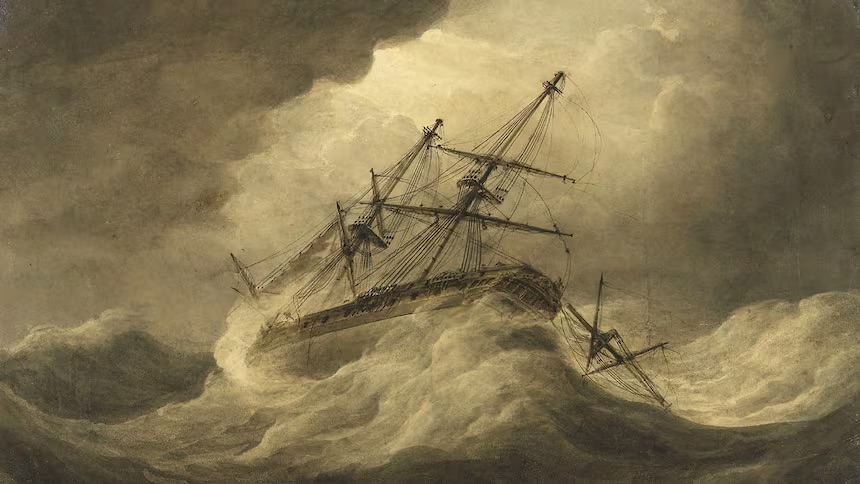
The Waterwitch was sinking below Newfoundland’s cliffs, 25 people were trapped in the freezing darkness, and help could not reach them from above. Then one local fisherman volunteered to be lowered down a cliff by rope into the storm. What followed would leave 11 survivors alive and turn an 1875 shipwreck into one of the most remarkable rescue stories in Pouch Cove.
A Routine Voyage Turned Into a Nightmare
The Waterwitch departed St. John’s in the early evening, heading toward Cupids across the coast of Newfoundland. The weather was already rough, but the crew had faced bad conditions before, and there was little reason to expect that the voyage would end in one of the community’s most remembered maritime disasters.
As darkness fell, the snow intensified and visibility deteriorated. The crew tried to judge their position by travel time and the sound of the waves along Cape St. Francis, believing they had cleared the cape and could turn toward Conception Bay. They were wrong.
Instead of safely entering the bay, the Waterwitch entered a narrow rocky inlet known as Horrid Gulch, north of Pouch Cove. The vessel struck the cliffs, its bow was smashed and the surf began driving the ship against the rocks, leaving those aboard with almost no chance of saving the vessel.

The Survivors Were Trapped Beneath the Cliffs
The wreck was devastating. Contemporary accounts recorded 25 people aboard and 12 people lost, leaving the survivors stranded among the rocks while the storm continued around them. The Waterwitch itself was beyond saving, so survival depended on getting the remaining people off the shoreline before the sea or the cliffs claimed them.
The captain, Samuel Spraklin, realized that simply waiting beside the wreck was too dangerous. He and two other crewmen climbed from the ship and began scaling the cliffs in the hope of finding help, fighting their way upward through wet rock, snow and darkness.
After reaching the top, the men still had no idea exactly where they were. They eventually made their way toward Pouch Cove and found a house with a light in the window. Their arrival finally brought news of the wreck to the settlement, and local men immediately began preparing to return to Horrid Gulch.
A shipwreck left survivors trapped beneath Newfoundland’s cliffs, with almost no way back to safety. Then one fisherman was lowered into the darkness by rope to reach them. Watch the video to see the dramatic story of the Waterwitch disaster and the daring rescue that saved 11 lives.
The Rescue Required a Rope and a 600-Foot Drop
Finding the survivors was only the beginning. The men of Pouch Cove reached the cliffs but could not simply climb down to the wreck, so they needed someone willing to descend the dangerous rock face in the darkness. Alfred Moores, a local fisherman, volunteered.
A rope was secured around Moores while the other end was fastened above. He was lowered gradually down the cliff until he reached a narrow ledge, and there he heard something through the darkness: the cries of the people still trapped below. The fishermen had finally located the survivors.
The next phase took hours. Survivors were tied into ropes one at a time and hauled upward by the men waiting above, while Moores remained on the dangerous cliff face to guide them. Eleven people were brought to safety before Moores himself was pulled back up.
A Disaster Became a Story of Local Courage
The rescue was remarkable not because sophisticated equipment arrived, but because ordinary fishermen chose to confront conditions that could easily have killed them. Contemporary accounts praised the people of Pouch Cove for leaving their homes in the storm, reaching the wreck and caring for the exhausted survivors once they were brought ashore.
Moores became the central figure in the rescue because his descent turned an almost impossible recovery into a workable one. His actions were later formally recognized, and the Royal Humane Society awarded him a medal and diploma for his bravery.
The story endured because the Waterwitch disaster was more than a shipwreck. It showed what could happen when a vessel was overwhelmed by Newfoundland’s winter coast—and what a small coastal community could accomplish when the people on shore refused to leave those trapped below the cliffs.

Why the Waterwitch Is Still Remembered 150 Years Later
The Waterwitch became one of the historic maritime events associated with Pouch Cove, where the rescue itself has remained part of the community’s heritage. In 2011, the rescue associated with the wreck received a provincial historic commemoration recognizing its significance.
The story has also survived through local histories, newspaper accounts and traditional storytelling, although later sources sometimes disagree about details such as the exact date or number of people aboard. The contemporary Newfoundland Express account and local heritage records provide the clearest basis for the 29 November 1875 date and the rescue involving Moores.
That may be why the story continues to work so well a century and a half later. The Waterwitch itself was lost to the sea, but the desperate climb from the wreck, the rope lowered down the cliff and the eleven people hauled to safety left something behind that a shipwreck normally does not: a story about the people who refused to let the sea have everyone.
The Waterwitch shipwreck of November 29, 1875 began as a voyage from St. John’s to Cupids and ended with a vessel destroyed in Horrid Gulch, 12 people dead and survivors trapped beneath towering cliffs. What made the disaster memorable was the rescue: Captain Samuel Spraklin and two crewmen climbed out to find help, while Pouch Cove fishermen returned to the wreck and Alfred Moores was lowered down the cliff by rope to reach those still stranded. Eleven survivors were hauled back to safety, and Moores later received formal recognition for his bravery.