Some of the English words you use every day are far older than you might expect. Words like tomorrow, awkward, tenant, trespass and foray carry traces of medieval language, law and everyday life into modern conversations. Understanding where these words came from is more than a history lesson—it can help you appreciate how language evolves and, more importantly, choose the right words when precision matters.
The Medieval Words You Still Use Without Knowing It
You probably use English words like patient, awkward, tomorrow, tenant and trespass without giving them a second thought. They sound completely ordinary—words you might hear at work, use in a conversation or encounter in a contract. But some of them carry histories that stretch back centuries, to a time when England looked nothing like the modern world.
What if some of the most ordinary words you use every day are actually centuries old?
Language rarely disappears all at once. Instead, words survive by changing meaning, adapting to new situations and passing from one generation to the next. That is why vocabulary with medieval roots can still appear in modern conversations about business, property, law, work and everyday life.
Consider tenant, for example. Today, it is a familiar word for someone who rents or occupies property. Trespass appears on signs and in legal documents. Tomorrow is one of the most basic words in everyday English, while awkward can describe everything from an uncomfortable conversation to an embarrassing moment.
The fascinating part is not simply that these words are old. It is that they have survived because they remained useful.
Some words changed their meanings considerably. Others retained much of their original sense. But all of them demonstrate something important about English: modern vocabulary is built on layers of history that most speakers rarely notice.
So this isn’t really about learning obscure medieval vocabulary.
It is about realizing that the language you use every day contains traces of people, institutions and ways of life that existed hundreds of years before you were born.
Some of the most ordinary words in modern English carry centuries of history.

Words for Men Who Want to Speak With More Precision
When “Try” Isn’t Quite Enough
Sometimes the difference between sounding vague and sounding precise comes down to choosing a better word.
Take foray. Today, it can describe an attempt to enter or explore a new area, particularly in business, career or investing. Instead of saying, “I’m trying something new,” you could say:
“This was my first foray into investing.”
The word adds a sense of deliberate exploration. Interestingly, foray originally referred to a hostile incursion or raid, before its meaning evolved into the broader idea of entering a new field.
Then there is utmost, a useful word when you want to emphasize the highest degree of something. You might talk about your utmost effort, utmost importance or utmost responsibility:
“This requires the utmost attention.”
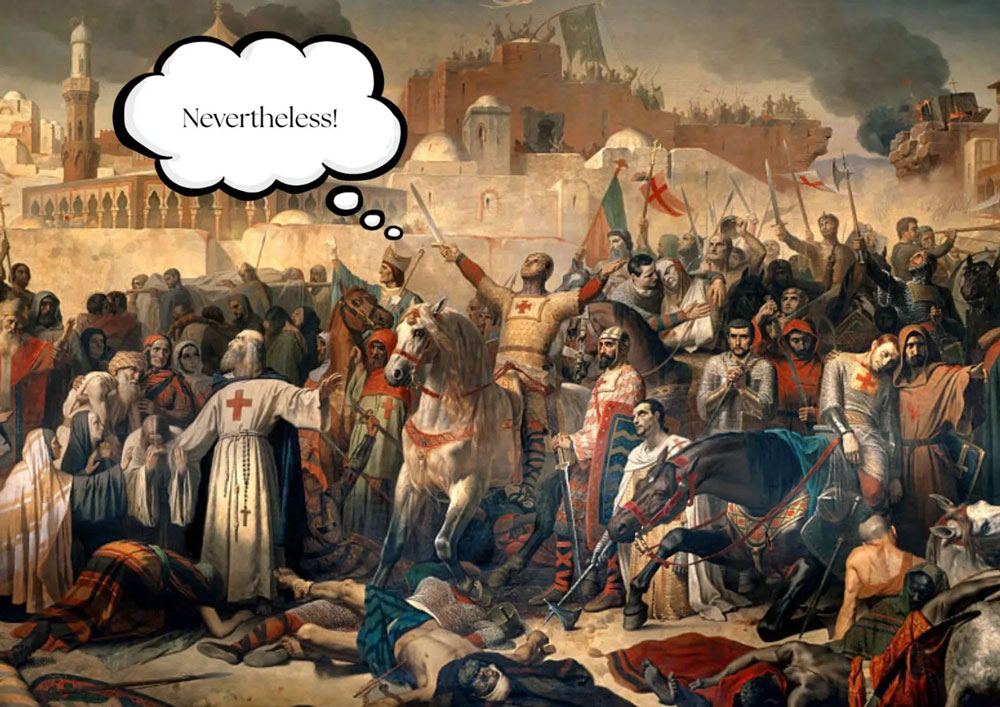
Nevertheless serves a different purpose. It allows you to acknowledge an obstacle without losing sight of your main point:
“The risk is significant. Nevertheless, the opportunity is worth considering.”
That makes it particularly useful in professional discussions, arguments and writing.
When Simple Words Carry More Weight
Not every useful word needs to sound sophisticated.
Patient, for example, can describe someone who remains calm while waiting, but it can also refer to a person receiving medical treatment. Tenant is a practical word that becomes especially important when discussing property, contracts or real estate.
Then there is trespass, a word you may recognize from the familiar sign:
“No trespassing.”
It carries a precise meaning involving entering someone’s property without permission, making it much more useful than simply saying someone “went somewhere they shouldn’t.”
The lesson is simple: vocabulary is not about collecting impressive words. It is about having the right word available when the distinction matters.
You don’t need complicated vocabulary to sound intelligent. You need words that say exactly what you mean.
How did Europe go from the fall of Rome to the Renaissance? This short journey through the Middle Ages explores the invasions, rise of Charlemagne, fragmentation of Europe, Crusades, Black Death and the cultural transformation that eventually led to the Renaissance.
Words That Can Make Everyday Life More Precise
The Words Hiding in Ordinary Conversation
Some of the most useful English words are so familiar that we rarely stop to think about where they came from. Take awkward. Today, it describes an uncomfortable conversation, an embarrassing moment or a difficult social situation. But the word has roots in Old Norse and originally carried the sense of being turned the wrong way or facing in the wrong direction. Over time, that physical idea developed into the modern meaning of something uncomfortable or difficult to handle.
Tomorrow is another everyday word with a surprisingly old history. It developed from the Old English phrase to morgenne, essentially meaning “on the morrow.” The word has changed very little in its basic purpose: we still use it to refer to the day that comes after today.
Then there is stew. Today, you probably think of a slow-cooked dish made with meat, vegetables or both. But the word originally referred to a container or vessel used for cooking before it became associated with the food prepared inside it.
These words are useful precisely because they are ordinary. You don’t need to sound sophisticated to use them effectively. Understanding their history simply gives you another reason to notice how much meaning can be packed into everyday language.
Even “Acre” Has a Story
Acres may sound like a modern real-estate measurement, but the word has Germanic roots connected to fields or open land. In Old English, an acre was associated with an amount of land that could be plowed in a day using a yoke of oxen.
That history makes the word especially interesting today. Whenever you discuss property, farming, land investment or real estate, you may be using a measurement whose origins are tied to the physical work of medieval farmers.
English vocabulary often works this way: ordinary words preserve traces of the lives and institutions of people who lived centuries ago.
How many words you use at work, at home or in business have stories that go back nearly a thousand years?
The Legal Language We Inherited From Medieval England
Trespass, Tenant and the Language of Property
Some of the most familiar words in modern property and legal language have surprisingly old roots. Take tenant. Today, it usually means someone who rents or occupies a property, but the word comes from an older legal tradition involving the holding and possession of land.
Trespass has an equally practical place in modern life. You might encounter it on a property sign, in a contract or in a legal dispute. Its meaning is closely connected to the idea of entering or interfering with someone else’s property without permission.
These words may sound completely ordinary, but they reflect a much older system for defining who could own land, who could occupy it and what happened when someone’s rights were violated.
That makes medieval vocabulary surprisingly relevant to modern adult life.
You may encounter these concepts when renting a home, buying property, signing a contract, managing an estate or dealing with a dispute. The words may be centuries old, but the underlying questions remain familiar:
- Who has the right to use this property?
- What are the terms of the agreement?
- What happens when someone crosses a boundary?
Language Can Carry Institutions Across Centuries
A word does not survive for hundreds of years simply because it sounds impressive. Often, it survives because the institution behind it survives.
Property law still needs concepts such as ownership, possession and tenancy. Contracts still establish rights and obligations. Legal systems still need precise language for describing violations and disputes.
That is why medieval England left such a lasting mark on modern English vocabulary. Words connected to property, crime and legal relationships continued to evolve as English-speaking societies changed, but many remained useful because the underlying institutions remained important.
In that sense, language can act like a historical record. A word you encounter in a modern contract may carry traces of a legal system that began taking shape centuries ago.
Sometimes, when you use an ordinary legal word, you’re speaking a language shaped by institutions that are centuries old.

Why These Old Words Still Matter to Modern Men
Better Vocabulary, Better Decisions
Learning old English words is not about filling your conversations with sophisticated vocabulary. The real value is having a more precise word available when precision matters.
Compare the difference between saying:
“This is a problem.”
and:
“Nevertheless, this is a manageable risk.”
The second statement does more than sound polished. It separates the existence of a problem from the question of whether that problem can actually be handled.
The same applies to foray. Instead of saying:
“I’m trying something new.”
you could say:
“This is my first foray into the industry.”
That wording makes it clear that you are deliberately entering a new field rather than simply experimenting without direction.
A stronger vocabulary gives you more ways to distinguish between uncertainty and risk, opportunity and possibility, responsibility and obligation, or disagreement and outright conflict.
Those distinctions matter when you’re making decisions.
A Strong Vocabulary Is a Tool, Not a Performance
In business, precise language can make decisions clearer. In leadership, it can reduce confusion about expectations and responsibilities. In negotiations, carefully chosen words can prevent misunderstandings that later become expensive problems.
Even in everyday conversations, having the right vocabulary can help you explain what you actually think instead of settling for vague phrases.
But there is an important difference between having a strong vocabulary and trying to sound intelligent.
A man who constantly reaches for complicated words may come across as trying too hard. A man who chooses the simplest accurate word often sounds far more confident.
The goal is not to impress people with how many words you know.
It is to communicate an idea so clearly that there is less room for someone to misunderstand you. The goal isn’t to sound educated. It’s to make your thoughts harder to misunderstand.

The Words You Use Today Have Been Around for Centuries
You can say tomorrow without thinking about Old English. You can describe a conversation as awkward without realizing that the word has roots in Old Norse. You can use tenant or trespass without thinking about the medieval legal traditions that helped shape their meanings.
And when you use foray to describe entering a new field, you probably don’t think about the word’s much more aggressive past as a term associated with a raid or incursion.
That is what makes the history of English so fascinating.
English does not simply replace old words with new ones. It borrows them, adapts them, changes their meanings and carries them forward. Words that once described medieval farming, property, warfare or daily life can eventually become completely ordinary parts of modern conversation.
That also changes the way we should think about vocabulary.
A strong vocabulary is not necessarily a collection of impressive or complicated words. It is the ability to understand what a word means, recognize the situation where it belongs and choose it because it expresses your thought more precisely.
That matters in a meeting, a negotiation, a business decision or a conversation with someone you care about. The right word can make an idea clearer without making you sound like you’re trying to impress anyone.
You don’t need to speak like someone from another century.
You just need to understand the words you already have—and know when one of them says exactly what you mean. The words you use every day may be centuries old. What matters is how precisely you use them today.
The English you use every day carries centuries of history. Words like tomorrow, awkward, tenant, trespass and foray have survived because they continued to serve a purpose as language changed. Their history is interesting, but their modern value is even more practical: precise vocabulary helps you communicate clearly, make better arguments and avoid misunderstandings. You don’t need complicated words to sound intelligent. You need the right words when they matter most.