Texas is famous around the world for cowboys, oil, barbecue and its larger-than-life reputation. But the Lone Star State has a history far stranger than most people realize. Texas was once an independent country, has flown six different flags, witnessed one of the final battles of the Civil War and could theoretically be divided into five separate states. From devastating disasters to surprising political history, these nine facts reveal that the Texas we think we know is only part of a much bigger story.
Everything Really Is Bigger in Texas
The famous saying that “everything is bigger in Texas” may be an exaggeration, but it has a foundation in reality.
Texas covers about 268,596 square miles, making it the second-largest U.S. state by area, behind only Alaska. Its enormous size has helped shape nearly every part of its identity, from agriculture and ranching to transportation and political influence. The state has also long been associated with major cattle, cotton and oil industries.
Size became part of the Texas image itself. The state’s culture has often celebrated the idea of being bigger, stronger and more ambitious than everyone else. Even its Capitol building has historically been a point of pride.
Of course, Texas is more than its physical dimensions. Its enormous territory contains deserts, forests, plains, major cities, ranching communities and a long Gulf Coast. Few states combine such a vast geographical range with such a powerful cultural identity.

Six Different Flags Have Flown Over Texas
One of the most famous facts about Texas is that six different nations have governed the territory.
The traditional “Six Flags of Texas” represent Spain, France, Mexico, the Republic of Texas, the Confederate States of America and the United States. This extraordinary history explains why Texas has such a strong reputation for independence and a political identity unlike that of many other states.
Texas became part of Mexico after Mexican independence from Spain in 1821. But its connection to Mexico did not last long. Following the Texas Revolution, the territory declared independence in 1836 and became the Republic of Texas.
For nearly a decade, Texas existed as an independent republic before joining the United States on December 29, 1845. It later joined the Confederacy during the Civil War before returning to the Union.
The history of the six flags eventually inspired the name of the Six Flags amusement park chain, which originated in Texas.
Watch the video to uncover the strange and surprising history of Texas. From its time as an independent country to six flags, devastating disasters and the possibility of becoming five separate states, there is far more to the Lone Star State than cowboys and oil.
Texas Could Have Been Even Larger
Modern Texas is already enormous, but the state could have been much bigger.
During the period when it existed as an independent country, Texas pursued ambitious territorial claims. Even after joining the United States, it continued to claim a vast area that extended into what is now part of the American Southwest.
That changed with the Compromise of 1850.
As part of the agreement, Texas relinquished claims to roughly 67 million acres of land in exchange for $10 million, which helped the state address its financial obligations.
Had Texas retained those claims, the map of the United States might look dramatically different today. The state could have extended much farther west and included territory that later became associated with other states and regions.
It is a reminder that modern state borders are not inevitable. They are often the result of wars, political negotiations, financial pressures and historical compromises.
One of the Last Civil War Battles Happened in Texas
Many people associate the end of the American Civil War with Confederate General Robert E. Lee’s surrender at Appomattox Court House in April 1865.
But fighting did not immediately stop everywhere.
The Battle of Palmito Ranch took place the following month near Brownsville, Texas. It is widely regarded as the final major land engagement of the Civil War, although the exact description of the “last battle” can depend on how historians define the end of the conflict.
The battle carried a remarkable irony: Confederate forces won the engagement even though the Confederacy itself was collapsing.
The episode demonstrates how difficult it was to end a nineteenth-century war instantly. Information moved slowly, armies remained in the field and the political reality of surrender did not immediately reach every location.
In Texas, the war’s final chapter continued even after the outcome had become clear.

The Deadliest Natural Disaster in U.S. History Happened in Texas
Texas was also the site of what is commonly considered the deadliest natural disaster in American history.
On September 8, 1900, a powerful hurricane struck Galveston, then an important port and commercial center on the Gulf Coast. The storm brought a devastating storm surge and powerful winds, destroying much of the city.
An estimated 8,000 people died.
The Galveston hurricane permanently changed the city’s history. Before the disaster, Galveston had been one of the most important ports in the United States and a prosperous destination for wealthy Americans and new arrivals.
Two U.S. Presidents Were Born in Texas—And Neither Was a Bush
Texas is strongly associated with the Bush family, particularly George H. W. Bush and George W. Bush. Both built important political careers in the state.
Yet neither was actually born there.
The two U.S. presidents born in Texas were Dwight D. Eisenhower and Lyndon B. Johnson.
Eisenhower was born in Denison, Texas, in 1890, although his family moved to Kansas while he was still young. Johnson, by contrast, had much deeper lifelong ties to Texas. He was born there, attended college in the state and later served as both a U.S. representative and senator from Texas before becoming president.
The Bush family’s political association with Texas is so strong that this fact continues to surprise many people.
It is another example of the difference between being born in a place and becoming politically or culturally identified with it.
Afterward, the city undertook major engineering efforts, including the construction of a seawall and projects to raise parts of the island’s elevation.
Galveston survived, but it never fully regained the position it had held before the storm. The disaster remains one of the most devastating examples of how a single natural event can reshape the future of an entire city.
“Don’t Mess With Texas” Was Originally About Trash
Today, “Don’t Mess With Texas” sounds like a warning.
It has become an unofficial expression of Texas pride, toughness and confidence. But the slogan did not originally have anything to do with challenging outsiders.
It was created as an anti-littering campaign.
During the 1980s, Texas reportedly spent around $20 million each year cleaning trash from its highways. The Texas Department of Transportation hired an advertising agency to create a memorable campaign aimed at reducing litter.
The result was “Don’t Mess With Texas,” which first appeared in a television campaign during the 1986 Cotton Bowl.
The slogan worked so well that it eventually escaped its original purpose. Over time, Texans adopted it as a broader expression of state identity.
Few advertising campaigns have experienced such a dramatic transformation—from a message about roadside litter into a cultural symbol recognized around the country.
Texas Was Once Dominated by Democrats
Modern Texas is strongly associated with Republican politics, but that has not always been the case.
For decades, Texas was dominated by the Democratic Party, a pattern shared by much of the American South. The state’s political landscape was shaped by the aftermath of the Civil War, Reconstruction and later the civil rights era.
The Republican Party struggled for generations to gain a major foothold in Texas politics. According to the historical account highlighted by HISTORY, significant changes became more visible during the twentieth century, particularly from the 1960s onward.
The transformation was gradual rather than sudden. Political realignment, demographic change and shifting attitudes toward national issues all contributed to the changing balance of power.
Texas today is often viewed through the lens of its current politics, but its history demonstrates how dramatically political identities can change over time.
No state’s political future is guaranteed to resemble its past.

Texas Could Theoretically Be Split Into Five States
Perhaps the strangest Texas fact involves the possibility that the state could one day become five separate states.
The resolution admitting Texas to the United States included a provision allowing for the possible creation of as many as four additional states from Texas territory, subject to constitutional conditions and congressional approval.
That does not mean Texas can simply decide tomorrow to divide itself into five states. Any such change would involve complex legal and political processes.
Still, the possibility has fascinated politicians, historians and map enthusiasts for generations.
Imagine the consequences.
Would Austin remain the capital of one new Texas state? How would Houston, Dallas, San Antonio and the rest of the state’s major cities be divided? What would happen to congressional representation and the balance of power in Washington?
The idea remains largely theoretical, but the fact that Texas even has such a historical provision adds another layer to the state’s unusual political story.
Texas is already famous for thinking big. In theory, it could one day become even bigger in another sense—by becoming five.
Why Texas Has Such a Powerful Identity
Few American states possess an identity as recognizable as Texas.
Part of that comes from geography. Texas is enormous and geographically diverse.
Part comes from history. It was once an independent republic, experienced rule by six different governments and developed its own powerful myths around events such as the Alamo and the Texas Revolution.
Economics also played a major role. Ranching, cotton, railroads and oil transformed Texas into a state with enormous influence and wealth. The discovery of oil at Spindletop in the early twentieth century helped accelerate industrialization and urban growth.
Then there is culture.
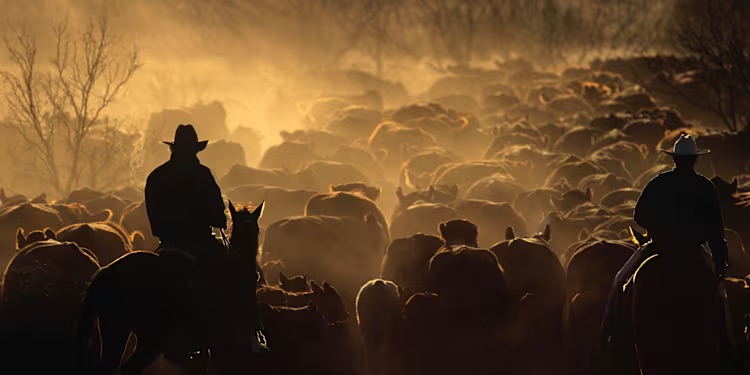
Cowboys, ranches, barbecue, country music, football and the famous Texas attitude have all contributed to a distinctive image that is recognized far beyond the state’s borders.
Texas pride is therefore not based on a single event or symbol. It developed from a combination of geography, history, economics and the extraordinary fact that Texas was once its own country.
Texas is far more than a state of cowboys, oil wells and oversized portions. Its history includes six different flags, a period as an independent republic, territorial ambitions that could have made it even larger and one of the final battles of the American Civil War. It was also the site of the deadliest natural disaster in U.S. history, gave birth to two presidents and created one of America’s most famous slogans to fight roadside litter. Perhaps the strangest fact of all is that Texas could theoretically be divided into five states. Texas may be famous for thinking big, but its history is arguably even bigger than its reputation.